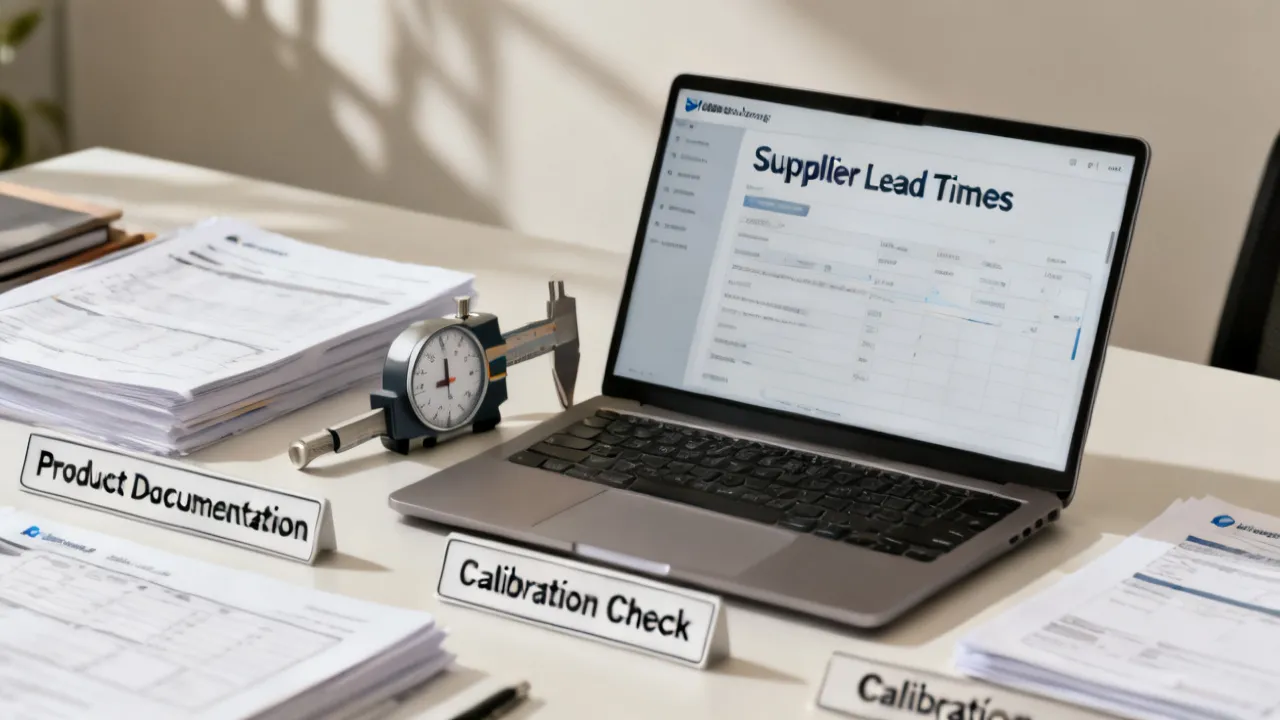
Zz Procurement Guide for Suppliers and Pricing
This guide explains how organizations evaluate “Zz” related sourcing needs—covering pricing logic, supplier selection, and practical quality checks. It provides objective background on how procurement terms, product classification, and documentation requirements influence sourcing outcomes, helping readers reduce procurement risk and improve comparability when multiple vendors quote differing specifications.

Key sourcing takeaways for “Zz” pricing and suppliers
When you’re managing procurement connected to “Zz,” the most decisive factor is not a single quote—it’s whether each supplier’s price maps to the same technical scope, documentation level, and acceptance conditions. In practice, teams should compare what is being supplied, how it’s measured, how quality is verified, and how change orders are handled. This is the basis for stable budgeting and fewer disputes in the delivery window.
Because “Zz” may appear in vendor catalogs as a product family, a component identifier, or an internal reference, you must treat it as a structured procurement identifier rather than a casual keyword. That approach enables more accurate cross-supplier comparison—especially when the supplier list includes both established manufacturers and smaller specialist providers.
A useful mental model is to treat “Zz” as the label on a bundle of requirements. The label alone won’t tell you whether the bundle contains the same documents, the same test regimen, the same packaging, the same warranty coverage, and the same remedies if something fails acceptance. In other words, your procurement job is to ensure the label points to the same “bundle” across suppliers.
What “Zz” typically represents in procurement contexts
“Zz” is frequently used as a shorthand code: a designation that can represent a particular specification set, a process variant, a grade, or a packaging configuration. From an industry perspective, procurement teams usually confirm three layers before committing:
- Technical layer: specification sheets, tolerances, material or component class, and test methods.
- Commercial layer: unit of measure, lead time, warranty/coverage period, and payment terms.
- Operational layer: labeling, documentation package, packaging standards, and delivery logistics.
If any layer differs, “price” alone becomes a misleading comparison metric.
To make this concrete, imagine two suppliers both respond with “Zz” pricing. Supplier A provides a basic conformance certificate and performs only a limited incoming inspection. Supplier B provides a full document pack with traceability, plus extended lot testing and a more robust packaging system aligned to your receiving docks. The line-item unit price might look similar or Supplier A might even be cheaper—but your true costs will diverge once you factor in the documentation audit effort, additional receiving inspection time, and the likelihood of rework.
Procurement professionals often get burned when “Zz” acts like a “shorthand promise.” The supplier believes they are quoting the catalog item; your organization believes they are quoting the engineering specification package. The quote still says “Zz,” but the underlying deliverable differs. That’s why your sourcing approach must be structured and explicit.
How to compare prices when “Zz” quotes differ
Even when two suppliers both reference the same “Zz” term, price differences often come from scope boundaries. As an expert procurement reviewer, I recommend you audit quotes with a structured checklist:
- Unit normalization: Ensure both suppliers quote per the same unit (piece, set, kilogram, batch, or service hour). “Nearby” distribution or regional fulfillment can change shipping and handling costs, so normalize delivery basis terms.
- Included vs. excluded costs: Request an itemized breakdown covering packaging, inspection, documentation, and any compliance paperwork.
- Lead-time pricing: Capture whether the quote assumes standard production scheduling or priority allocation. Expedited production or inventory-late availability can affect cost.
- Quality assurance level: Confirm whether the price includes incoming inspection, in-process checks, certificates, or test reports. Higher QA intensity typically reduces risk but may raise the unit price.
- Change-order handling: Clarify rates or rules if specifications evolve (for example, material substitution, revision to drawings, or updated labeling standards).
These checks are especially important when the “supplier details” you receive include different levels of documentation. A quote that looks cheaper at first glance may shift costs to your side later in the form of rework, inspection delays, or nonconformance remediation.
To prevent “scope drift,” ask suppliers to confirm, in writing, what is included under the “Zz” item and what is not. For example, a supplier might say: “Zz includes the product and a certificate of conformity, but does not include third-party testing.” If your receiving standards require third-party test results for acceptance, that supplier is effectively quoting a different deliverable. Procurement must identify these mismatches early, before purchase order release.
Another common source of “price mismatch” is the way suppliers interpret packaging. Some suppliers include packaging materials as part of standard delivery; others treat special packaging (e.g., desiccant, foam inserts, anti-static bags, tamper-evident seals, custom labeling) as an add-on. If your inbound process requires specific packaging to prevent damage and ensure traceability, you must price those requirements explicitly.
Supplier selection criteria for “Zz”
Choosing the “right” supplier is a risk management exercise. For “Zz” sourcing, many organizations evaluate vendors across four dimensions: capability, consistency, compliance, and responsiveness. Here is a practical lens:
1) Capability and specification fit
Ask for evidence that the vendor can manufacture or supply to the exact “Zz” specification package you require. Look for specification traceability (e.g., reference drawings, bill of materials mapping, revision control) and test method alignment. If your internal requirements reference documentation standards, verify the vendor’s ability to produce matching deliverables.
Capability is not only “can they build it,” but also “can they prove they built it correctly.” For “Zz,” proof might mean the supplier can deliver certificates that match the exact lot, provide results from the test method you specified (not a “similar” internal method), and provide documentation in your accepted format (e.g., PDF, Excel exports, or controlled forms).
It’s also worth verifying that the supplier understands the engineering intent behind “Zz.” If “Zz” denotes a process variant (for example, a particular heat treatment or finishing method), you need confirmation that the supplier will use the correct process route—because different routes might still meet some superficial parameters but fail under your acceptance tests or real operating conditions.
2) Consistency under real-world conditions
Consistency means repeatable quality across lots/batches, stable lead times, and predictable packaging. If possible, request prior production records relevant to “Zz” or similar code-family items. Avoid relying only on marketing claims—ask about how they handle variation and how they document corrective actions.
Procurement teams often underestimate the value of “trend data.” Instead of only asking for a single compliance certificate, ask for a recent history showing conformance rates, any recurring nonconformance themes, and what CAPA (corrective and preventive actions) were implemented. If the supplier has frequent deviations for a given “Zz” variant, the long-term cost may rise due to delays and the overhead of disposition handling.
Consistency also includes supply continuity. If the supplier uses critical materials that are sometimes constrained, ask about approved alternates, substitution policy, and lead-time variability. “Zz” items may be stable in specs, but the supply chain around them may not be. A supplier that can flex without harming acceptance outcomes is often the better choice even if their unit price is higher.
3) Compliance readiness
Depending on your industry, “Zz” sourcing may involve regulatory expectations, customer-specific compliance, or internal quality standards. Confirm what the supplier can provide: certificates, test reports, labeling requirements, and audit support. Ensure the compliance package can be transferred to your procurement file without gaps.
Compliance readiness is more than having documents. It includes whether the supplier understands the difference between (a) documents that demonstrate compliance and (b) documents that merely state compliance. For example, a certificate that says “compliant” without referencing your required tests, or referencing a different standard number, might not satisfy your acceptance process. A supplier that provides a traceable evidence chain reduces procurement friction and supports faster receiving.
Also consider industry-specific compliance. If “Zz” is used for items subject to environmental or safety requirements (e.g., materials restrictions, hazardous substance declarations, or documentation of excluded components), verify the supplier’s process for managing these requirements for each lot. “Zz” might appear the same, but compliance evidence may vary if the supplier changes component sources.
4) Responsiveness and communication cadence
In procurement operations, responsiveness affects schedule reliability. Evaluate the vendor’s process for managing questions, design clarifications, and nonconformance notices. A supplier that responds with structured answers and clear documentation typically reduces cycle time—even if their initial price is not the lowest.
Responsiveness should be assessed during RFQ cycles and early order management. For instance, ask a clarifying question about documentation formatting or test methodology, then observe their reply speed and specificity. Suppliers with a mature quality system often provide answers that directly map to your checklist. Suppliers without such maturity may respond with generalized statements, leaving procurement to interpret the differences later.
Communication also matters during changes. If your engineering team revises the “Zz” specification, the supplier must provide timely confirmation of impact on lead time, cost, documentation deliverables, and whether prior lots require special handling. A responsive supplier reduces the risk of schedule slippage and reduces the cost of re-approval workflows.
Industry context: why “ZZ”/“Zz” references often cause quoting errors
In many procurement programs, mismatches occur because internal teams use “Zz” as a simple label rather than a specification carrier. The outcome can be a quote that references a related but not identical item family. That mismatch may surface only at delivery or inspection, when returns and re-inspections become costly.
To prevent this, ensure your request for quotation (RFQ) includes:
- Exact specification references (drawings, revision levels, material/process identifiers).
- Acceptance criteria (pass/fail metrics, inspection plan expectations).
- Required documentation package (what reports/certificates to provide and in what format).
- Packaging and labeling instructions aligned to your inbound process.
But the RFQ requirements are only half of the solution. The other half is ensuring your internal team interprets those requirements consistently. Procurement, quality, and engineering should align on the meaning of “Zz” before the RFQ is sent. If engineering sends one interpretation and quality receives another, the quotes may be correct relative to the RFQ, but still wrong relative to operational expectations.
A practical improvement is to attach a “requirements translation” sheet. This is a small document mapping each RFQ line item to a tangible receiving action. For example, “Zz certificate requirement” maps to “receiving will verify that the certificate references lot ID X and includes test results Y and Z; if missing, the lot will be quarantined.” This reduces the risk of differences in how “requirements” are understood.
It also helps to specify how suppliers should handle substitutions. Some vendors assume substitution is allowed if “similar.” Procurement should define whether substitutions require prior approval, whether alternate materials are allowed only within pre-approved lists, and how documentation changes are handled if substitutions occur. Without that clarity, “Zz” pricing can be undermined by a supplier’s assumption that they can substitute to protect margins.
Operational best practices for procurement teams
Professional purchasing is partly analytical and partly procedural. Here are methods widely used in mature procurement functions:
- Use a standardized RFQ template: This reduces ambiguity and makes quote comparison meaningful.
- Normalize all commercial terms: Unit price, delivery terms, lead time assumptions, and payment conditions should be aligned.
- Set a single acceptance pathway: Define when inspection occurs, who performs it, and how discrepancies are handled.
- Require documentation mapping: Ask vendors to explicitly state how their supplied documentation satisfies your checklist.
- Conduct supplier readiness checks: For new suppliers or new “Zz” variants, run a small pilot or sample verification before scaling.
To make these best practices actionable, consider implementing a quote comparison worksheet that forces each supplier answer to “fill the same boxes.” For “Zz,” the worksheet might include fields for: product identifier, specification revision, unit of measure, included documentation list, included inspection steps, packaging type, delivery basis, warranty statement, and change control terms.
Another practical step is to incorporate a “total cost of ownership” lens early. If your organization only applies TCO after selecting the supplier, it’s easier to rationalize a wrong choice. Instead, ensure that TCO inputs (inspection labor, potential rework, documentation processing overhead, probability of re-inspection) are discussed during the RFQ evaluation. This creates a decision trail that is defensible if stakeholders later question why a supplier with a slightly higher quote was selected.
Also, ensure internal stakeholders understand what “winning” means. If your priority is schedule reliability, then a supplier with a higher unit price but shorter and more stable lead time may be the best procurement outcome. Procurement is often a balancing act between cost and risk; “Zz” items highlight that tension because risk is frequently hidden inside documentation and acceptance differences rather than in the raw unit price.
Quality verification: turning price into dependable value
From an industry expert viewpoint, the best “value” is the price that survives the full lifecycle—from order confirmation to inspection and onward to usage. For “Zz” materials/components, quality verification should cover:
- Incoming inspection: Visual checks, dimensional verification, labeling verification, and documentation completeness.
- Test traceability: Ensure test reports correspond to the correct lot/batch identifier.
- Nonconformance resolution: Confirm the vendor’s process for containment, root-cause analysis, and corrective/preventive actions.
- Re-inspection policy: Define who pays and how timelines are affected if re-testing is required.
This is one reason “supplier details” matter: a supplier with strong documentation and a clear corrective action process can reduce hidden costs and delivery friction.
One of the most helpful procurement-quality integrations is to define “acceptance conditions” that are measurable and unambiguous. Instead of vague statements like “meets specification,” define what exactly must be checked, the frequency of checks, the sampling plan if applicable, and what happens if results are borderline or inconclusive.
It’s also important to align quality verification with the supplier’s quality system. If your quality team uses a specific incoming inspection method, ask the supplier to provide test data or certificates in a format that supports those checks. Suppliers often provide documentation that is technically correct but not easy to audit quickly. For example, they might provide a certificate with a test result table that uses a different labeling scheme, making it hard for your receiving team to map results to the correct “Zz” variant.
Finally, incorporate a feedback loop. After each “Zz” delivery, capture whether the documentation met expectations on first submission, whether any items were quarantined, and whether corrective actions were timely. Over time, these outcomes help refine supplier scoring and adjust future RFQs. A supplier that repeatedly creates receiving friction may remain cheap on paper but becomes expensive in the total operational lifecycle.
Documentation and compliance: what to require in the RFQ
To keep quotes comparable, standardize the documentation you ask for. For “Zz” procurement, teams typically request a documentation package such as:
- Certificate(s) of conformity (where applicable)
- Test reports aligned with your acceptance criteria
- Material/process statements if relevant to your use case
- Packaging and labeling evidence to match your inbound handling requirements
- Lot/batch traceability references
If a supplier provides these items as part of their base price, your comparison is fair. If not, you should adjust your total cost of ownership model accordingly.
Consider adding a “document completeness checklist” to the RFQ. This list enumerates the required documents and can also include “minimum fields” within each document. For instance, for a certificate of conformity, you might specify that it must include: supplier legal name, address, certificate number, the exact “Zz” specification revision, lot/batch number, test standard reference, results summary, signatory name, and date of issue. Without these fields, your quality team might reject the certificate even if the results appear adequate.
Documentation requirements should also address version control. Some suppliers might provide certificates that reference an old revision if they still have inventory for a previous spec. Procurement should specify that the delivered items must correspond to the latest revision listed in the RFQ (unless your change control process allows otherwise). This prevents the scenario where “Zz” looks consistent but the revision is not.
Also, clarify whether electronic documents are acceptable. Many organizations accept PDFs but require them to be legible and complete. If your receiving process requires hard copies, you should request them up front. Hard copies may increase costs and lead time, and suppliers might not include them unless specified. Conversely, if you accept electronic documentation only, you might avoid unnecessary shipping and administrative overhead.
Risk management and contract alignment
Pricing disputes often arise from unclear scope and acceptance criteria. To reduce risk, ensure contract language mirrors your operational reality. For “Zz” orders, pay close attention to:
- Definition of the deliverable: What exactly counts as the supplied “Zz” item.
- Change control: How changes are approved and how they affect lead time and cost.
- Warranty and remedies: What happens if the item fails acceptance tests or early-life checks.
- Delivery obligations: Where and when delivery is considered complete.
Even when you have the “best” price, contract misalignment can create downstream costs that outweigh the initial savings.
Contract alignment is also about “how disputes are resolved.” If your purchase agreement specifies that nonconformance is handled only through informal email exchanges, then disputes can become long and expensive. You should specify a formal process: notification requirements, containment responsibilities, timelines for supplier response, and how corrective actions are reviewed and closed.
For “Zz,” you should also address what happens if documentation is late or incomplete. Sometimes deliveries arrive on time but the required certificates are missing or incomplete, causing receiving to quarantine inventory. If the supplier’s price doesn’t include documentation re-issuance or expedited document delivery, your procurement contract should define remedies and timelines for document corrections.
Another risk is “spec substitution.” If the contract allows substitution under certain conditions without prior approval, your receiving team may end up inspecting items that do not fully match your acceptance tests. Contract language should define when substitution is allowed, what documentation is required for the substitution, and whether the substituted item counts as the same “Zz” deliverable for warranty purposes.
In mature procurement programs, contracts often include service level expectations for response time to nonconformances, as well as penalties or credits if those expectations are not met. Even if you don’t include penalties, defining response timelines helps keep disputes from dragging on.
Comparison table: supplier approaches and purchasing conditions (no links)
| Evaluation element | Common supplier approach | Purchasing condition/requirement | Why it affects “Zz” price |
|---|---|---|---|
| Scope definition | General “Zz” reference with optional details | RFQ must specify exact specification/revision and acceptance criteria | Incomplete scope can reduce unit price but shift costs to your side |
| Documentation package | Certificates or reports provided only on request | Require documentation mapping to your checklist in the RFQ | Bundled documentation typically increases quote transparency |
| Quality assurance level | Basic inspection vs. extended lot testing | Define inspection plan and test methods before comparing prices | Higher QA may raise unit price while lowering rework risk |
| Lead time assumptions | Standard scheduling vs. priority production | Normalize lead-time basis and confirm whether expediting is included | Priority scheduling changes costs and availability risk |
| Logistics model | Fulfillment from different regions; “nearby” delivery varies | State delivery basis terms clearly and request total cost breakdown | Regional shipping and handling can materially change totals |
| Nonconformance handling | Case-by-case resolution vs. standardized CAPA process | Require defined remedies, timelines, and responsibility allocation | Clear remedies reduce hidden costs and schedule disruption |
Step-by-step guide for “Zz” sourcing decisions
The following process helps procurement teams convert scattered supplier information into a decision that is both defensible and repeatable.
- Clarify the “Zz” reference: Confirm whether it denotes a product family, variant, grade, or process step, and identify the exact specification revision.
- Write an RFQ that is specification-complete: Include unit of measure, acceptance criteria, documentation deliverables, and packaging/labeling requirements.
- Request an itemized price breakdown: Ask for unit price and separately show packaging, inspection, documentation, and logistics assumptions.
- Normalize commercial terms: Ensure quotes use comparable lead-time assumptions, delivery terms, and payment conditions.
- Evaluate supplier capability: Verify the supplier’s ability to meet the test methods and documentation requirements connected to “Zz.”
- Check quality assurance readiness: Confirm incoming inspection approach and how the supplier handles traceability and documentation completeness.
- Run a controlled validation: For new suppliers or new “Zz” variants, request samples or a pilot lot aligned to acceptance criteria.
- Score total cost of ownership (TCO): Use a model that accounts for re-inspection likelihood, documentation compliance, and lead-time risk—rather than comparing unit prices alone.
- Finalize contract conditions: Align scope definition and acceptance terms with operational reality to prevent price-to-scope disputes.
To enhance this step-by-step approach, consider adding two extra evaluation steps that many teams overlook: (1) a “documentation first” check before final award and (2) an “on-time documentation delivery” performance criterion once the contract is active. For “Zz,” these steps can materially reduce receiving disruption because documentation is frequently the bottleneck that holds inventory in quarantine.
You can also make the controlled validation step more systematic. Instead of only sampling for physical characteristics, sample for the entire deliverable package: packaging condition, labeling correctness, and documentation completeness. If the documentation and labeling do not match your checklist, the supplier is likely to create receiving and traceability burdens even if the product itself is within tolerance.
Procurement requirements and conditions to watch
For successful “Zz” purchasing, the most frequent failure points are usually procedural: ambiguity in scope, missing documentation, or acceptance criteria that are not fully defined before shipment. Consider the following requirements and conditions:
- Specification traceability: “Zz” must be tied to a revision-controlled specification, not just a catalog name.
- Documentation completeness: Your receiving team should be able to verify documentation immediately against your checklist.
- Acceptance criteria clarity: Define the pass/fail metrics before shipment; avoid “interpretation by inspection.”
- Lot/batch identification: Require traceability identifiers so that any test results can be matched to delivered units.
- Change control: Ensure changes are explicitly approved and documented with effects on lead time and price.
Beyond these five points, watch for hidden ambiguity in “labeling.” Labeling is often treated as a nontechnical detail, but in controlled environments it’s a traceability requirement. If “Zz” items require labels that match barcodes, internal item codes, or receiving location conventions, specify them explicitly. If suppliers provide “close enough” labeling, it may still cause inventory handling errors that create delay costs.
Also watch for discrepancies between your inbound process and your contract. For example, if your receiving team must conduct incoming inspection upon delivery, specify inspection responsibility and timing. If inspection timing is unclear, you might receive goods, quarantine them, and then have a contract dispute over who should have inspected first.
Another practical condition is that “Zz” might exist in multiple packaging configurations. A supplier might quote one packaging configuration for unit price but deliver another packaging type. This can affect damage rates, storage handling, and even acceptance criteria if your inspection process includes packaging-related checks (e.g., whether protective materials are present). Ensure packaging is part of the deliverable definition, not only part of logistics discussions.
Industry background: procurement performance depends on comparability
Procurement scholars and industry bodies consistently note that procurement outcomes improve when requirements are standardized and when supplier evaluations reflect operational risk—not only price. While specific quantitative “performance” metrics vary by industry and geography, the general principle is well established: comparable inputs lead to better decisions.
For objective grounding on procurement risk and performance measurement, readers can reference widely used guidance from recognized organizations such as the Institute for Supply Management (ISM) and the OECD on responsible supply chains. These sources emphasize the importance of clear requirements, supplier management, and risk controls rather than relying solely on unit pricing. For an official starting point, see ISM’s resources and OECD supply-chain guidance from their respective websites.
To connect these broader principles to “Zz” sourcing, note that comparability means your RFQ communicates requirements unambiguously and your evaluation method rewards suppliers who meet those requirements—not suppliers who merely submit a quote labeled with the same term. When “Zz” is treated as a structured identifier, procurement teams can measure comparability across technical and documentation dimensions.
Procurement performance can also be evaluated through cycle time and dispute frequency. If “Zz” orders frequently lead to documentation requests, rejections, or prolonged supplier discussions, then the procurement process is failing to create comparability. Improving RFQs, clarifying acceptance criteria, and standardizing documentation deliverables often reduce these operational failures.
In many organizations, there’s also a governance component. If “Zz” is an internal code used by multiple departments, governance ensures the code is mapped to a controlled specification set. Without governance, different teams might interpret “Zz” differently, resulting in RFQs that contain implicit assumptions. Governance—such as a controlled mapping document between internal “Zz” codes and engineering revisions—helps make procurement decisions consistent across time and across buyers.
FAQs about “Zz” pricing, supplier selection, and procurement controls
Q1: What does “Zz” mean in an RFQ or supplier quote?
In many procurement settings, “Zz” functions as a reference code for a product family or specification variant. Because its meaning can vary by supplier and industry, you should confirm the exact specification revision, the unit of measure, and the acceptance criteria that correspond to “Zz.”
To make this easy for procurement teams, create an internal “Zz interpretation guide” that lists the possible meanings of “Zz” (family, variant, grade, process step, packaging config) and the controlled specification revision each meaning points to. Then, when an RFQ is prepared, the team selects the meaning and automatically pulls the relevant acceptance criteria and documentation requirements.
Q2: How can I compare prices across suppliers when “Zz” quotes look different?
Normalize unit pricing by matching the unit of measure and delivery basis terms. Then ask for itemized pricing covering documentation, inspection, packaging, and logistics assumptions. Only compare unit prices after the scope and QA level are aligned.
A useful technique is to compute a “normalized delivered cost” rather than comparing sticker unit prices. For example, convert all supplier quotes into: base unit price + included inspection/documentation costs + packaging compliance costs + delivery costs to your dock + any lead-time expediting charges (if applicable). When “Zz” differences are primarily about documentation or inspection intensity, this normalization reveals the true cost drivers.
Q3: Why would a supplier with a lower quote still be more expensive overall?
A lower quote can exclude documentation, inspection effort, or include longer lead times. If your receiving or quality team must perform extra rework, re-inspection, or administrative reconciliation, the total cost of ownership can exceed the initial difference.
Procurement cost is not only finance. It includes labor time, schedule risk, and operational disruption. If your quality team spends days chasing missing certificates or resolving nonconformance dispositions, you effectively pay “hidden” costs that are not reflected in the supplier line item. Therefore, the right comparison model must include operational overhead.
Q4: What supplier details should I request for “Zz” sourcing?
Request the supplier’s capability evidence (how they meet the “Zz” specifications), their QA approach, documentation deliverables, lot/batch traceability practices, and their nonconformance remediation process. If “nearby” fulfillment affects delivery timing and costs, include logistics assumptions in the RFQ.
Also request evidence of how they handle changes. For instance: if they revise a subcomponent within the same “Zz” family, how do they notify customers, and how does the documentation update process work? Suppliers who can manage change control smoothly reduce the likelihood that you will incur expensive re-approval or re-inspection.
Q5: What conditions should be written into the purchase agreement?
Define scope precisely (what counts as the deliverable), list acceptance criteria, specify documentation requirements, and set change control and nonconformance remedies. Clear acceptance terms reduce disputes that often arise when “Zz” is interpreted differently.
Additionally, include provisions that cover documentation delivery deadlines. If certificates and test reports are missing by a defined time after shipment, your agreement should state what happens (e.g., quarantine status, responsibility for resubmission, or credit/chargeback rules). This prevents ambiguity and supports consistent receiving decisions.
Q6: Should I require samples or a pilot lot for “Zz” orders?
For new suppliers, new “Zz” variants, or critical applications, samples or a pilot lot aligned to acceptance criteria is a common risk-reduction step. It helps verify specification fit and documentation completeness before scaling to full volume.
To maximize the value of sampling, require that the pilot includes the full documentation package and labeling/packaging configuration intended for production volumes. This ensures the supplier’s entire deliverable package works, not just the physical product. A pilot that passes only on physical characteristics but fails documentation still indicates ongoing operational risk.
Q7: How do “nearby” logistics considerations influence supplier pricing?
Regional fulfillment can affect shipping, handling, and lead-time certainty. Even if two suppliers quote the same unit price, differences in delivery terms and logistics assumptions can shift total costs. Always compare on a normalized delivery basis.
Also consider that “nearby” does not always mean “better” if the supplier’s fulfillment approach changes how packaging is handled. A supplier close to your facility might use packaging standards that do not match your inbound constraints, leading to higher damage rates and more receiving time. Therefore, include packaging and receiving process alignment in the normalization model, not only the geography.
Q8: Can I rely on supplier marketing materials when selecting a vendor for “Zz”?
Marketing claims are not sufficient for specification-critical procurement. Use marketing as background, then validate with technical documentation, test methods alignment, traceability practices, and a clear quality assurance and remedies process.
If a supplier offers a marketing claim like “meets all standards,” ask them to specify which standards, which test methods, and which revisions. Then verify those details match your RFQ. Procurement should treat marketing as a starting point for discussions, not evidence of compliance.
Closing perspective: make “Zz” sourcing decisions repeatable
Procurement excellence is less about chasing the lowest sticker price and more about ensuring comparability. For “Zz” related sourcing, the best outcomes come from aligning technical scope, QA verification, documentation expectations, and contract acceptance terms before purchase order release. When you do that, supplier competition becomes meaningful—your organization can evaluate price with confidence, select capable suppliers with evidence, and protect delivery schedules.
If you share your industry context and what “Zz” refers to internally (product family, component code, service reference, or process step), you can also tailor the RFQ checklist and acceptance criteria to match your real inbound inspection workflow.
Repeatability is the final advantage. Once your organization has a standardized “Zz RFQ” approach—complete with unit normalization rules, documentation mapping requirements, acceptance criteria checklists, and a TCO model that accounts for inspection and dispute risk—future sourcing cycles become faster and less error-prone. The “Zz” label remains the trigger, but the process ensures it consistently points to the same deliverable across suppliers. That’s what turns procurement from a negotiation over ambiguous terms into a measurable comparison of defined deliverables.
-

A Guide to Cost-Efficient Small Electric Cars for Seniors
-
Mastering Debt Consolidation: Boost Your Credit Score and Manage Interest Rates
-
Your Guide to Loans, Credit Checks, and Interest Rates
-
Affordable Independent Living: Finding the Right Senior Housing
-
Guide to Senior Living Apartments: Affordable and Comfortable Environments