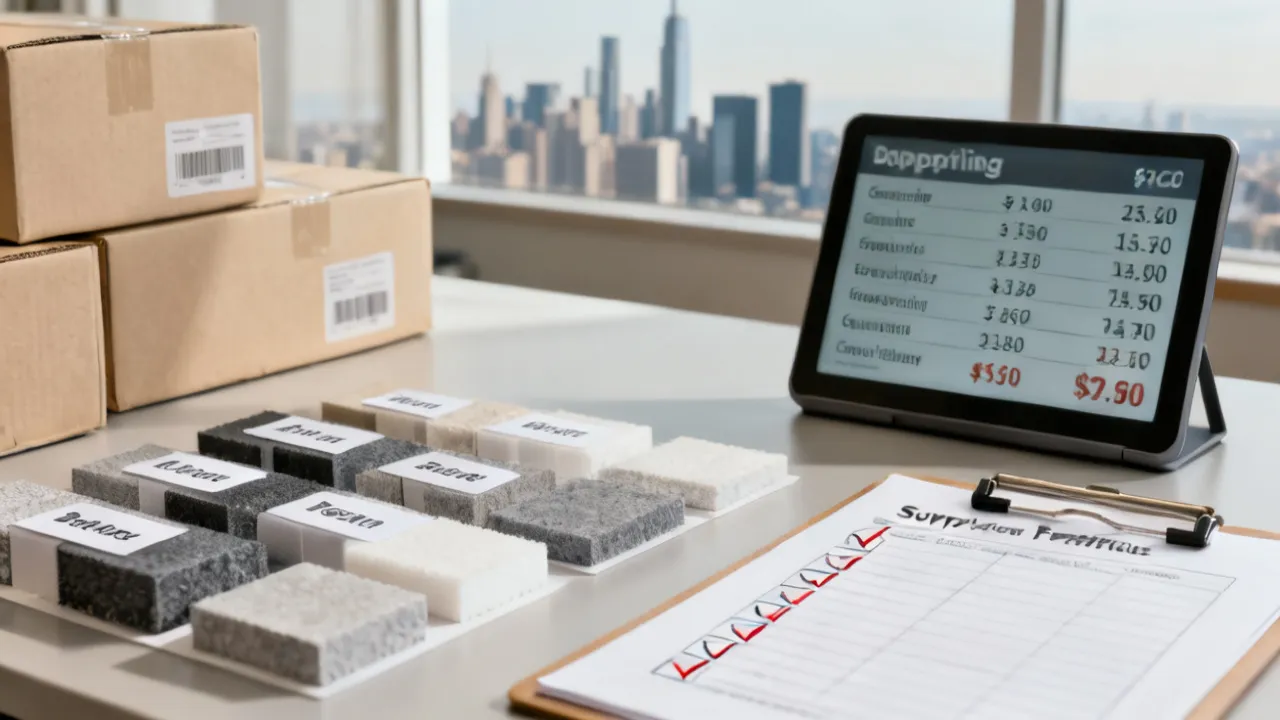
Eliene Sliva: Supplier, Pricing, and Care Guide
This guide helps you evaluate Eliene sliva by explaining how suppliers, pricing factors, and quality requirements connect to real-world outcomes. Objectively, “Eliene sliva” is best approached as a product or branded component whose value depends on documentation, traceability, and materials. You’ll also find selection steps, conditions, and FAQs to support decision-making.

Why Eliene sliva matters for smart purchasing decisions
When evaluating Eliene sliva for personal use or business procurement, the most important starting point is not advertising—it’s supplier traceability, clear pricing logic, and verifiable quality requirements. In practice, buyers get the best results when they compare sourcing documentation, packaging details, and after-sale support rather than relying on vague claims. A “smart” purchase is not simply the one with the lowest sticker price; it is the one that offers the strongest combination of identity certainty, quality consistency, practical risk reduction, and predictable total cost.
Because procurement outcomes depend on what actually arrives—not what is promised—the buyer’s job is to reduce uncertainty before payment. For Eliene sliva, uncertainty typically falls into four categories: (1) whether the product truly matches the described variant, (2) whether the product can be traced by batch/lot to specifications, (3) whether the product is shipped and handled in a way that preserves intended quality, and (4) whether the supplier can resolve issues if something goes wrong. When you evaluate those categories methodically, pricing and marketing become secondary to measurable procurement criteria.
Quick context: what “Eliene sliva” generally represents
Eliene sliva appears to function as a named product or branded item (the exact category—cosmetic, wellness, or another consumer good—can vary depending on market listings). Because the name by itself does not define ingredients, manufacturing standards, or regulatory status, objective evaluation requires confirmation through the supplier’s technical materials (e.g., specifications, batch/lot details, and compliance statements where applicable).
In many real-world purchasing situations, product names are ambiguous in listings. A single brand name can be used across multiple formulations, sizes, package types, or regulatory versions (for example, a “standard” version for one region and a “label-compliant” version for another). Even when the brand name is consistent, the “variant” can change the entire procurement profile: formulation costs, shelf-life dynamics, storage requirements, packaging design, and documentation needs may all shift. That is why a buyer should treat Eliene sliva as a label that needs specification confirmation rather than as a fully defined product in itself.
Additionally, a buyer should consider whether “Eliene sliva” is being sold as a finished product, a component, a consumable, or a bundle. For smart purchasing, the evaluation method should remain the same—confirm identity, traceability, and handling requirements—but the specific documentation you request may differ depending on the product’s nature. A cosmetic-like item will often require different labeling or compliance support than a wellness supplement; however, the underlying procurement logic remains consistent: documentation-driven confidence.
How price is usually determined for Eliene sliva
Pricing for branded consumer goods typically reflects several cost drivers. To compare offers responsibly, look for these elements inside the supplier quote—especially if you are comparing multiple vendors:
- Product formulation or component category: Different variants can change raw material costs, testing requirements, and packaging. If Eliene sliva exists in multiple versions (for example, different concentrations, ingredient mixes, or package sizes), unit cost differences often come from formulation and compliance testing differences—not just “brand margin.”
- Supply chain method: Direct sourcing from a manufacturer versus third-party distribution can affect unit pricing. Direct supply may reduce intermediary markups but may require larger minimum order quantities; distribution may simplify delivery but add cost layers.
- Compliance documentation: If the product is sold in markets with specific labeling or testing expectations, documentation costs can be part of the price. For example, a supplier that provides full compliance documentation, updated labels, and retention of batch records may charge more than a supplier that provides only generic claims.
- Packaging and shelf-life handling: Protective packaging and storage requirements can influence logistics expenses. Some products degrade with heat, light, or time; robust protective packaging and cold-chain or controlled handling may add costs that should be reflected transparently.
- Order size and fulfillment: Bulk pricing often differs from single-unit purchases, and shipping conditions can change total cost. A low unit price can be misleading if shipping is expensive, if delivery timelines are long, or if returns are restrictive.
Professional note: Without verified product specifications, quoting “a single price” for Eliene sliva can be misleading. A careful buyer uses the supplier’s breakdown—unit price, shipping, handling, expected delivery timing, and any applicable taxes or import fees—to compare like with like. Smart pricing comparisons should also include “cost of uncertainty.” If one vendor provides traceability and full documentation while another provides partial information, the second vendor’s lower price may create hidden costs: time spent resolving disputes, possible returns, lost shelf-life, or customer dissatisfaction.
In procurement practice, buyers often use a “total cost of ownership” viewpoint. For consumer goods, total cost of ownership can include: cost of inspection on arrival, cost of re-labeling (if needed), cost of storage and handling requirements, risk-adjusted probability of returns or complaints, and even the cost of downtime if a product is needed for a business workflow (such as retail replenishment or event usage). That is why the best “price” is not just the lowest number; it is the lowest defensible number.
Supplier considerations: what to verify before committing
From an industry perspective, supplier evaluation should focus on reliability and risk control. For Eliene sliva, you’ll generally want evidence that the supplier can support the product’s identity and condition through documentation and transparent processes.
Key supplier checks include:
- Traceability: Does the supplier provide batch/lot numbers or other traceability indicators? Traceability should not be a vague statement; it should be tied to shipping documents, packing lists, and batch records where applicable.
- Specification clarity: Are ingredients, materials, usage instructions, and variant information clearly stated? Clarity includes whether the supplier confirms the correct size, formulation, or packaging type for Eliene sliva.
- Storage guidance: Can the supplier explain storage conditions and handling requirements during transit? A supplier that cannot describe storage needs is a risk because transit conditions can directly impact quality.
- Returns and support: Are there defined policies for damaged goods, incorrect items, or discrepancies? Effective returns processes include response times and clear steps for resolution.
- Communication quality: Do they respond with concrete details (not only marketing language)? Buyers should be able to receive documentation, not just reassurance.
In addition to the checklist above, advanced procurement buyers often assess supplier maturity. Supplier maturity can be evidenced by the presence of standard operating procedures, consistent documentation practices, and responsiveness during pre-sale questions. If a supplier becomes vague when you request documentation (like batch/lot and specifications), that pattern often continues after purchase—particularly if you need to handle discrepancies.
Another dimension is whether the supplier offers evidence of ongoing quality control. For example, a supplier might describe how products are received, stored, and labeled internally, and how they ensure correct variant shipment. This matters because mis-picks and label mix-ups are common sources of procurement failure. You cannot always prevent these events, but you can demand controls that reduce their likelihood and improve resolution when they occur.
Quality and safety: objective requirements you can apply
Because Eliene sliva can be listed under different product contexts, the safest method is to evaluate it against universal procurement principles: documentation, consistency, and defensible standards. If the product is regulated in your market, confirm whether the supplier’s labeling aligns with local expectations.
Quality evaluation should begin before delivery, but it should not end there. Even with documentation, the buyer should plan for verification upon arrival (for example, checking packaging integrity, verifying batch/lot numbers match what was promised, and ensuring the delivered variant corresponds to the purchase order). A high-quality supplier makes it easy for a buyer to confirm what was shipped.
Where relevant to your category, ask about:
- Label accuracy: Names, net quantity, usage direction, and any warnings are consistent and legible. Label accuracy is not only about compliance; it is also about correct user experience and safe use.
- Batch consistency: Evidence that a batch can be tied back to specifications. Batch consistency is crucial if quality claims depend on formulation integrity or if performance is expected to be stable across time.
- Testing or compliance evidence: Certificates or test summaries where appropriate to the product type. The goal is not to overload the supplier with requests, but to ensure the supplier can substantiate claims relevant to your market.
- Allergen or sensitivity disclosures: Especially if the product could contact skin or involve ingestion (category dependent). For consumer safety, a buyer must ensure disclosures match the actual formulation.
Smart buyers also consider “quality stability” rather than only “quality at time of manufacture.” Quality stability depends on shelf life, storage temperature, light exposure, moisture control, and packaging barrier performance. If Eliene sliva is sensitive to such factors, the supplier’s shipping method and handling procedures become part of quality.
For businesses, you may also need internal quality gates. For example, you might require a receiving checklist: verifying that units are sealed, checking printed batch/lot codes, confirming expiry or best-before dates, and ensuring the packaging matches the purchase order. Those receiving steps reduce downstream returns and customer complaints.
Localization note: “nearby” purchasing behavior
Your prompt indicates location handling such that any city/country references should be replaced with “nearby.” That matters because purchasing decisions in a local or “nearby” context often hinge on shipping speed, return convenience, and language support. In many markets, “nearby” suppliers can reduce waiting time and simplify returns—but you should still verify documentation, not only convenience.
“Nearby” procurement has specific advantages and specific blind spots. Advantages include shorter lead times, easier coordination for replacements, and sometimes simpler customs or shipping processes (depending on whether “nearby” still involves cross-border movement). Blind spots include complacency: buyers may assume that shorter logistics implies lower risk, even if documentation quality remains weak.
In practice, the best approach is to treat “nearby” as a logistics variable—not as a quality guarantee. Ask for the same documentation you would ask for from any supplier: variant identification, batch/lot traceability, specification sheets, and an agreed returns process. If the supplier cannot provide those items, proximity alone does not fix procurement risk.
Another nuance: “nearby” suppliers may repackage or re-label products depending on distribution rules. If repackaging occurs, you must confirm what exactly changed: Was the product opened? Was the label replaced? Does the batch/lot information remain traceable and consistent? A buyer should ask whether Eliene sliva is shipped in original packaging with original batch labeling, or whether the supplier handles repackaging at any stage.
Comparison table: supplier and procurement options (no links)
| Option | Best for | What to request from the supplier | Typical risk level |
|---|---|---|---|
| Manufacturer-direct sourcing (if available) | Standardized products and repeat procurement | Batch/lot traceability, product specifications, compliance/labeling statements | Lower (when documentation is complete) |
| Authorized distributor | Balanced pricing and local support | Proof of authorization, storage/handling process, return policy clarity | Medium to lower |
| Third-party marketplace listing | Trial purchases or one-off needs | Full ingredient/material listing, clear variant identification, seller history and guarantees | Higher (verify authenticity and documentation) |
| “Nearby” regional reseller | Fast delivery and easier returns | Receipt/invoice, batch details, storage condition confirmation | Medium (documentation still matters) |
To make this table actionable, consider how risk level translates into purchasing behavior. For example, with higher-risk channels (like third-party marketplace listings), you might require a smaller initial order, demand stronger documentation, and set up stricter receiving checks. For lower-risk channels (manufacturer-direct or authorized distributors), you can typically plan for repeat purchasing, long-term inventory management, and smoother compliance alignment—assuming the documentation remains consistent across batches.
Another decision factor is whether you need regulatory-grade documentation. If your business is subject to audits, you may need evidence not only of what was shipped but of how it was controlled. A distributor channel might provide better continuity than a one-off marketplace listing. If you only need personal use, your tolerance for risk may be different; however, even personal purchasers benefit from traceability and correct variant identity, especially if the product has safety or allergy considerations.
Step-by-step guide to evaluate Eliene sliva
Use this practical workflow to move from interest to a defensible decision.
Step 1: Define the exact variant you mean
“Eliene sliva” should be treated like a label that could represent more than one offering. Confirm the exact variant name, size, and usage instructions with the supplier. If multiple versions exist, document them before comparing prices.
This step prevents one of the most common procurement errors: comparing “similar” items that are actually different. Two listings can both contain the phrase “Eliene sliva” but differ in concentration, packaging volume, scent profile, ingredient set, or target use case. To avoid this, ask for a product code (SKU), net quantity, and any variant-specific description. If the supplier provides a specification sheet that clearly references the variant, that becomes your anchor document for all later comparisons.
Step 2: Request written specifications
Ask for a specification sheet or equivalent document describing what the product is, what it contains, and how it should be used. A reliable supplier can usually provide this without delay.
Written specifications reduce misunderstandings and create a baseline for quality verification. For some categories, specifications may include ingredient lists, material composition, usage directions, warnings, and storage conditions. For other categories, specifications may include physical characteristics, performance claims, or functional requirements. Even if the buyer ultimately relies on label information, a specification sheet can clarify whether the label is consistent with the documented product identity.
When you request specifications, also ask how current they are. A specification sheet that is outdated can misrepresent ingredient lists or label warnings. If the supplier provides “latest revision dates,” that signals better document control.
Step 3: Verify traceability materials
Request information about batch/lot numbering and how it ties to packaging. If a supplier can’t confirm traceability, consider it a procurement risk.
Traceability is more than a “nice-to-have.” In quality management and recall scenarios, traceability determines whether you can isolate affected inventory quickly. In everyday purchasing scenarios, traceability also helps resolve disputes about damaged goods or incorrect variants: you can prove what batch you received and compare it with what was shipped.
Ask questions such as: Where do you find batch/lot numbers on the product? Are they printed on the outer carton, on the individual unit, or both? Will the batch/lot appear on your invoice or packing list? Will batch/lot values match what is stated in shipping documents? A supplier that has answers to these questions typically has more mature operational controls.
Step 4: Compare total cost, not only unit price
When quotes differ, compare the full landed cost: unit price, shipping, handling, expected delivery timing, and any applicable taxes or fees. If the supplier mentions storage-sensitive handling, ensure it’s included in the shipping conditions.
Landed cost comparison is one of the highest-return procurement skills. It prevents “false bargains.” For example, a quote with a lower unit price may include fewer protective packaging materials, or may ship without the storage handling needed for quality stability. Alternatively, the quote may not include taxes or import fees that you later must pay.
A smart comparison includes:
- Unit price: Confirm which unit is being priced (per bottle, per pack, per set).
- Packaging price: If protective packaging increases cost, ensure you know it is included.
- Shipping conditions: Confirm whether shipping methods are appropriate for the product’s storage sensitivity.
- Delivery lead time: If you need inventory by a certain deadline, lead time has a cost.
- Insurance: Some suppliers include shipment insurance; others require you to arrange it.
- Taxes/fees: Confirm what is included in the quoted total.
Step 5: Evaluate packaging integrity and shelf-life handling
Ask about how items are packed, whether seals are used (when applicable), and how shelf-life expectations are managed during transit. If the product is sensitive to temperature or light, confirm handling procedures.
Packaging integrity is a practical indicator of supplier discipline. A supplier that packs well reduces the chance of leakage, breakage, and compromised labeling. If Eliene sliva is intended for personal use where appearance and seal integrity matter, packaging controls also affect user confidence.
Shelf-life handling includes:
- Expiry/best-before dates: What is the remaining shelf life at dispatch?
- Rotation policy: Does the supplier use FIFO (first-in, first-out) or an equivalent method?
- Temperature/light controls: Are there recommendations or requirements for transit conditions?
- Protection during shipping: Are units protected from crushing, moisture, or direct light exposure?
Even if your region is “nearby,” transit still takes time and involves handling. Products can be exposed to temperature fluctuations. Buyers should not ignore shelf-life handling simply because delivery is faster.
Step 6: Assess returns, discrepancies, and customer support
Before ordering, read (or ask for) the returns policy and discrepancy handling steps. For instance, if the delivered item differs from the ordered Eliene sliva variant, you need a clear resolution path.
A well-defined returns process typically includes:
- Time window: How long do you have to report issues?
- Evidence requirements: Do you need photos, lot codes, packaging evidence, or shipping documents?
- Resolution options: Replacement, refund, partial refund, or store credit.
- Return shipping responsibilities: Who pays return shipping?
- Escalation path: How quickly does the supplier respond to claims?
In smart purchasing, you should assume the possibility of errors and verify that the supplier has a practical solution. This reduces operational stress and prevents you from being stuck if a problem occurs.
Step 7: Make a controlled first purchase
For new suppliers or uncertain categories, start with a small quantity. This approach reduces risk and gives you a real-world basis for evaluating quality and consistency.
A controlled first order also tests the supplier’s operational reliability. It verifies whether the supplier can deliver the exact variant, whether batch/lot information is correct, and whether packaging arrives intact. After receiving the first order, you can decide whether to proceed to larger volumes with confidence.
As an additional safeguard, document your receiving checks: photograph packaging, record batch/lot numbers, confirm expiry date alignment (if disclosed), and verify the label matches the variant description provided earlier. Those records become valuable if you need to resolve discrepancies.
Conditions and requirements (what you should insist on)
To keep decisions objective, use the following conditions as a minimum standard when purchasing Eliene sliva.
- Documented product identity: The supplier must clearly state the exact product/variant. Identity should include SKU, net quantity, and any variant-specific descriptor.
- Clear usage guidance: Instructions should be understandable and consistent with the product type. If the product requires specific usage patterns, confirm the guidance is correct for the variant.
- Traceability information: Batch/lot or an equivalent identifier should be available. The supplier should confirm where the batch/lot appears and how it is recorded in documents.
- Transparent pricing components: Unit cost plus shipping/handling/fees must be explainable. If any item is optional (like insurance), ensure you know it upfront.
- Accountable after-sale process: Returns policy or discrepancy resolution should be defined. You should be able to follow steps to get a replacement or refund.
- Compliance alignment: If your market requires specific labeling/testing evidence, the supplier should provide relevant documentation. If documentation cannot be provided, you should assess whether purchasing is acceptable given your risk tolerance.
To operationalize these requirements, buyers often convert them into an internal checklist. For example, procurement staff might create a “gate” that must pass before approval: documentation received, variant confirmed, batch/lot traceability expected, and returns policy reviewed. Even for individuals, a simplified checklist works: ask the supplier the key questions, confirm their responses in writing, and verify the delivered product matches.
Industry expert perspective: how to avoid common purchasing mistakes
Professionals in procurement and quality roles commonly see repeat issues with branded consumer goods. The most frequent problems are avoidable:
- Comparing mismatched variants: Different sizes or formulations can appear similar, but they behave differently. A buyer should confirm variant name, size, and key label descriptors before committing.
- Over-focusing on price: A lower unit price can be offset by higher shipping, shorter shelf life, or weaker support. The “cheapest” quote is not always the cheapest outcome.
- Skipping documentation: When ingredient/material details or traceability aren’t clear, it becomes difficult to resolve disputes. Buyers should secure documentation before purchase.
- Assuming “nearby” equals “reliable”: Local convenience may help logistics, but it does not replace supplier verification. Proximity is a delivery advantage, not a quality guarantee.
Another common mistake involves timing and decision pressure. Buyers may feel urgency and accept incomplete answers quickly. Smart purchasing slows the decision just enough to verify the critical items. In many cases, suppliers can provide the requested documentation once the buyer asks in a structured way. If they cannot, that inability is itself a signal of risk.
Also, buyers sometimes rely too heavily on reviews or testimonials. Reviews can be helpful for a first impression, but they do not replace supplier documentation, batch traceability, or quality verification. Reviews describe user experiences; procurement requires evidence. A buyer should combine both but keep evidence as the primary decision driver.
Finally, buyers sometimes forget internal processes. For business purchases, if staff are not trained to check batch/lot numbers or variant identifiers, discrepancies can slip through and become harder to resolve later. A smart purchasing approach includes planning for receiving and inspection, not only selecting a supplier.
What to include in your supplier request message
Copy and adapt this checklist when contacting suppliers about Eliene sliva. A good response usually includes more than a sales pitch.
- Exact variant name and size
- Ingredients/material composition (as applicable to category)
- Batch/lot traceability details
- Packaging type and any protective measures
- Shipping conditions (including temperature/light considerations if relevant)
- Total pricing breakdown (unit price, shipping, handling, fees)
- Returns/discrepancy policy
- Estimated delivery timeline for “nearby” regions and beyond
To increase the chance of a precise supplier response, structure your message as a request for documents and for specific confirmations. For example, ask for a specification sheet revision date, ask where batch/lot numbers appear, and ask whether the delivered product will match the requested variant exactly. Suppliers that operate with discipline will often respond with a clear document set.
If you are purchasing for a business, also ask whether they can provide invoice details that align with procurement needs (like purchase order references, tax documentation, and shipping documents). If you need documentation for audits, mention the type of records you require (e.g., batch records, compliance statements, or label compliance documentation).
FAQs about Eliene sliva
1) What exactly is “Eliene sliva”?
Eliene sliva is a named product offering, but its category may differ depending on listings. To determine what it is in your context, confirm the variant name, size, and specification sheet from the supplier. If listings are inconsistent, ask the supplier for the SKU or product code that uniquely identifies the exact variant.
2) How should I compare pricing for Eliene sliva?
Compare total landed cost rather than unit price alone. Request a breakdown covering unit price, shipping, handling, and any taxes or fees. Also compare shelf-life expectations and packaging integrity if those are mentioned in the quote. If one supplier offers longer remaining shelf-life, that can be a real cost driver and a value indicator.
3) What supplier details should I require?
Require traceability (batch/lot information), product specifications, clear labeling/usage guidance, and a stated returns or discrepancy resolution process. If applicable, request compliance-related documents relevant to your market and product category.
4) Is it safer to buy from a “nearby” reseller?
“Nearby” resellers can reduce delivery time and simplify returns, which may be practical advantages. However, reliability still depends on documentation, traceability, and whether the reseller can provide accurate product identity and handling information. Proximity helps logistics, not necessarily quality control.
5) What if the supplier cannot provide documentation?
If Eliene sliva documentation is missing or inconsistent—especially traceability and product specifications—it increases procurement risk. In professional procurement practice, this is a common reason to pause and request additional evidence before paying. If they cannot provide documentation, you should consider whether your acceptable risk threshold allows proceeding, particularly if the product has safety implications.
6) Are there regulatory or compliance requirements to consider?
Compliance requirements depend on your market and the product category. If your region requires specific labeling or testing evidence, ask the supplier how they comply and request the relevant documentation. If the supplier cannot explain compliance in a structured way, treat it as a signal to reassess procurement.
7) How can I reduce the risk with my first order?
Place a controlled first order (small quantity), verify that the delivered packaging matches the specified variant, confirm batch/lot information, and evaluate whether the product arrives under the stated storage conditions. If possible, check the label content and warnings against the supplier’s specification sheet. Keep receiving evidence (photos, batch codes, and shipping documents) for dispute prevention.
8) How do I handle damaged or incorrect deliveries?
Use the supplier’s discrepancy process: document the issue with photos, keep packaging evidence, and request replacement or refund according to the returns policy. A supplier with a clear process should respond quickly. To speed resolution, include batch/lot numbers, invoice references, and a concise description of what is wrong (e.g., wrong variant size, damaged seal, or missing label information).
9) What should I check when the product arrives?
Even with documentation, you should do a receiving check: confirm you received the exact Eliene sliva variant and size, verify batch/lot numbers match the shipping documents, inspect packaging for seal integrity and damage, confirm any expiry/best-before date status (as applicable), and verify label clarity (readable warnings, net quantity, and instructions). For business buyers, record these checks internally.
10) Can I rely on photos or sample images from suppliers?
Photos can help you understand how the product is presented, but you should not rely on them as proof of traceability or correct batch identity. For smart procurement, the deciding factors are the specification sheet, batch/lot information, packaging integrity on arrival, and the supplier’s ability to resolve issues through documented processes.
Conclusion: a decision framework you can trust
Evaluating Eliene sliva becomes straightforward when you treat the purchase as a documentation-driven process. Prioritize supplier traceability, compare total costs with consistent variants, and require clear quality and labeling requirements. By following the step-by-step guide and the conditions listed above, you can make a procurement choice that aligns with professional risk management and objective criteria.
Smart purchasing ultimately means you can answer, with evidence, three core questions: (1) What exactly did we buy (variant identity)? (2) Can we trace it to its batch and specifications (traceability and documentation)? (3) If there is a problem, can we resolve it efficiently (returns/discrepancy process)? If those questions are answered confidently for Eliene sliva, you are positioned to purchase with clarity rather than guesswork.
Sources (for objective procurement context)
For general procurement and product traceability concepts, consult established guidance from recognized standard bodies such as the ISO framework for quality management (ISO 9001) and supply-chain risk practices. For consumer product regulatory context, refer to your local government authority and the relevant official product safety or labeling guidance in your jurisdiction.
-

A Guide to Cost-Efficient Small Electric Cars for Seniors
-
Mastering Debt Consolidation: Boost Your Credit Score and Manage Interest Rates
-
Your Guide to Loans, Credit Checks, and Interest Rates
-
Affordable Independent Living: Finding the Right Senior Housing
-
Guide to Senior Living Apartments: Affordable and Comfortable Environments