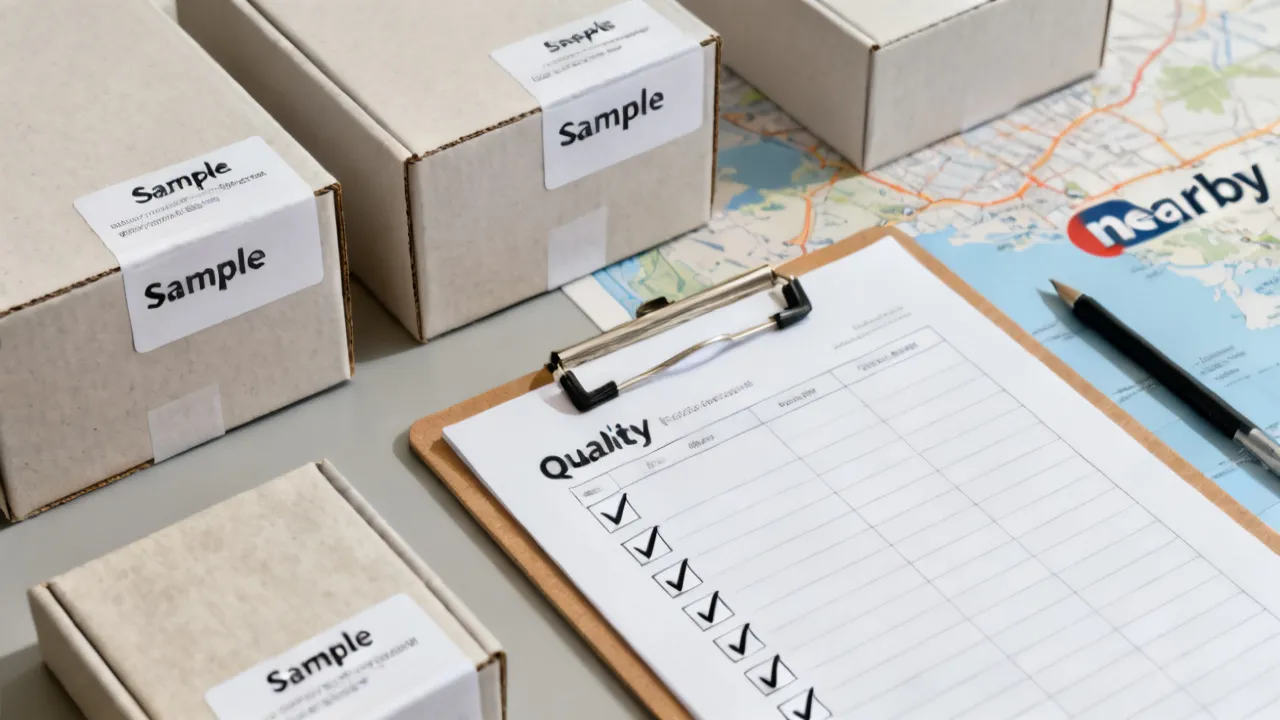
Zz Sourcing Guide: Keywords, Supplier, Pricing, Steps
This guide explains how to interpret the “Zz” keyword set for sourcing decisions, aligning supplier fit and realistic pricing. Objectively, it discusses what keyword-driven procurement usually means, why supplier documentation matters, and how to structure comparisons using clear conditions and requirements. The focus remains practical, compliant, and decision-oriented.
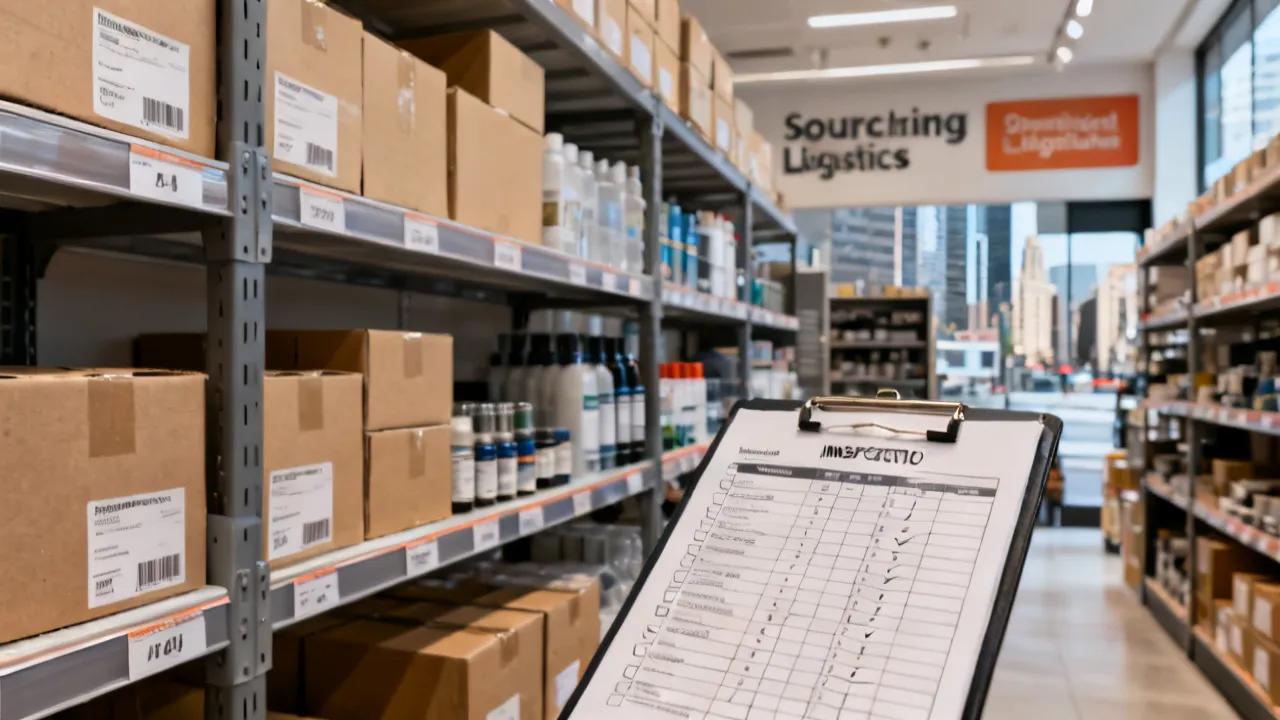
Key sourcing outcomes using “Zz” keyword intent
If you are evaluating suppliers and price options tied to the “Zz” keyword set, the most important starting point is to translate those keywords into procurement-relevant requirements—specification clarity, supplier capability, documentation quality, and verifiable cost components. In other words, you should not treat “Zz” (and the accompanying empty placeholders in the keyword field) as standalone information; you should treat them as search intent that must be matched against what the supplier can actually deliver.
From an industry expert perspective, successful sourcing projects tend to look the same across categories: buyers convert ambiguous search terms into measurable criteria, request evidence early (quality systems, lead-time history, material traceability where relevant), and separate “unit price” from the total delivered cost. That disciplined structure reduces the risk of paying for marketing phrasing rather than procurement value.
In practical terms, “Zz” should function like a pointer in an information system: it tells you what to ask about, not what to assume. When procurement teams handle these keyword-driven requests consistently, the sourcing effort becomes auditable. When they do not, sourcing decisions become fragile—subject to re-interpretation by different stakeholders and prone to disputes at receiving, during quality review, or later during warranty/support.
Why keyword sets like “Zz” often need objective interpretation
Keywords function as a bridge between what buyers are trying to find and what suppliers describe in their marketing or product catalogs. When your input keywords include placeholders (for example, empty quoted strings or whitespace entries), it usually indicates incomplete metadata or a partially specified product scope. In procurement workflows, that condition should trigger a clarification step—not rushed ordering.
Objectively, “Zz” can represent any number of concepts depending on your industry context: a model identifier, an internal SKU prefix, a short brand code, a shorthand term used in local catalogs, or even a typo that repeatedly appears in listings. Because the keyword itself is not enough to guarantee meaning, the buyer must verify it through supplier documentation and item-level identifiers (part numbers, drawings, datasheets, batch/lot references, and test reports where applicable).
To keep comparisons fair, buyers should focus on verifiable attributes: compatibility requirements, allowable tolerances, compliance statements, packaging standards, warranty terms, and measurable service-level commitments. The goal is not to “match wording”; it is to match functional outcomes. If the supplier cannot translate “Zz” into concrete product or service specifications, you should treat the quote as incomplete.
Another common issue is that keyword intent can drift over time. A supplier’s catalog might update a revision code while the marketing page still shows the older keyword, or the supplier might replace an obsolete SKU and keep the old label for SEO. That is why procurement teams often require the specification revision level (and sometimes the effective date) to be explicitly included in the quote and in the delivered documents.
Pricing: what “price information” should include in a reliable sourcing review
When you see “price information” referenced alongside a keyword-driven search, industry practice is to decompose cost into predictable components before comparing suppliers. A robust evaluation typically includes:
- Unit price tied to a specific part number or specification revision.
- Packaging and labeling costs (particularly if the end-use requires traceability or compliance labeling).
- Logistics and handling (incoterms, shipping method, insurance, and whether freight is included).
- Lead time and any expedition fees.
- Quality assurance costs (inspection certificates, sampling plans, or required tests).
- Payment terms that can affect effective cost (for example, net terms vs. prepayment).
This decomposition matters because “cheaper” unit pricing can become more expensive once handling, compliance documents, or delayed delivery are included. A disciplined buyer will calculate an effective total cost that reflects not only the sticker price but also the procurement risk and operational burden.
To make that practical, teams often separate pricing into three layers:
- Commercial layer: unit and line-item pricing, packaging, documentation fees, and any volume or tiered discounts.
- Delivery layer: freight charge, insurance, incoterms, duties/taxes handling, and any warehouse processing fees.
- Performance layer: costs associated with schedule risk (expedites, demurrage exposure, penalties or fees, and any agreed remedies).
Even if your procurement tools do not automatically compute these, you can require suppliers to provide the input data so you can calculate the effective comparison yourself. For reliability, buyers should also ask for a price validity window and confirm whether the quote is firm or contingent on quantity and specification.
Consider the following example scenario: Supplier A offers a lower unit price for “Zz” but excludes the required certificate of conformity and ships without traceable batch labeling. Supplier B’s unit price is higher but includes all documentation and traceability. If receiving rejects Supplier A’s delivery due to missing paperwork, the “savings” quickly disappears due to holding costs, downtime, and re-order labor. A total-cost comparison protects you against that outcome.
Another pricing nuance is currency, taxes, and duty responsibility. Many procurement disputes happen because the buyer assumed duties were included while the supplier assumed they were the buyer’s responsibility. For “nearby” sourcing, the assumption might be “simpler customs handling,” but you still need clarity on who pays what and who files which forms.
Supplier details: the documentation layer that separates trust from marketing
When sourcing using “Zz” intent, supplier details should be assessed beyond branding. In professional procurement, supplier evaluation commonly emphasizes:
- Quality management (auditable systems such as ISO 9001 or equivalent process controls, when applicable to your category).
- Traceability (batch/lot tracking, material certificates, or calibration records if measurement is relevant).
- Production capability (capacity, staffing model, and capability to meet lead-time targets).
- Consistency (history of similar orders, defect/returns process, and documented corrective actions).
- Communication discipline (responsiveness, clarity of quotes, and willingness to provide item-level evidence).
Instead of taking supplier statements at face value, request specific artifacts—datasheets, test reports, dimensional drawings, compliance declarations, and a sample invoice or quotation structure. If any of those elements cannot be provided, treat that as a risk signal and adjust your contracting conditions accordingly.
In many procurement categories, “documentation quality” matters as much as “documentation existence.” For example, a certificate of conformity might be present but not actually linked to the batch or production run delivered. That can look compliant at a glance while failing internal traceability audits. Therefore, documentation should be evaluated in terms of:
- Traceability linkage: does the certificate reference lot numbers, serial numbers, heat numbers, or production batch references matching your order?
- Specification alignment: does the document explicitly state the governing standard or specification revision?
- Completeness: does it include the required test parameters, ranges, sampling approach, and pass/fail criteria?
- Timeliness: can the documents be provided at shipment or are they only promised later?
- Acceptability: are your internal stakeholders willing to accept the supplier’s certification style, or do you require your own template?
Procurement teams also evaluate supplier evidence for consistency across time. A supplier who provides a strong datasheet but inconsistent quote line-item descriptions may indicate either catalog drift or uncertainty about what is being sold under the “Zz” label. That is why an evidence chain (catalog → quote → packing list → certificate → label) is often required.
Location handling: “nearby” phrasing and procurement reality
Your instruction references a replacement rule: whenever a keyword includes “{city}” or “{country},” replace it with “nearby.” Since the provided keyword field does not include explicit city/country tokens, this article uses the concept of nearby supplier alignment in a general sense: prioritize suppliers whose logistics routes and lead times are realistic for your replenishment cycle, including warehousing and customs handling where relevant.
In many markets, buyers prefer “nearby” suppliers not only for speed but for reduced uncertainty—fewer handoffs, clearer delivery accountability, and more predictable incident resolution if something goes wrong.
When translating “nearby” into a procurement requirement, teams should be careful not to assume that proximity automatically guarantees quality. “Nearby” can mean a short transit time, but it can also mean reliance on a local distributor that repackages or cross-batches inventory. If your traceability requirements are strict, proximity must be evaluated alongside whether the supplier can provide batch-level traceability and documentation integrity.
For example, a nearby supplier might offer fast delivery but source from multiple upstream plants. If their labeling and certificate of conformity do not map clearly to the upstream batch/lot, your compliance evidence might be weaker than expected. Conversely, a non-nearby supplier might have stronger traceability systems and better documentation discipline. So “nearby” should influence logistics and schedule risk—not replace technical verification.
Industry-aligned step-by-step sourcing workflow (with conditions and requirements)
Below is a structured workflow that treats “Zz” as keyword intent and converts it into decision-ready procurement actions. This portion also supplements the narrative with a comparison-style table, a clear source approach, and conditions/requirements.
| Evaluation Area | What to Compare | Supplier Evidence to Request | Pass/Fail Condition (Requirement) |
|---|---|---|---|
| Specification match | Whether the quoted item truly aligns with the “Zz” identifier and intended use-case | Part number confirmation, datasheets, drawings, revision level | Supplier must provide item-level identifiers and a specification match statement |
| Pricing transparency | How unit price becomes total delivered cost | Quote breakdown, shipping/incoterms, fee schedule, quote validity period | Quote must specify what is included and provide a documented cost breakdown |
| Quality and compliance | Whether outputs meet category requirements | Test reports, certificates of conformity, quality procedures relevant to your category | Certificates must be traceable to the batch/lot or production run referenced |
| Lead time reliability | Whether delivery dates are realistic for your quantity | Historical lead-time range, capacity statements, production scheduling approach | Supplier must confirm lead time for your quantity and specify remedies for delays |
| Commercial terms | Risk allocation and payment conditions | Warranty terms, returns policy, incoterms, payment schedule | Terms must be written clearly; remedies and responsibilities must be explicit |
To ensure the workflow is usable, you should implement it as a sequence of gates. Each gate produces an “approval to proceed” decision with a documented rationale.
Gate 1: Identification gate (clarify “Zz”). Before comparing suppliers, require each supplier to map “Zz” to a specific item. The supplier should provide: part number, revision, brief description, and how “Zz” relates to that mapping (for example: SKU name, internal code, product family designation).
Gate 2: Specification gate (confirm technical equivalence). Confirm that the supplier’s quoted item satisfies your category requirements. If your end-use requires compatibility (dimensions, material composition, tolerance bands, electrical ratings, chemical composition, etc.), those must be included in the documentation or addressed in a specification match statement.
Gate 3: Cost gate (total delivered cost transparency). Validate that all cost components are itemized. If the supplier includes only unit price, you must request freight, handling, documentation, and any compliance fees. The goal is to make “apples-to-apples” comparisons possible.
Gate 4: Risk gate (quality and compliance evidence). Require test reports or certificates where relevant. If your category demands formal compliance, lack of documentation should be considered a fail condition, or at least a condition that triggers restricted acceptance (for example: hold shipments pending document review).
Gate 5: Schedule gate (lead time and remedies). Confirm lead time for your quantity and clarify what happens if the supplier misses the delivery. Remedies could include expediting at supplier cost, partial shipments, credit terms, or cancel/refund options depending on your contract style.
Gate 6: Operational gate (receiving and acceptance). Ensure the delivery packaging, labeling, and documentation are consistent with your receiving capability (label formats, inspection procedures, storage requirements). A “good” supplier quote can still fail operationally if the delivered goods cannot be processed with your current systems.
Source approach (objective verification over keyword repetition)
When keyword-driven sourcing produces ambiguous signals—such as placeholders or an unclear meaning of “Zz”—professional buyers verify meaning through multiple independent sources. A practical “source ladder” usually looks like this:
- Catalog verification: Confirm the “Zz” identifier maps to a specific part number, model, or specification revision.
- Document verification: Request datasheets, drawings, and compliance statements that reference the same identifier.
- Commercial verification: Ensure invoices/quotes include the same item number and revision level.
- Quality verification: If relevant, request sample documentation or batch test reports tied to production runs.
- Operational verification: Validate packaging, labeling, and delivery procedures against your receiving capabilities.
What makes this approach “objective” is that it reduces reliance on the supplier’s verbal explanation alone. Verbal explanations are still useful, but they should be supported by artifacts. In procurement disputes, the buyer rarely wins by “trust.” The buyer wins by documented consistency.
A further refinement many teams use is the “cross-reference matrix.” Instead of simply asking for documents, they create a matrix listing the identifiers they must see across artifacts. For example:
- Part number must match across quote, packing list, and certificate.
- Revision must match across quote, datasheet revision, and documentation.
- Lot/batch number must appear on the label and in the certificate.
- Serial range (if applicable) must match delivery documents and any warranty registration forms.
This approach makes it easier to detect substitution behavior or catalog mismatches early—before the goods arrive.
Conditions and requirements you should set before committing
To keep procurement outcomes stable, set baseline requirements that suppliers must accept. In most professional sourcing engagements, you should require:
- Defined scope: a written item description with part numbers and revision levels.
- Documented quote structure: a breakdown of price components and included services.
- Quality documentation: test/certificates when your category demands it.
- Delivery commitment: confirmed lead time for your target quantity and clear delay handling.
- Change control: a policy for substitutions, revisions, or specification changes.
- Acceptance criteria: how you will inspect, test, and accept (or reject) delivered goods.
To make these requirements enforceable, they should be included in the purchase agreement and mirrored in your purchase order (PO) terms. If requirements are discussed informally but not included contractually, suppliers may deliver something “close enough” and later argue that the buyer accepted the deviation.
Below are additional requirement details that often matter when “Zz” is ambiguous:
- Substitution policy: require that no substitution occurs without written approval. Include what constitutes a substitution (different part number, different revision, different manufacturing site, different packaging, or missing traceability fields).
- Specification revision handling: require that the supplier state whether they can produce the requested revision and whether any revision changes would require re-qualification or updated documentation.
- Document delivery timing: specify when documents must be delivered (with shipment, within X days, or prior to shipment).
- Labeling requirements: specify what must appear on outer carton labels and individual item labels (part number, lot, quantity, and any compliance markers).
- Inspection right: reserve the right to inspect/test upon receipt and to require corrective action if items fail acceptance criteria.
- Warranty clarity: define warranty period, what is covered, what evidence is needed to claim, and whether replacement occurs at supplier cost.
These clauses reduce “interpretation friction” that arises when “Zz” is only a keyword. When you convert it into a defined scope and acceptance criteria, you constrain ambiguity at the contract level.
How to interpret ambiguous keyword inputs in procurement terms
Because the keyword field includes empty quoted entries and a standalone “Zz,” you should assume the keyword input may be incomplete. In practice, that means you should:
- Ask suppliers to confirm what “Zz” refers to on their side (model, SKU, category code, or marketing tag).
- Request screenshots or excerpts from product catalogs that show the identifier in context.
- Require consistent mapping across quote, packing list, and delivered labels.
This approach ensures you are not selecting an item based on search-engine ambiguity. It also protects you during audits and receiving disputes, because the traceability chain is preserved.
Procurement teams often underestimate the value of requiring item-level clarity before requesting formal pricing. If suppliers do not know which item you are buying, they might quote a default alternative under “Zz,” or they might quote multiple alternatives but without mapping them clearly to “Zz” intent. A structured clarification email can prevent this.
A useful clarification request to suppliers typically includes:
- Your target usage requirements: end-use conditions, compatibility constraints, and any governing standards.
- Mapping request: ask them to state which specific part number and revision correspond to “Zz.”
- Evidence request: request datasheet, drawing, and compliance documentation references.
- Packaging request: ask for labeling and carton/pallet marking requirements.
- Availability and lead time request: confirm lead time for the exact quantity and delivery schedule.
Even if your original query is driven by search intent, you can shape it into a procurement-ready request that results in actionable quotes.
FAQ: supplier selection, pricing, and verification for “Zz” keyword sourcing
FAQs
1) What does the “Zz” keyword usually represent in sourcing?
In many listings, “Zz” can be an internal code, model identifier, or shorthand label. However, its meaning is not guaranteed. You should confirm the identifier by matching it to part numbers, datasheets, and quote/invoice item lines.
In practice, “Zz” often appears in catalog systems as a “product family” or “short descriptor.” That means different revisions or different manufacturing variants might share the same family label. For procurement, you should treat the family label as a starting point and require the exact part number and revision to be stated in the quote.
2) Why can’t I rely on keywords alone?
Keywords are search intent, not contractual specifications. Suppliers may use different naming conventions, revisions, or marketing descriptions. Objective verification requires item-level identifiers and supporting documents.
Additionally, keywords can be influenced by search-engine optimization (SEO). A supplier might reuse a popular keyword to attract inquiries even if the product has been updated. That can create a mismatch between what the buyer thinks they asked for and what the supplier believes they are selling. Your procurement process should protect you from this.
3) How should I compare pricing fairly across suppliers?
Compare total delivered cost rather than unit price alone. Require a quote breakdown that includes freight/incoterms, packaging, documentation fees, and any quality assurance costs. Also check quote validity and payment terms.
For fair comparison, it helps to define a “standard quote template.” Provide suppliers with a template requiring each cost component. If suppliers refuse or cannot complete it, you can treat that as a sign that they may not support transparent procurement execution.
4) What supplier details are most important for risk reduction?
Prioritize quality documentation (where relevant), traceability, lead-time capability for your quantity, and clear commercial terms (warranty, returns, and delivery remedies). A supplier’s responsiveness and clarity also matter.
Responsiveness is not merely politeness; it is process maturity. A supplier that cannot respond clearly in the quoting phase might also struggle during shipment documentation, nonconformance handling, or warranty claims. Those failures are expensive.
5) What conditions should be included in a purchase agreement?
Include defined scope/specification, documented acceptance criteria, change-control rules, delivery commitments, and explicit remedies for delays or nonconformance. These reduce disputes at receiving and during downstream use.
Where your category is regulated or compliance-heavy, you may need additional clauses addressing documentation retention and the supplier’s obligation to provide records for audits. If the goods support safety-critical use, you may also require an escalation process for field issues.
6) If a supplier cannot provide test reports or certificates, is it automatically a rejection?
Not automatically, but it increases risk. The decision should be tied to category requirements. If quality documentation is mandatory for your compliance or end-use, then lack of evidence is typically a fail condition.
A common compromise is “conditional acceptance” with documented inspection plans. For example, you might allow shipment without certificates if you can perform incoming inspection and testing at your site, but you should require that the supplier supplies at least basic identification and traceability to support your verification process.
7) How does “nearby” supplier selection affect sourcing decisions?
“Nearby” suppliers often improve logistics predictability and reduce the number of handoffs. For replenishment cycles, that can lower lead-time variability and make delivery accountability clearer, especially when operational disruptions occur.
However, “nearby” should be treated as a schedule and operations benefit, not a quality substitute. Always validate that the supplier can meet traceability and documentation requirements independent of geographic proximity.
8) Can this process be used even if the keyword input is incomplete?
Yes. Incomplete or placeholder-heavy keywords should trigger clarification steps and a verification ladder (catalog → documents → commercial mapping → quality evidence → operational checks) before you commit to an order.
In some organizations, the keyword intent may map to multiple possible items. In those cases, you can request supplier “shortlists” (for example, “Zz corresponds to part numbers A, B, and C”) and then proceed through the same verification gates. The key is to avoid selecting a single supplier based on keyword similarity alone.
Practical conclusion: turn “Zz” keyword intent into measurable procurement criteria
“Zz” and the surrounding keyword set should be treated as the beginning of an inquiry, not the finish line. By separating specification verification from pricing transparency and by demanding evidence through a structured source ladder, you can compare suppliers objectively and make purchasing decisions that stand up to receiving checks, audits, and operational realities—whether sourcing from nearby partners or from broader networks.
If you share the product category you intended for “Zz” (for example: industrial component type, service category, or document category), I can tailor the verification checklist, acceptance criteria language, and the quote breakdown template to your specific use-case.
When you implement this approach consistently, you also gain secondary benefits: procurement cycle time can improve (because fewer clarifications are needed later), supplier relationships become smoother (because expectations are clear), and internal compliance becomes easier (because traceability chains are preserved). Ultimately, converting keyword intent into measurable criteria is what transforms sourcing from “search and hope” into “engineered purchasing.”
To make the transformation complete, consider creating internal “Zz mapping rules” for your organization. These rules can define what you will accept as a valid mapping and how you will handle each type of ambiguity. For example:
- If “Zz” maps to a family name, you require the exact part number and revision.
- If “Zz” maps to a marketing descriptor, you require a cross-reference to engineering identifiers.
- If “Zz” maps to an internal SKU, you require the supplier’s public-facing part number or drawing reference (if different) to avoid future confusion.
- If “Zz” appears with multiple matches, you require supplier quotes for each candidate with clear differentiation.
Those internal rules help procurement teams respond quickly and consistently to future sourcing requests that contain similar placeholder or ambiguous keyword patterns. Over time, your organization develops a repeatable method, which reduces both operational risk and cognitive load for buyers.
Finally, remember that good procurement documentation is a form of operational reliability. When the supplier delivers exactly what you asked for—spelled out in scope, supported by evidence, and priced with clarity—receiving becomes faster, inspection becomes less controversial, and subsequent usage in the supply chain becomes more stable. That is the real outcome behind every “keyword-driven” sourcing exercise, including those initiated with “Zz.”
-

A Guide to Cost-Efficient Small Electric Cars for Seniors
-
Mastering Debt Consolidation: Boost Your Credit Score and Manage Interest Rates
-
Your Guide to Loans, Credit Checks, and Interest Rates
-
Affordable Independent Living: Finding the Right Senior Housing
-
Guide to Senior Living Apartments: Affordable and Comfortable Environments