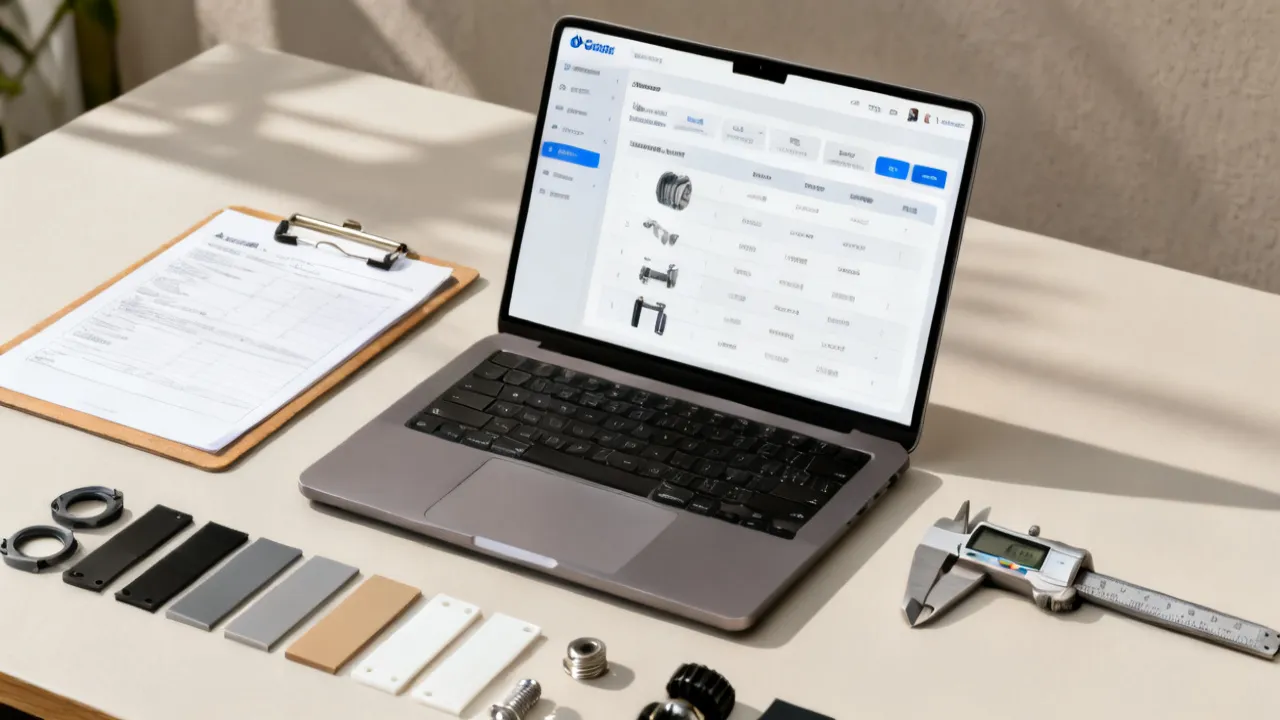
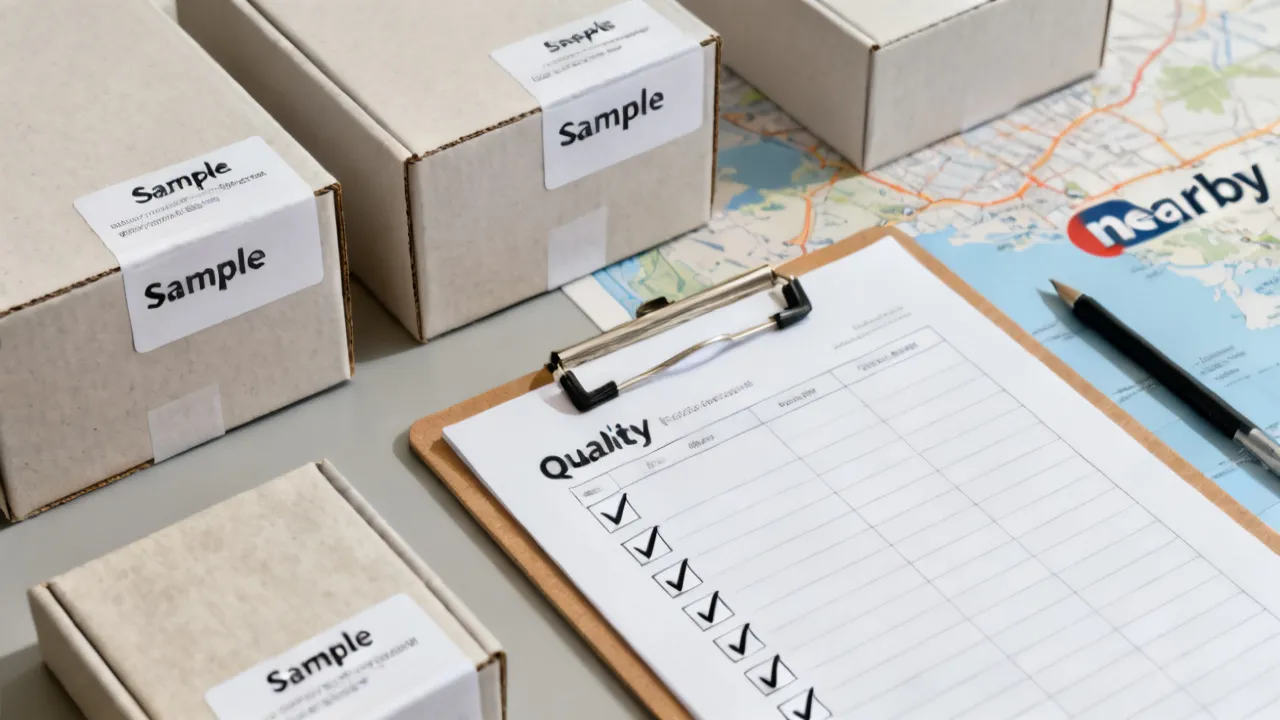
Understanding 57587795987: Procurement Insights and Fit
This guide examines 57587795987 within procurement and sourcing workflows, explaining how identifiers, supplier details, and pricing typically interrelate in real purchases. It provides objective background on what such keywords often represent, common due-diligence steps, and practical conditions to verify before placing orders, with an expert, risk-aware approach.

Why “57587795987” Matters in Sourcing and Procurement
In many procurement contexts, the string 57587795987 functions as an internal identifier—commonly used to track a product line, invoice reference, stock-keeping record, internal administrative code, or a supplier communication handle tied to a specific offer or fulfillment record. In practice, procurement professionals rarely evaluate “a number” on its own. Instead, they treat an identifier as a pointer into a broader information system that should connect the commercial offer to a technical object (the thing you’re actually receiving) and the contractual terms (the obligations you can enforce).
This guide helps you interpret that kind of identifier in a structured way, so you can evaluate supplier details and price information more reliably, reduce ordering mistakes, and build a defensible paper trail. Instead of assuming the identifier fully explains what you’re buying, the goal is to transform the identifier into a confident purchase by verifying what the code maps to, how the pricing is structured, and how the supplier will document and deliver.
Alongside the identifier, the other provided keywords (shown as empty placeholders in the prompt) appear intended to represent additional sourcing terms—such as catalog labels, procurement categories, product descriptors, commodity codes, or request-line attributes. Because the actual keyword strings are not present, the article focuses on how procurement teams normally use identifiers like 57587795987, and how they verify “what you’re really buying” before committing budget.
Immediate Checklist: What to Validate First (Very Critical)
When you encounter an identifier like 57587795987, treat it as a pointer—not as proof of product quality, compatibility, or final cost. The first questions should be the ones that stop misorders at the earliest stage. Many procurement failures happen because teams compare price numbers without confirming what the identifier actually refers to.
To avoid those failures, begin with a disciplined checklist:
- What system is it from? Determine whether 57587795987 is an internal SKU, supplier reference, invoice number, quotation line identifier, customs/logistics code, or an ERP procurement record ID. The “system of origin” matters because it often determines the rules for mapping, revisions, and data governance.
- What exact item does it map to? Confirm product specifications, compatibility requirements, unit of measure, and any variant (model, grade, size, material class, certification scope, or revision level). A numeric code can sometimes be reused across similar items if supplier systems are not tightly controlled.
- How is the price structured? Verify whether the supplier’s quoted price is unit price vs. total price, currency, taxes, shipping terms, and any escalation clauses (e.g., material index-based adjustments, surcharge terms, or fuel/transport adjustments).
- Which supplier details apply? Confirm the legal entity name, warehouse/fulfillment location, lead time, return policy, warranty/guarantees, and the applicable Incoterms or equivalent delivery terms. Supplier identity is crucial for enforceability.
- What documentation is available? Look for quotations, purchase order terms, certificates of conformity, test reports, packing lists, and contact authorizations (e.g., who has authority to bind the supplier contractually).
This early verification is where mature procurement organizations outperform ad hoc purchasing. It prevents you from paying for the wrong variant under the same identifier, or paying the right variant but under unfavorable terms you didn’t realize were included or excluded.
Industry-Expert Context: How Identifiers Connect to Real Purchases
From an operations and sourcing perspective, identifiers such as 57587795987 sit at the boundary between commercial systems and physical goods. In practice, procurement teams must bridge three layers:
- Commercial Layer: Supplier catalogs, quotations, invoices, credit notes, internal ERP records, and the commercial text in emails/attachments.
- Technical Layer: Specifications, tolerances, compatibility requirements, packaging requirements, and any compliance or certification claims relevant to your end use.
- Operational Layer: Lead times, order cutoffs, shipping methods, acceptance criteria, receiving workflows, and documentation handoffs.
If any one layer is misaligned—e.g., the identifier is correct but the specification differs—then the “price information” can become misleading. Even a “correct” identifier can sometimes represent a revision range or an umbrella code used by suppliers for multiple packaging formats or grades.
Therefore, procurement teams should always treat an identifier as a hypothesis that must be confirmed against (1) technical requirements and (2) contractual terms. That confirmation is what turns an identifier into a defensible purchase decision.
Interpreting “Price Information” Without Assumptions
When teams say “the price is known,” it often means only the quoted unit cost. However, mature sourcing practice distinguishes several cost components and contract constraints. The identifier 57587795987 may point to the unit being quoted, but it usually does not automatically communicate the full landed cost.
To interpret “price information” responsibly, consider the following components and how they interact:
- Unit price: The per-unit amount for the item tied to 57587795987. Confirm whether “unit” means each, meter, kilogram, box, reel, roll, or pallet.
- Quantity breaks: Price can change at different order volumes due to supplier economies of scale or production scheduling.
- Taxes and duties: These vary by jurisdiction, classification accuracy, and whether documentation is complete. A small documentation error can lead to delays or misclassification penalties.
- Shipping terms: Responsibilities depend on Incoterms-style arrangements (freight paid by whom, insurance coverage, and delivery location/port requirements).
- Handling and packaging: Especially relevant for fragile, hazardous, or regulated goods. Packaging costs can be substantial and sometimes included or excluded depending on the quote.
To avoid budget surprises, procurement professionals commonly compare landed cost assumptions rather than headline unit prices. Landed cost typically includes: item cost, freight, insurance (where applicable), warehousing/handling, taxes/duties (if known), and any required documentation processing fees.
Procurement teams also reduce pricing ambiguity by requiring suppliers to itemize charges in a standardized quote format. When that standardization is in place, a numeric identifier like 57587795987 becomes a reliable “join key” between systems: the ERP line item, the technical record, and the supplier invoice line.
Supplier Details: What “Good” Looks Like in Due Diligence
Supplier evaluation is not only about whether a vendor can quote quickly. It is about whether the supplier can deliver consistently, document shipments correctly, and stand behind the product terms that procurement teams need to enforce. An identifier such as 57587795987 is only as useful as the supplier’s data quality and documentation discipline.
When verifying supplier details related to 57587795987, procurement teams commonly evaluate:
- Traceability: Can the supplier link the identifier to a production batch, lot, revision, or manufacturing date? In quality-heavy environments, traceability is mandatory for recalls and investigations.
- Order fulfillment capability: Are lead times realistic and do they match your acceptance window? Do they have capacity constraints that might impact delivery?
- Documentation completeness: Are invoices, packing lists, and quality statements provided promptly and in a format you can ingest into your systems?
- Contract alignment: Does the supplier quote match your purchase order terms (returns, defect handling, warranty, indemnification, and service levels)?
- Responsiveness: If something doesn’t match the identifier-to-spec mapping, how quickly can they correct it? Responsiveness is often the difference between a recoverable mismatch and a long dispute.
These points reflect mainstream procurement governance practices used across manufacturing, healthcare supply chains, and regulated industries. They also support internal controls, especially where audit requirements apply.
Where Procurement Teams Often Get Confused
The following are common failure modes when handling identifiers like 57587795987. These patterns show up repeatedly across industries because they stem from data and process gaps rather than any single supplier’s behavior.
- SKU/Reference mismatch: The identifier matches a record, but the technical specification does not (e.g., wrong material grade, wrong tolerance range, wrong certification package). This may occur when suppliers reuse codes or when internal catalogs are out of date.
- Revision drift: A supplier updates packaging, materials, or labeling but keeps an older reference number in communications. The identifier stays the same while the underlying product changes.
- Pricing ambiguity: The quote includes shipping in one scenario but excludes it in another, or the quote mixes currency/currency base terms. Without itemization, “price information” becomes hard to defend.
- Unit confusion: “Per box” vs. “per unit,” or measurement differences that inflate the real cost. For example, two suppliers can quote the “same” identifier but define the unit differently.
- Missing terms: No written return policy or defect procedure. This makes disputes harder because acceptance and remediation rules were never firmly agreed.
Any of these can create a gap between what your team expected from the “price information” and what is actually delivered, both physically and contractually. The result can be budget overrun, production downtime, and management escalations.
Step-by-Step: A Practical Verification Workflow
Below is an expert-style workflow procurement teams can use when an identifier like 57587795987 appears in a quote, message, or order form. The aim is not only to confirm the item but to ensure that the purchase is enforceable, auditable, and operationally safe.
Step 1: Capture the Identifier and Its Context
Record 57587795987 along with the document source (email quote, ERP line item, invoice draft) and the stated description. If possible, capture screenshots or PDF copies for audit trails. Context should include:
- Supplier name and legal entity
- Quote number and quotation date
- Purchase order (if already issued)
- Incoterms/delivery destination stated in the quote
- Any attachment containing specifications or catalogs
This step prevents the common problem where the identifier is copied into a ticket or procurement system without retaining the original meaning. When disputes arise, “orphaned codes” are extremely hard to interpret.
Step 2: Confirm the Technical Specification
Ask the supplier (or check your internal catalog) for the full specification set tied to 57587795987. This typically includes: dimensions, grade/material, compatibility notes, packaging format, and any compliance claims relevant to your use case.
Good procurement practice also checks whether the identifier maps to a product variant. For instance, “specification” is not only what the supplier says it is; it is what your internal acceptance criteria require. If you have internal engineering requirements, procurement should crosswalk the supplier’s specs to your internal standard terms.
If your environment is regulated or safety-critical, procurement should request documents like test reports, certificates, or approved vendor documentation well before dispatch to avoid late-stage rejection.
Step 3: Validate Unit of Measure and Quantity Logic
Ensure you understand how the supplier prices the item—per unit, per bundle, per pallet, per meter, or another basis. Confirm how quantity changes affect unit pricing and total amounts.
Key validations often include:
- Whether quantity is quoted in the same unit you will order in your ERP
- Whether packaging units differ from invoicing units
- Whether rounding rules apply at the supplier’s packing stage
- Whether the supplier uses “minimum order quantities” that could override pricing assumptions
For example, one supplier may quote “10 boxes” with 50 units per box, while another quotes “500 units” directly. If you misinterpret the unit basis, your “price information” comparisons become inaccurate and you may fail to capture the actual spend.
Step 4: Normalize Price Components Into an “All-in” View
Convert quoted amounts into consistent categories: item cost, packaging, shipping, taxes/duties (if applicable), and any service fees. This turns “price information” into a decision-ready number.
To do this effectively, procurement teams often build a simple pricing model in a spreadsheet or procurement platform. They break the quoted amounts into:
- Base material/item price (tied to the identifier)
- Freight/transport charges (tied to incoterms and destination)
- Insurance (if stated separately)
- Customs/duties/taxes (if the quote includes them or if you need to model estimates)
- Handling/documentation costs
- Any surcharges (fuel, urgency, payment terms impacts)
Then they compare “like for like.” Even if the identifier 57587795987 is the same, pricing can differ because packaging and logistics responsibilities differ. Normalization prevents you from being misled by the appearance of comparability.
Step 5: Review Terms and Acceptance Criteria
Confirm return conditions, defect handling, lead time guarantees, and what constitutes “acceptance” upon receipt (e.g., visual inspection vs. functional testing). Terms and acceptance criteria are where “price information” becomes enforceable—or where it becomes meaningless.
Procurement should confirm:
- Inspection/receiving process and how defects are reported
- Replacement vs. refund policy for nonconforming goods
- Whether the supplier warrants fit for purpose or only conforms to stated specs
- Whether lead time is guaranteed or indicative
- Whether there are limitations on liability and how they apply
Without acceptance criteria, you can receive the goods and still struggle to correct a mismatch. With clear acceptance criteria, you can tie the identifier and the documented spec to a defensible claim if the delivered goods fail inspection.
Step 6: Require Supporting Documentation Before Dispatch (When Feasible)
Depending on the goods, request certificates of conformity, test reports, compliance documents, or batch/lot traceability evidence before dispatch. Even for non-regulated items, basic documentation reduces ambiguity and accelerates receiving decisions.
Documentation requests should be aligned with your risk profile. If 57587795987 corresponds to regulated goods (medical supplies, industrial safety items, aerospace components, food-contact items, chemicals, or similar), documentation is often not optional.
Procurement also considers how quickly documentation can be delivered. A supplier may ship on time but deliver the paperwork late, which can halt invoicing or create compliance blocks.
Step 7: On Receipt, Reconcile Identifier, Packaging, and Quantity
Match the received items to 57587795987 documentation and packing list. If the physical packaging or labels differ from the agreed terms, escalate immediately rather than waiting for downstream usage.
Receiving reconciliation should include:
- Checking that labels and packaging reflect the correct identifier mapping
- Verifying that quantity received matches the packing list and PO line
- Verifying that the lot/batch and revision information (if applicable) align with documentation
- Confirming that “unit of measure” aligns with what the receiving team expects
- Documenting discrepancies with photos or scanned copies
When discrepancies are found, the identifier should be used as a key to investigate the root cause. For example, if the identifier ties to a specific batch revision, but the received goods show a different lot, you can ask the supplier for the mapping evidence that links their internal production record to your received goods.
Step 8: Close the Loop With a Records Check
After delivery and reconciliation, update the internal record: store documentation, validate that invoice amounts align with the approved “all-in” price view, and note any deviations for future sourcing improvements.
Closing the loop means more than saving PDFs. It means ensuring that:
- The ERP line item total equals the normalized “all-in” cost model where expected
- The invoice references match the internal trace identifier records
- Any deviations (freight differences, tax differences, packaging substitutions) are recorded with explanations
- The supplier performance feedback is updated based on delivery and documentation accuracy
This is how procurement builds an evidence-based improvement cycle. Next time the identifier 57587795987 appears, your team can use prior experience and data quality history to expedite evaluation and reduce risk.
Comparison Table: Decision Conditions and Requirements
The table below summarizes common conditions used by procurement teams to decide whether an identifier-and-price combination is ready for ordering. (No external links are included, per your request.)
| Procurement Check | Requirement / Condition | Why It Matters With 57587795987 |
|---|---|---|
| Identifier mapping | The reference clearly maps to one exact item/spec revision. | Prevents ordering the wrong variant under the same code. |
| Specification match | Technical attributes match internal acceptance criteria. | Ensures the delivered goods fit your use case. |
| Unit of measure | Unit pricing aligns with the ordering unit (each/box/pallet). | Avoids cost inflation from misunderstood quantities. |
| Price components | Shipping, taxes, and fees are itemized or otherwise unambiguous. | Improves accuracy of price information comparisons. |
| Supplier authorization | Quote and order are issued by the correct legal entity. | Supports enforceability and reduces contract disputes. |
| Lead time and delivery terms | Delivery date and logistics responsibilities are confirmed. | Reduces downtime and receiving bottlenecks. |
| Quality and returns | Defect handling and return process are documented before purchase. | Protects your ability to correct mismatches tied to the identifier. |
| Document traceability | Invoices, packing lists, and reference numbers reconcile cleanly. | Helps audits and prevents billing errors. |
Expanding the View: Identifier Governance and Data Quality
While the earlier sections focus on practical steps, it’s useful to understand why identifiers like 57587795987 can sometimes be confusing. The root cause is often data governance rather than supplier intent. Identifiers are only stable if the systems that generate, maintain, and use them are governed.
Procurement ecosystems often include supplier catalogs, internal commodity master data, ERP line items, warehouse SKU systems, and finance systems. When these systems disagree—e.g., one system updates the revision while another doesn’t—you can encounter situations where a single identifier appears “correct” but points to different underlying attributes depending on which system you consult.
To mitigate this, organizations commonly adopt:
- Master data governance: Clear rules for how SKU descriptions, revisions, and unit conversions are maintained.
- Controlled reference mapping: Standard mapping tables that link supplier references to internal item IDs.
- Revision management: Policies ensuring that revisions create new item records rather than overwriting old ones without traceability.
- Audit-ready evidence rules: Requirements that procurement records retain the quote, specs, and acceptance terms that were active at the time of ordering.
When these governance controls are weak, teams may rely too heavily on the visible identifier itself. That’s risky because the identifier is a piece of data whose correctness depends on the underlying data quality discipline.
How Procurement Teams Build Defensibility in Case of Disputes
One of the most important benefits of treating 57587795987 as a pointer rather than truth is defensibility. Disputes happen: a supplier ships late, invoices unexpectedly, delivers substitute packaging, or disputes whether the goods meet the agreed specs. When that happens, procurement must show exactly what was ordered and what was agreed.
Defensibility is built from three elements:
- Evidence of what the identifier represented at the time of ordering (quote line description, catalog spec, mapping to internal acceptance criteria).
- Evidence of what price terms were agreed (itemization, incoterms, taxes/duties handling, surcharges, payment terms).
- Evidence of acceptance and remediation rules (inspection procedures, returns/defect handling policy, warranty language).
When these elements are captured, you can use the identifier as a thread tying together the supplier’s documents and your internal approvals. Without evidence, the dispute becomes a debate about memory or email context rather than a structured comparison of contract terms and deliverables.
Common Identifier-Related Scenarios (and How to Respond)
To make the guidance more actionable, consider several realistic scenarios procurement teams face when handling identifiers like 57587795987. Each scenario illustrates a different risk and the appropriate response.
Scenario A: Same Identifier, Different Description Across Emails
Sometimes you might see 57587795987 appear in a quote email, and later in a follow-up message the supplier includes it again but changes the description text. The risk is that the supplier is referencing an updated product while still using the same code, or vice versa.
Response: Demand a mapping explanation: ask whether the identifier is tied to a specific revision and request the revision code/date. Verify technical specifications and unit of measure again. Do not approve the order based on the identifier alone.
Scenario B: Identifier Matches Internally, But Price Components Differ
You have an internal item record mapped to 57587795987. However, the quote you receive includes shipping in one place but excludes it in another line item, or quotes taxes/duties as “to be confirmed.”
Response: Normalize “all-in” costs and make sure the incoterms or shipping responsibilities are explicit. If the supplier expects taxes/duties to be managed separately, define that boundary in the purchase order terms. Where the supplier says “to be confirmed,” request an estimate with assumptions or require a priced itemization.
Scenario C: Supplier Claims the Goods Match, But Packing List Shows Different Batch/Lot
The supplier might state that goods tied to 57587795987 match the ordered item, but the packing list shows a different lot/batch number.
Response: Treat it as a traceability issue. Pause use if the goods are quality-sensitive. Ask for production trace evidence linking the ordered item revision to the delivered lot. If your acceptance criteria include lot-specific requirements, escalate under the agreed defect/nonconformance procedures.
Scenario D: Unit of Measure Confusion Causes Billing Variance
For example, you ordered “per box” quantities using one conversion assumption, but the supplier invoices “per unit” or a different packaging factor.
Response: Confirm the unit basis in the quote and ensure the PO line item UOM matches the invoice logic. If needed, include conversion rules or require invoice line reconciliation before approving payment.
Scenario E: Identifier Appears Correct, But Physical Label Doesn’t
Even if 57587795987 is correct in the documentation, the physical labeling on the packaging may not reflect the agreed reference or compliance markings.
Response: Document the mismatch immediately. If labeling is required for compliance, quarantine the goods until corrected or until you obtain written supplier remediation. Label mismatches often cause downstream operational friction and can trigger compliance issues.
Risk Management Perspective: Why This Matters Even When You “Trust the Supplier”
Many procurement teams initially “trust the supplier” because the supplier has performed well historically. However, even well-performing suppliers can produce data and process errors. The risk with identifiers like 57587795987 is that a small mismatch can cause large outcomes—budget variance, delayed production, or compliance failures.
Risk management in procurement often emphasizes:
- Likelihood of mismatch: How often does the supplier reuse codes or update revisions without changing identifiers?
- Impact: What happens if the wrong variant is delivered? Production stoppage? Safety risk? Legal implications?
- Detectability: Can receiving detect mismatches quickly, and is documentation accessible at the time of receiving?
- Control strength: Are your internal processes (mapping, approvals, acceptance criteria) robust?
By following the workflow and decision conditions described earlier, procurement effectively increases detectability and control strength—turning identifier usage into a managed risk activity rather than an assumption-based process.
Integrating Identifier Checks Into Your Procurement Process
If you want this guidance to be operational rather than theoretical, consider how to integrate identifier verification into everyday workflows: purchase requisitions, quote comparisons, PO issuance, receiving, and invoice reconciliation.
Here’s an example of how teams often operationalize it:
- During requisition: Require a field for supplier reference/identifier (57587795987) and a field for internal mapping to item/spec. Procurement systems can enforce “cannot submit” if mapping is missing.
- During quote review: Compare not just the unit price but the UOM, revision, and item description tied to the identifier. Flag mismatches automatically.
- During PO issuance: Ensure the purchase order line contains the same identifier and the same descriptive spec summary used in the approved quotation.
- During receiving: Use receiving checklists that require verifying identifier consistency between PO, packing list, and labels.
- During invoicing: Validate invoice line references and total amounts against the normalized price model and PO terms.
When these steps are embedded, the identifier becomes a structured artifact rather than an untracked string of digits. That is typically where procurement teams see real improvements: fewer receiving delays, fewer disputes, and fewer invoice exceptions.
Reliability Notes: Using Evidence Without Overclaiming
This article avoids speculative claims about specific market performance or unverifiable pricing trends for “57587795987.” In procurement practice, reliable decisions come from documented quotes, internal specs, and contractual terms—not from assumptions. Where broader industry statements are needed, sourcing professionals typically reference widely accepted frameworks and guidance from established bodies.
For methodological alignment, many organizations follow procurement risk management principles consistent with ISO standards (e.g., ISO 31000 for risk management). For supply chain governance and quality systems, organizations commonly align with ISO 9001–type quality management concepts. For regulatory or industry-specific requirements, teams consult relevant official guidance applicable to the product category and jurisdiction.
In other words: identifiers and pricing matter most when you link them to real evidence and approved procedures. The digit string itself is not the business truth; it is the label that should lead you to the business truth.
FAQs
1) What does “57587795987” usually represent?
In procurement workflows, a string like 57587795987 represents an identifier tied to a catalog entry, internal SKU, quotation reference, or invoice/accounting record. Its meaning should be confirmed by checking the supplier’s quotation description, any specification attachments, and your internal system mapping.
2) Can I rely on the price information if I only have the identifier?
You should treat the price as provisional. Confirm what the identifier maps to (item/spec, revision, unit of measure) and verify whether the price includes shipping, taxes, and any fees. Only then can the quoted “price information” be compared accurately and used for approval.
3) What supplier details are very important for risk reduction?
Key supplier details include: correct legal entity identity, documented lead times, clear return/defect handling procedures, the ability to provide consistent documentation, and evidence that the identifier maps to the correct specification or lot/revision. Supplier responsiveness to corrections is also a practical indicator of operational reliability.
4) What should I do if the received item doesn’t match the identifier?
Stop using the goods, reconcile packing lists and documentation against 57587795987, and notify the supplier immediately. Request corrective shipment or replacement according to the agreed terms, and preserve records (photos, scanned documents, receiving logs) for audit and dispute resolution.
5) How do I confirm the unit of measure matches the quote?
Check how the supplier states quantity and pricing (e.g., “per unit,” “per box,” “per pallet”) and ensure the purchase order line item uses the same unit. Confirm conversion logic if the supplier uses different packaging units or if the invoicing unit differs from the ordering unit.
6) Where do acceptance criteria come from?
Acceptance criteria should come from your internal specifications, quality requirements, and contractual terms (such as inspection procedures). If acceptance criteria are not defined, procurement should require clarification before ordering, because ambiguity can make it difficult to claim nonconformance after delivery.
7) Are there any location-specific considerations to watch?
If a procurement request involves shipping or compliance requirements in a specific region, teams should adjust for local logistics practices and documentation standards. In this prompt, no explicit city or country is provided, so the guidance remains broadly applicable to typical sourcing operations.
Conclusion: Turning an Identifier Into a Confident Purchase
The string 57587795987 is best understood as a procurement “handle” rather than a complete answer. Effective sourcing depends on confirming the exact item mapping, reconciling supplier details, and validating price information within clear terms and acceptance conditions. When you follow the step-by-step workflow and apply the decision conditions in the comparison table, you reduce the risk of mismatches, invoice surprises, and preventable receiving delays—while building a clean record that stands up to operational review and audit needs.
Most importantly, procurement teams succeed not because they “decode” the digits themselves, but because they use the identifier as the starting point of an evidence chain: quote → specification → unit and pricing terms → PO terms → receiving checks → invoice reconciliation. When that chain is intact, an identifier like 57587795987 becomes a powerful tool for accuracy, accountability, and continuous improvement.
-

A Guide to Cost-Efficient Small Electric Cars for Seniors
-
Mastering Debt Consolidation: Boost Your Credit Score and Manage Interest Rates
-
Your Guide to Loans, Credit Checks, and Interest Rates
-
Affordable Independent Living: Finding the Right Senior Housing
-
Guide to Senior Living Apartments: Affordable and Comfortable Environments