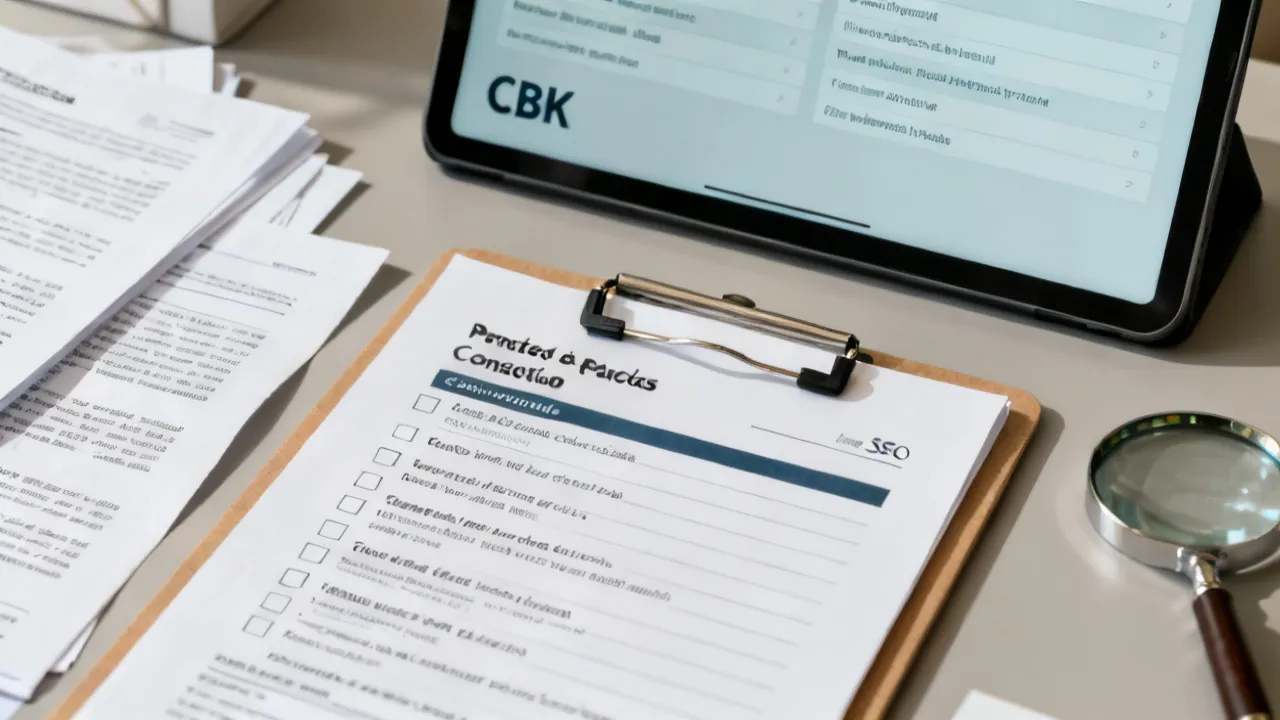
Crisna Guide: Supplier, Pricing, and Quality Considerations
This guide explains how to evaluate Crisna offerings by supplier reliability, pricing logic, and quality requirements. It introduces “Crisna” as a business reference term while outlining objective selection criteria used in procurement and sourcing. Readers will learn how to compare options, confirm documentation, and assess risk factors before purchasing.

Executive overview: how to evaluate Crisna offerings effectively
When people search for Crisna, they typically want an evidence-based way to compare options—especially around supplier reliability, pricing behavior, and quality requirements. The very important starting point is to treat “Crisna” not as a single product, but as a sourcing identifier that may map to different batches, specifications, grades, or bundled services depending on the supplier. This article provides an objective, industry-style framework to help you make sound procurement decisions—without relying on marketing claims.
Because many sourcing labels behave like “aliases” (they can mean different formulations, different compliance packages, different packaging formats, or different minimum order configurations), your job as a buyer is to strip away ambiguity and force the comparison back onto measurable attributes. Done correctly, you can evaluate Crisna offerings the same way procurement teams evaluate any technically sensitive supply: define requirements, request evidence, normalize comparisons, and confirm the supplier’s ability to deliver consistently over time.
Why “Crisna” needs structured comparison
In procurement and sourcing, the same label can refer to different underlying attributes: material composition, packaging format, certification status, compliance documentation, manufacturing controls, or lead-time guarantees. Therefore, evaluating Crisna requires a structured approach:
- Confirm the exact specification (grade, size, tolerances, intended use, and acceptable substitutes).
- Validate the supplier’s capability (traceability, documented QA/QC procedures, and responsiveness).
- Understand pricing logic (what drives cost—inputs, certification, logistics, and warranty terms).
- Check conditions/requirements (payment terms, delivery conditions, returns, and documentation included).
Structured comparison matters for at least four reasons.
- Safety and performance risk: For many categories of industrial goods, a small difference in specification can cause downstream failures—product performance drop, equipment wear, regulatory noncompliance, or customer complaints.
- Audit and compliance risk: Even if the delivered item “seems fine,” missing or mismatched documentation can cause failures in quality audits, procurement verification processes, or regulatory reporting.
- Cost of poor assumptions: Buying based on a vague label frequently leads to rework, replacement, shipping delays, and internal time costs that exceed the apparent savings from a lower unit price.
- Comparability risk: Two vendors can both say they supply “Crisna,” but one may include certificates, one may ship with protective packaging, and another may not—so you end up comparing unlike items unless you normalize the offer.
Very critical first: what to verify before purchasing Crisna
If your goal is to purchase Crisna with predictable outcomes, focus on these high-impact checks. They prevent common failure modes such as receiving a nonconforming batch, missing documentation, or discovering late-stage mismatches between expected and delivered specifications.
Think of this as your “evidence gate.” You don’t decide everything at once; you reduce uncertainty step-by-step. Before you commit to volume procurement, your process should force the supplier to demonstrate they can provide the exact version you need and can prove it with documented traceability.
- Specification match: Require a product data sheet or equivalent technical description showing the exact parameters.
- Documentation completeness: Request certificates of analysis/quality, batch numbers, and relevant compliance statements when applicable.
- Traceability: Ensure the supplier can link the delivered unit(s) to a production run.
- Quality assurance process: Ask how they inspect incoming and outgoing inventory, including sampling approach.
- Clear acceptance criteria: Confirm how “pass/fail” is determined for your use case.
- Supplier communication reliability: Track responsiveness time and consistency during pre-order verification.
To make these checks operational, consider adding a short “pre-award verification request” to your sourcing process. This can be a checklist email or vendor portal ticket that requests a bundle of documents and answers before you even compare pricing. Vendors who can respond quickly and consistently typically have fewer process gaps, while vendors who cannot often signal incomplete QA/QC infrastructure, unclear product mapping, or weak documentation discipline.
Pricing considerations: interpreting Crisna cost without guessing
Price is rarely just a reflection of the base item. For Crisna, cost differences usually reflect one or more of the following factors:
- Specification level: Higher grade or tighter tolerances generally cost more.
- Certification and documentation: Packaging, labeling, and formal certificates add cost.
- Packaging and quantity: Unit price often changes with order volume and case configuration.
- Logistics and lead time: Expedited shipping and shorter lead-time commitments raise costs.
- Warranty or replacement policy: Suppliers offering robust corrective actions may charge accordingly.
To evaluate price fairly, compare total delivered value, not just the sticker number. Total delivered value typically includes documentation, packaging integrity, shipping terms, and post-delivery support.
Here’s a practical way to “normalize price.” Instead of comparing quotes as raw numbers, you can construct a structured quote normalization table.
- Line item clarity: What exactly is being quoted (grade/specification, packaging type, quantity breaks)?
- Freight and Incoterms: Who pays for shipping and insurance, and where does responsibility transfer?
- Documentation included: Are certificates included automatically or only provided upon request?
- Lead time: Is the promised lead time a “best effort” or a binding commitment?
- Remedies: If there’s a defect or nonconformance, what does the supplier do (replacement, credit, return shipping responsibility)?
When a supplier quote is “cheap,” it’s often cheap because it does not include one or more of the above components. The real test is whether the supplier’s offer creates downstream cost. If your internal costs for testing, inspection, rework, or lost production time are significant, “lowest unit price” is frequently the wrong benchmark.
Supplier evaluation: what “reliability” means in real sourcing
When choosing a Crisna supplier, objective reliability shows up in verifiable behaviors and operational practices rather than persuasive wording. Industry buyers often evaluate reliability through:
- Consistency of product description across quotes, invoices, and packing slips.
- Ability to provide traceability (batch/lot details and production identifiers).
- Document turnaround time for quality records and compliance statements.
- Corrective action readiness if an issue is discovered after delivery.
- Supply continuity, demonstrated by stable lead-time patterns.
To go beyond subjective impressions, you can score supplier reliability using a light-weight metric set. For example:
- Quote accuracy rate: How often does the delivered specification match what was quoted?
- Documentation on-time rate: When required documents arrive compared with the expected timeframe.
- Lead-time adherence: Percentage of shipments arriving within promised windows.
- Nonconformance resolution time: How quickly replacements, credits, or remediation actions are initiated.
- Communication completeness: Does the supplier answer technical questions with enough detail to make decisions?
Even without a formal supplier scorecard system, collecting these data points from each purchase order builds an evidence base you can use for future awards. Over time, your organization’s “supplier memory” improves decision quality, and the same supplier can be compared fairly.
Quality requirements: aligning Crisna with your intended use
Quality is context-specific. A specification that is acceptable for one application may fail in another. To align Crisna with your needs, define:
- Intended application (where it is used and what performance constraints matter).
- Acceptable tolerances (how strict quality must be).
- Handling and storage requirements (conditions that preserve performance).
- Testing expectations (what you will verify upon receipt).
- Documentation needed for audits, internal governance, or regulatory purposes.
To make this practical, buyers often benefit from creating a “requirement statement” document that includes both technical and operational constraints. The same document can be used for:
- Request for quotation (RFQ)
- Pre-award evidence request
- Purchase order acceptance criteria
- Receiving inspection plan
Quality alignment also includes a key decision: whether you want to treat the supplier’s certificates as the primary evidence of conformity, or whether you will conduct your own confirmatory testing. Many procurement teams choose a hybrid approach: rely on supplier certificates for baseline assurance, but run receiving tests for high-risk attributes, especially on first lots or when switching suppliers.
Localized considerations for buyers: practical expectations “nearby”
Many buyers look for Crisna options that can be sourced “nearby” to reduce transit delays and improve communication. In practice, localized procurement may offer advantages such as easier inspection scheduling, fewer handoffs, and faster clarification of documentation. Even then, proximity does not replace verification: you should still request the same specification evidence and quality records you would require for suppliers outside your immediate area.
However, “nearby” can also influence practical quality outcomes in subtle ways. For example:
- Faster document resolution: If the shipment is close, the supplier may respond more quickly when certificates need correction.
- Shorter exposure to storage conditions: Reduced time in transit can limit risk related to temperature, moisture, or handling sensitivity (where relevant).
- More predictable receiving windows: Your receiving team can plan inspections with less uncertainty.
Still, any advantage of localization should be treated as a supporting factor—not a replacement for specification and traceability verification. A nearby supplier can still ship a different batch or incomplete documentation. Your process should be designed to catch that, regardless of geography.
Supplemental guidance: comparison framework, source guidance, and conditions
The following section is designed to help you apply the evaluation logic consistently. Use it as a practical checklist when comparing Crisna options from different suppliers—especially when price differs or documentation quality varies.
One challenge buyers face is that suppliers may offer partial information. Some will provide a high-level datasheet but not provide batch-specific certificates. Others may offer very detailed documentation but not include transparent pricing terms or explicit acceptance criteria. This table and the surrounding workflow help you close those gaps by defining what good looks like and what risks appear when evidence is missing.
| Comparison Item | What to Ask for | What Good Looks Like | Risk if Missing |
|---|---|---|---|
| Specification | Exact grade, dimensions, tolerances, intended use statement | Clear product data sheet or equivalent technical documentation | Wrong item delivered or incompatible performance |
| Pricing basis | Price breakdown: unit, packaging, shipping terms, lead time, volume discounts | Transparent quote with measurable assumptions | Hidden costs or mismatch in “comparable” offers |
| Supplier proof | Batch/lot traceability method and QA/QC overview | Documented traceability and inspection approach | Inability to investigate issues later |
| Quality records | Certificates of analysis/quality records where applicable | Documents correspond to the delivered batch | Audit failure or nonconforming batch acceptance |
| Delivery and packaging | Incoterms/transport responsibilities, packing condition expectations | Defined delivery terms and protective packaging standards | Damage in transit, delayed receipt, disputes |
| Acceptance criteria | Pass/fail conditions, inspection method on receipt | Defined measurable criteria agreed before order | Disputes when quality is questioned |
| Returns and remedies | Replacement process, timelines, and evidence required | Clear corrective action procedure and realistic response time | Long downtime and cost escalation |
To further harden your sourcing process, consider adding two more columns to your internal procurement worksheet (even if they are not part of the vendor table): “Buyer’s internal verification steps” and “Priority risk attributes.” This ensures your team knows what must be verified upon receipt and which attributes create the biggest operational risk.
Step-by-step guide: a buyer’s workflow for Crisna sourcing
- Define your requirement: Write down the exact application constraints and the minimum documentation you require.
- Collect quotes: Request pricing from multiple suppliers (including options available “nearby”) using the same requirement sheet.
- Normalize comparisons: Compare like-for-like: same specification, same packaging configuration, same lead-time expectations.
- Verify documentation: Ask for sample records or template documents first, then request batch-specific documentation once a quote is selected.
- Confirm quality assurance: Evaluate whether they have incoming inspection, outgoing checks, and a traceability mechanism.
- Request an inspection plan: Agree on acceptance criteria and what tests you will perform upon receipt.
- Place a controlled test order: If feasible, order a limited quantity to validate consistency before scaling.
- Review performance: Track outcomes—document completeness, defect rate, delivery reliability, and after-delivery support.
- Decide on good sourcing: Choose suppliers who meet both technical requirements and operational reliability metrics over time.
This workflow can be made more robust by adding two decision points—“evidence gating” and “scale gating.”
- Evidence gating (pre-award): Confirm that the supplier can provide the required documentation and traceability method. If the supplier cannot demonstrate these capabilities, price becomes irrelevant.
- Scale gating (post-test): Even if the first test order is successful, decide whether to scale based on pre-defined quality and delivery thresholds (for example, maximum defect rate, on-time delivery percentage, and document timeliness).
Also, ensure you align your internal stakeholders early. Quality engineers, receiving teams, and regulatory/compliance owners may have distinct requirements. If these stakeholders are not aligned during the sourcing phase, you may receive items that pass commercial acceptance but fail internal technical acceptance—or you may discover that you are missing documents at the worst possible time (during an audit or a production stoppage).
Conditions and requirements: what to include in your purchasing process
To reduce ambiguity, attach these conditions to your order workflow when buying Crisna:
- Documentation requirement: batch/lot details and relevant quality records delivered with shipment or immediately after.
- Delivery terms: define responsibility for transit and handling, including packaging standards.
- Inspection window: specify when inspection will occur and who performs it.
- Nonconformance handling: replacement, refund/credit, or remediation procedure should be written in advance.
- Communication protocol: establish who contacts whom if a discrepancy occurs.
To make these conditions enforceable, you should convert them into operational commitments. That means specifying timelines and what evidence is required to trigger remedies.
Examples of operational commitments you might include (adapt as needed for your category):
- Document timing: “Certificates of analysis and batch identifiers provided no later than X days after delivery” or “provided with the shipment.”
- Nonconformance notification: “Buyer notifies supplier within X business days of receiving inspection results.”
- Remedy timeline: “Supplier initiates replacement or credit within X business days of confirming nonconformance.”
- Evidence requirement: “Nonconformance claim includes photos, test results, and batch/lot identifiers.”
- Disposition rules: “Define whether the buyer can consume/hold inventory pending investigation.”
These details reduce “gray zone” negotiations later. When documents are missing or quality is questionable, the supplier’s ability to respond quickly is as important as the product itself. Good terms protect both sides: the buyer reduces uncertainty and the supplier reduces disputes.
Risk management: common pitfalls with Crisna procurement
Even experienced teams can run into avoidable issues. These are recurring risks during procurement of items labeled under a shared brand or identifier such as Crisna:
- Specification drift: Suppliers may provide updated formulations or different batches unless explicitly documented.
- Documentation mismatch: Delivered batches not matching the provided certificates.
- Over-reliance on price: Low price becomes expensive when remediation, delays, or audit issues occur.
- Weak acceptance criteria: Without clear acceptance standards, disputes become likely.
- Insufficient after-delivery support: If a problem appears, you need a defined corrective path.
It helps to think of procurement risks in two layers: “before delivery” risks (incorrect supply setup, missing documentation, unclear acceptance criteria) and “after delivery” risks (quality deviations, delayed document delivery, nonconformance disputes, and slow remedies). A robust evaluation framework addresses both.
Here are additional pitfalls often observed in procurement programs, especially where suppliers use flexible branding or where multiple product variants exist under the same sourcing label:
- Variant substitution without notice: A supplier may swap a near-equivalent grade to maintain stock availability, but your use case might require the exact original grade.
- Packaging inconsistency: Items may be shipped in different packaging configurations that affect handling, storage conditions, or damage risk.
- Unclear responsibility for inspection: If your team assumes the supplier verifies key attributes, but the supplier expects buyer inspection only, issues may slip through.
- Testing scope mismatch: Your receiving tests may not include the attributes that actually determine downstream performance.
- Incomplete complaint handling: A supplier might respond, but only with unclear next steps—causing delays that increase operational cost.
Mitigation involves building a “defense-in-depth” system: evidence before purchase, explicit acceptance criteria, receiving checks for critical attributes, and clear remedies. Each layer reduces the chance that a failure reaches production.
Objective sourcing context: how procurement standards inform decisions
In many industries, the very dependable purchasing decisions reflect disciplined controls similar to quality management principles used globally. For buyers who want additional methodological grounding, widely recognized frameworks include ISO management principles related to quality and process consistency. While the exact application depends on your sector, the underlying idea is consistent: define requirements, verify compliance with evidence, and use traceable records to support accountability.
You don’t necessarily need to apply a full formal standard framework to get the benefits. You can translate the spirit of process discipline into practical procurement actions:
- Define requirements clearly: Avoid ambiguous labels; insist on measurable specs.
- Control supplier verification: Request evidence of traceability and QA/QC controls.
- Keep records: Retain purchase orders, quotes, acceptance records, certificates, and correspondence.
- Use corrective actions: When nonconformance occurs, require corrective action responses tied to root causes rather than only replacements.
- Improve continuously: Use performance history to refine your vendor selection and acceptance criteria.
When you apply these principles to Crisna sourcing, you create a defensible procurement trail. That matters not only for internal decision quality but also for audits, supplier disputes, and governance reviews.
FAQs about Crisna suppliers, pricing, and requirements
FAQ 1: What does “Crisna” refer to?
“Crisna” is commonly used as a sourcing identifier or brand-like reference. The meaning can vary by supplier and by market, so the very objective approach is to confirm the exact specification, grade, and intended use in the product documentation provided by the supplier.
In practical terms, “Crisna” may represent different product families or variants. Even if the supplier insists that “it’s the same thing,” you should treat it as a hypothesis until you verify the following:
- Technical grade/specification
- Batch/lot traceability
- Compliance/certification package
- Packaging format and labeling
- Document naming that corresponds to the delivered batch
FAQ 2: How should I compare Crisna pricing across suppliers?
Compare like-for-like. Normalize for specification, packaging configuration, quantity, lead time, and documentation included. Look at total delivered value (price plus shipping terms plus what records are provided), not only the unit cost.
If you want a simple approach, define a “pricing equivalence checklist” that must be identical across quotes before you compare. For example, require that all quotes include:
- Same grade and technical parameters
- Same packaging configuration
- Same delivery terms and timeframe
- Same document set (certificates and traceability documentation)
- Same return/replacement policy terms (or explicitly stated differences)
Then you can compare either unit cost or total order cost with confidence that you are comparing comparable offers.
FAQ 3: What supplier details should I request for Crisna?
Request the supplier’s QA/QC overview, traceability approach (batch/lot linkage), and documentation practices. If applicable to your use case, also request certificates of analysis/quality records that correspond to the exact delivery batch.
Additionally, consider asking for evidence of how traceability works operationally. Some suppliers can explain traceability but cannot demonstrate it for a specific batch. A good supplier will be able to:
- Provide the batch/lot identifier that matches the shipped units
- Show how certificates correlate to that identifier
- Explain what happens if a batch fails internal quality checks
- Clarify what inspection sampling method they use
FAQ 4: Are there specific quality requirements I must define before ordering Crisna?
Yes. Define acceptance criteria based on your application, including tolerances, inspection/testing expectations on receipt, and handling/storage requirements. Include how you will respond if nonconformance is detected.
To avoid misalignment, you can define acceptance criteria in two tiers:
- Supplier conformance criteria: What the supplier must attest to through documentation (and any internal test results).
- Buyer receiving criteria: What you will test/verify on arrival (and under what conditions).
Then you decide whether to accept based on documentation only, documentation plus inspection, or inspection only. The right approach depends on the risk of failure and cost of receiving tests.
FAQ 5: Is it better to source Crisna “nearby”?
Sourcing “nearby” can reduce transit uncertainty and speed up communication, which can help during inspection and documentation clarification. However, proximity should not replace verification of specification and quality evidence. Always evaluate requirements and documentation completeness.
In some cases, nearby sourcing can also reduce schedule risk—especially if your operations cannot tolerate late deliveries. But you still need to confirm whether the supplier can consistently provide the required batch quality and the required compliance package on every shipment.
FAQ 6: What if documentation is incomplete for Crisna?
If critical documentation is missing—such as batch/lot information or quality records—pause the decision until you receive the needed evidence. Buying without documentation may create compliance and audit risks and can complicate remediation if issues appear later.
Make the consequence of missing documentation explicit in your procurement process. For example, you might establish a rule:
- No batch identifier, no acceptance: If the supplier cannot provide batch/lot linkage, you cannot verify conformity.
- No certificate alignment, no release: If certificates do not correspond to the delivered batch, receiving is held pending clarification.
This approach creates leverage for the buyer and reduces the likelihood of “documentation acceptance” becoming an informal norm.
FAQ 7: Can I test a small order before scaling?
Yes, when feasible. A controlled test order helps validate consistency, packaging integrity, and after-delivery support. After reviewing results, you can decide whether to scale procurement.
For test orders, consider defining the evaluation criteria before ordering. Common test order evaluation points include:
- Document completeness and timeliness
- Traceability accuracy (batch/lot matches certificates)
- Observed defect rate or nonconformance rate
- Packaging integrity upon arrival
- Response time and effectiveness if issues occur
A test order that has no evaluation plan is not truly a test—it is just a small purchase. The value comes from measurable outcomes and documented learnings.
Further reading sources (for objective verification)
For buyers seeking general guidance on quality management and documentation discipline, reputable references include standards and guidance published by recognized bodies such as the International Organization for Standardization (ISO). If your industry is regulated, consult your relevant national or sector regulator for documentation expectations. For supply-chain performance measurement methods, industry research organizations and professional procurement associations often publish buyer guidance and risk frameworks.
In addition to standards, consider internal policy alignment and the practical guidance available from:
- Quality management systems used in your organization (e.g., ISO-aligned QMS documentation)
- Regulatory compliance manuals relevant to your sector
- Supplier quality assurance agreements (SQAs) used by enterprises in your industry
- Procurement risk frameworks used for vendor due diligence
While you don’t need to replicate a full certification program for supplier evaluation, you can reuse the same principles: define requirements, verify evidence, document decisions, and ensure corrective actions are available when something goes wrong.
Note: This article intentionally avoids unverified claims and does not present pricing numbers without a specific market context. If you share your target specification for Crisna, quantity, and whether you need any certificates, I can help you build a more exact comparison checklist tailored to your situation.
To move from “framework” to “action,” you can take the checklist elements above and convert them into three concrete artifacts: (1) a requirement sheet, (2) an evidence request template, and (3) an acceptance plan. If you do this, you’ll find that evaluation becomes faster, disputes become rarer, and supplier selection becomes more defensible.
Practical implementation: building your Crisna requirement sheet
A requirement sheet is more than a technical specification. It is also a procurement control document. When crafted well, it ensures every supplier quote can be normalized and every receiving decision can be defended.
In your requirement sheet for Crisna, include at least the following sections:
- Item description and intended use: What the item is, how it will be used, and what performance constraints matter.
- Technical specification: Grade, tolerances, dimensions/parameters, labeling requirements, and any constraints that cannot be substituted.
- Documentation package: List the exact documents required (e.g., batch certificate, test results, compliance statements, labeling photos if needed).
- Packaging and handling requirements: Protection needs, storage constraints, and any handling instructions required by your receiving team.
- Delivery terms: Incoterms (or local equivalents), required delivery window, and who is responsible for transit risk.
- Acceptance criteria: Define pass/fail thresholds and the receiving inspection method (visual inspection, sampling plan, lab test parameters).
- Nonconformance and remedies: Clarify how issues are handled, evidence needed for claims, and remedy timelines.
By writing this document once and reusing it across suppliers, you eliminate “process variability.” Your team avoids comparing apples and oranges and ensures internal stakeholders evaluate the same requirement.
Practical implementation: evidence request templates for Crisna
Evidence request templates reduce back-and-forth and improve supplier response quality. If you ask in an unstructured way, you may receive inconsistent outputs: one supplier provides a certificate template but not a batch certificate, another provides batch records but not traceability evidence, and another provides neither.
A strong evidence request for Crisna should specify:
- Which documents are required and whether they are needed before purchase, with shipment, or after shipment.
- Whether documents must correspond to specific batch/lot identifiers and how those identifiers appear on labels and certificates.
- What constitutes acceptable substitutes (if substitutions are allowed at all) and what approvals are required.
- Where documents will be delivered (email, portal upload, printed with shipment, or electronic link).
When you request evidence, ask suppliers to provide either:
- Example documentation (templates) for pre-award review, and then
- Batch-specific documentation once a purchase order is placed.
This two-stage evidence approach is useful because it tests both documentation quality (format, completeness, clarity) and the supplier’s operational discipline (ability to match documents to actual batches).
Practical implementation: acceptance plan and receiving inspection approach
An acceptance plan clarifies how you will confirm quality upon receipt. Without it, a supplier can argue that the item was “as quoted,” while your team can argue that the item “doesn’t work.” The dispute typically becomes expensive and slow.
Your acceptance plan for Crisna should include:
- Inspection scope: Visual inspection items, measurement/test items, and documentation checks.
- Sampling method: Full inspection, spot checks, or statistical sampling approach (if appropriate).
- Test methods: The method you will use and who performs it (your lab, a third-party lab, or supplier-provided test results).
- Pass/fail thresholds: Exact tolerances and what “nonconformance” means.
- Documentation verification steps: Batch/lot matching steps, certificate alignment checks, and any labeling checks.
- Decision timeline: How quickly you must decide acceptance, hold, or reject.
- Remedy triggers: How inspection results trigger replacement/credit or further investigation.
If you are launching a new supplier or switching batches, consider increasing receiving inspection intensity for the first few shipments. This “ramp up confidence” approach reduces the risk that you scale an unknown supplier variant.
Normalization: turning multiple Crisna offers into an apples-to-apples comparison
Normalization is what converts procurement from guesswork into analysis. If you skip normalization, you may select a supplier that looks cheaper but is missing critical features you actually need.
Normalization should be performed across both commercial and technical terms:
- Commercial normalization: Incoterms, lead time commitments, delivery windows, warranty/remedy terms, packaging configuration, and documentation inclusion.
- Technical normalization: Grade/specification, tolerances, intended use alignment, and any required test results corresponding to delivery batches.
When offers differ legitimately (for example, one supplier offers tighter tolerances but charges more), you can evaluate the cost-to-performance trade. But if the differences are not explicitly stated, you should treat them as potential red flags and require clarification.
Supplier due diligence: practical ways to assess operational maturity
Beyond certificates and quotes, supplier due diligence helps you assess whether the supplier can maintain quality consistently. Crisna suppliers can vary widely in maturity, especially when the label maps to multiple internal variants.
Practical due diligence steps include:
- Ask how they control changes: What happens if manufacturing parameters change? Do they notify you? Do certificates reflect the change?
- Ask about corrective action process: If a batch fails, what is the corrective action approach? How do they prevent recurrence?
- Request traceability evidence: Can they show how batch/lot IDs are linked to documentation and shipment labels?
- Review responsiveness patterns: Track how quickly they answer pre-award questions and how consistently.
- Check documentation consistency: Are documents complete, clearly named, and aligned with the batch delivered?
Even if you don’t have time for deep audits, you can gather enough evidence through structured requests. A supplier that has robust operational controls will generally handle these questions smoothly and provide clear answers without evasiveness.
Handling disputes: how to protect your team when Crisna delivery doesn’t match expectations
Disputes are not just unpleasant—they can become operational crises. A dispute over Crisna quality can delay production, create inventory uncertainty, and require expensive re-testing.
To protect your team, ensure disputes are handled with evidence and defined procedures:
- Keep batch/lot information intact: Record identifiers immediately upon receiving.
- Perform receiving tests per acceptance plan: Don’t improvise; use the plan you agreed to.
- Document conditions: Photos of packaging condition, labels, and any visible defects.
- Maintain chain-of-custody: If your tests occur in-house, log who handled inventory and when.
- Communicate with a protocol: Designate a single point of contact and a structured claim template.
- Request corrective action details: If replacement occurs, ask what root cause prevented conformity.
A good supplier will respond with clarity. If a supplier refuses to discuss batch-specific traceability, provides generic responses, or delays remedies without a timeline, that is itself evidence of lower reliability.
Scaling procurement responsibly after test orders
Test orders are only valuable if you convert their results into scaling decisions. Once test orders are complete, decide based on pre-defined thresholds.
Consider defining scale criteria such as:
- Quality performance threshold: Maximum allowable defect/nonconformance rate.
- Documentation performance threshold: Certificates delivered on time and aligned to batch IDs.
- Delivery performance threshold: On-time delivery percentage and lead-time adherence.
- Remedy performance threshold: If any issues occurred, measure resolution time and effectiveness.
Even if test results are successful, you might also decide to continue higher receiving inspection for a short ramp period. Then gradually reduce inspection intensity once confidence is established through multiple successful shipments.
Building a supplier scorecard for Crisna over time
A supplier scorecard turns experience into usable data. Even a simple scorecard is better than relying on memory.
Suggested scorecard categories:
- Technical conformity: How often deliveries match specification and acceptance criteria.
- Documentation compliance: Correct batch matching and certificate completeness.
- Delivery reliability: On-time delivery and lead-time adherence.
- Responsiveness: Speed and quality of communication for clarification and problem resolution.
- Corrective action effectiveness: Whether remedies resolve issues permanently, not just temporarily.
Update the scorecard per shipment. Over time, you can use it to:
- Decide when to qualify or disqualify suppliers
- Negotiate pricing based on performance
- Set inspection intensity and documentation requirements
- Prioritize suppliers for urgent or high-risk orders
Final procurement stance: what “good evaluation” looks like for Crisna
Effective evaluation of Crisna offerings is not about finding the “best deal” in a single moment. It is about selecting suppliers who can consistently deliver the exact specification you need, provide evidence you can trust, and support you with clear remedies when issues arise.
When your process is working, the outcome should look like this:
- You can identify exactly what you are buying (not just a label).
- You can verify that what arrives corresponds to what was quoted and documented.
- You can compare offers fairly because you normalized key variables.
- You can make decisions quickly because your evidence requirements are clear.
- You can defend decisions because records are complete and traceable.
In that sense, the “how to evaluate” framework becomes a procurement capability, not a one-time task. Apply it consistently across Crisna sourcing cycles and you will steadily reduce quality surprises, compliance risks, and cost escalations.
-

A Guide to Cost-Efficient Small Electric Cars for Seniors
-
Mastering Debt Consolidation: Boost Your Credit Score and Manage Interest Rates
-
Your Guide to Loans, Credit Checks, and Interest Rates
-
Affordable Independent Living: Finding the Right Senior Housing
-
Guide to Senior Living Apartments: Affordable and Comfortable Environments