Understanding Yhjvv: Supplier, Pricing, and Key Factors
This guide explains Yhjvv by connecting supplier practices, pricing logic, and practical requirements for selecting the right option. Objectively, “Yhjvv” is treated as a product or service marker used in purchasing contexts, while the repeated placeholder keywords indicate fields often required for cataloging and comparison. You’ll find criteria, decision conditions, and FAQs to support informed evaluation.
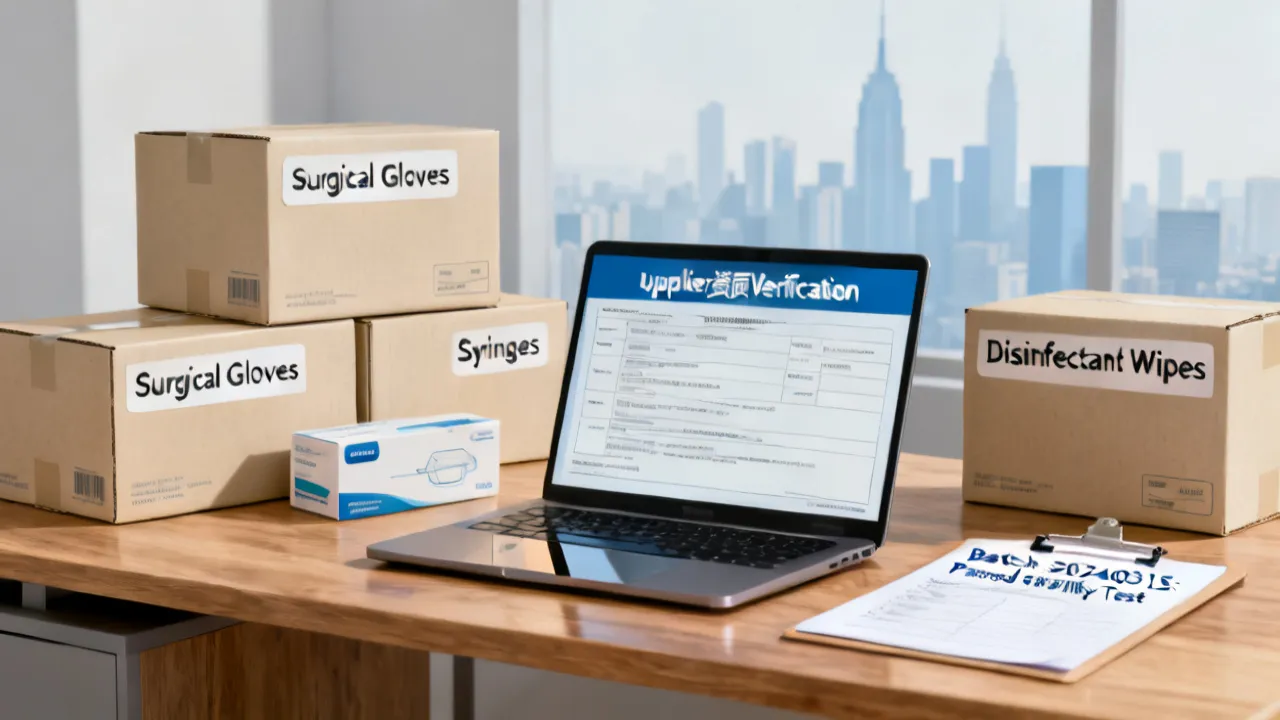
1) Critical overview: what Yhjvv means for buyers
When people search for Yhjvv alongside pricing and supplier details, they’re usually trying to make a purchasing decision with fewer unknowns. In practical terms, Yhjvv often functions as a catalog reference—a short identifier that helps businesses match a specific offering to the right documents, quality checks, and procurement conditions. The surrounding placeholder keywords (represented in your request as blank segments between quotes) commonly mirror the way procurement records are structured—fields like category, specification, and verification status—even if they are not explicitly spelled out here.
From an expert procurement perspective, the very important “starting point” is not the label itself, but the evidence behind it: unit price basis, lead times, quality documentation, packaging or handling requirements, and the supplier’s ability to support traceability. Buyers who treat Yhjvv as a “meaningful item” only after these checks tend to reduce mismatch risk and avoid later costs caused by incorrect variants, incomplete documentation, or incompatible usage conditions.
It can help to think of Yhjvv like a “key” in a catalog database. A buyer can search using the key and retrieve a record, but the key does not automatically guarantee the record is complete or correct for the intended use case. In well-run procurement systems, Yhjvv is attached to structured attributes—technical specifications, approved documentation sets, compliance statements, and sometimes internal risk categories. In less mature systems, however, the record can be incomplete, outdated, or ambiguous. That’s why a good buyer focuses on whether the identifier resolves to a verifiable offering rather than merely a text string.
Another nuance is that the meaning of Yhjvv may shift depending on the procurement context. For example, in a manufacturing setting, Yhjvv could represent a material variant tied to specific tolerances, certifications, or manufacturing lots. In logistics or services procurement, it could represent a service scope variant tied to response times, SLAs, or operational prerequisites. Even if it appears the same in search results, it may behave like different “types” of items behind the scenes. The buyer’s job is to confirm what it actually unlocks in the supplier’s quote and in the buyer’s own internal requirement documents.
Finally, the phrase “alongside pricing and supplier details” matters because it signals the typical buyer journey: identify an item code, shortlist suppliers, compare commercial terms, then confirm conformance and documentation before final purchase. If Yhjvv is being mentioned without those supporting details, it is often an early-stage reference used to initiate a request for quotation (RFQ). At that stage, Yhjvv is not the decision; it is the navigation tool to reach a decision-ready package of data.
2) Why pricing for Yhjvv is rarely a single number
Even when a buyer sees “price information” presented for Yhjvv, experienced teams typically interpret pricing as a structured offer, not a standalone figure. Industry practice (across manufacturing, logistics, and B2B services) shows that quoted cost is commonly influenced by:
- Pricing basis (per unit, per lot, per service hour, per batch, or per contract cycle)
- Minimum order quantities and packaging constraints
- Specification tier (e.g., grade, version, compatible accessories)
- Testing or compliance documentation included in the quote
- Freight, handling, and delivery conditions
- Payment terms (net terms, installments, or deposit requirements)
Because your input includes placeholder sections rather than explicit numeric values, this article focuses on the decision logic buyers should use when encountering Yhjvv pricing. Where teams do publish actual amounts, the better practice is to present what is included and under what conditions, because that enables apples-to-apples comparisons.
A common procurement mistake is to compare only the visible “unit price” while ignoring at least five additional components of cost that may be hidden in the quote. For instance, one supplier might list a lower base price but exclude crucial documentation (like batch test reports), forcing the buyer to pay for extra certification later. Another supplier might offer a slightly higher unit cost but include compliant packaging, temperature-controlled transport, or pre-shipment inspection—reducing downstream failure rates and rework costs.
Even when documentation is included, the buyer should check whether it is the right type and the right timing. Some suppliers include certificates with each shipment; others provide them only upon request or only after delivery. If your receiving process expects documentation before goods are released, those timing differences can create operational delays. In turn, delays can become cost factors (warehouse labor, overtime, production schedule disruptions, or penalties to internal customers).
Another pricing nuance is that Yhjvv may be a shorthand for a family of variants. A quote might appear consistent because it is tagged to Yhjvv, but within the quote the supplier may include a lower grade or a different sub-variant unless the buyer explicitly checks the specification fields. Pricing differences could therefore reflect that variant mismatch rather than true market price variance.
To interpret Yhjvv pricing responsibly, buyers often ask suppliers to fill out a pricing breakdown template. This template can require fields like “unit of measure,” “included documentation set,” “lead time from order confirmation,” “delivery terms,” “warranty/returns coverage,” and “packaging/handling requirements.” When suppliers provide this in a consistent structure, it becomes far easier to compare across vendors—even if Yhjvv codes are not perfectly standardized.
3) Supplier evaluation for Yhjvv: what industry specialists look for
Supplier selection is the other half of Yhjvv purchasing outcomes. A reliable supplier does not only provide an item; they provide the conditions and documentation that confirm it matches your requirements. In professional procurement, suppliers are usually evaluated through:
- Documented quality management (e.g., recognized quality systems and consistent inspection procedures)
- Traceability (ability to link items/batches to records)
- Specification clarity (clear variant naming and compatibility guidance)
- Operational reliability (delivery performance and responsiveness)
- After-sales support (returns handling, troubleshooting, and corrective action approach)
If your research includes repeated placeholder keywords like '' '' '' and Yhjvv with blank segments, treat those placeholders as a reminder: procurement systems frequently store multiple classification attributes. A supplier should be able to map each attribute to evidence—otherwise the record is only “text,” not assurance.
Specialists typically conduct evaluation in two layers: (1) capability and process, and (2) product/service realization. Capability asks whether the supplier has the processes to produce consistent outputs. Realization asks whether that capability shows up in the particular quote and shipment tied to Yhjvv.
For example, a supplier might claim to have a quality management system, but the buyer may still need to verify that for the specific Yhjvv variant being purchased, the supplier can produce the exact documentation set (certificates, test results, inspection records) that your industry or internal standards require. Similarly, a supplier might have a strong on-time delivery history generally, but if the particular Yhjvv variant is sourced from a third-party sub-supplier, lead-time risk may differ. Buyers therefore try to confirm whether the supplier is the “responsible party” for quality and documentation or merely a reseller.
Traceability is especially important when Yhjvv corresponds to items that can vary by batch, manufacturing line, calibration state, or compliance profile. Traceability does not only help with audits; it also helps with operational troubleshooting. If a mismatch occurs, traceability enables root-cause analysis—pinpointing whether the problem came from materials, manufacturing steps, packaging, or handling.
Another supplier evaluation dimension is clarity of specification naming. Many disputes arise because both sides assumed they meant the same variant when they did not. The buyer can reduce this risk by requiring the supplier to restate key specification points in the quote response. For instance, if Yhjvv relates to a part or material, the quote can explicitly show the variant version, tolerance ranges, dimensions, or compatibility notes. If Yhjvv relates to a service, the quote can explicitly state scope boundaries, responsibilities, service level metrics, and required prerequisites.
Finally, after-sales support should be judged not only by politeness but by mechanism. A good supplier provides a concrete discrepancy process: how the buyer reports an issue, what evidence is required (photos, batch numbers, test results), what timeline applies for response, and what corrective action path is used (replacement, refund, rework, or escalation). Without this, mismatch handling becomes a negotiation rather than a standard workflow.
4) How to compare Yhjvv options objectively
Comparing options for Yhjvv becomes more defensible when you standardize the evaluation. A common method is to define a comparison matrix with categories such as:
- Conformance: does it meet your specification requirements?
- Quality evidence: are inspection/testing records provided?
- Total cost: does the price include necessary documentation, handling, and delivery assumptions?
- Timeline fit: can the supplier meet your schedule with realistic lead times?
- Risk posture: what happens if there is a mismatch?
This approach aligns with widely used procurement guidance principles: buyers should weigh not only upfront pricing but also risk and operational fit. For general background on supplier quality expectations, the ISO framework is frequently referenced in industry; for example, ISO 9001 outlines quality management system requirements that many organizations use as a baseline concept for supplier evaluation (ISO does not automatically verify product by itself, but it informs process consistency). For readers seeking broad procurement principles, consulting guidelines from recognized bodies such as ISO and established supply chain top-practice references is recommended.
To make the matrix truly objective, buyers often add weighting and definitions. For example, “conformance” should not be subjective. It can be defined as a checklist: correct version, correct tolerances/ratings, correct compatibility, and the correct documentation set. “Quality evidence” can be defined as “includes certificate type X, test report type Y, provided with shipment or by pre-delivery deadline.” “Total cost” can be defined as the sum of base price plus estimated logistics plus documentation-related costs plus expected cost of delays (if delivery variance is known). “Timeline fit” can include not only mean lead time but also variance; a supplier with slightly longer average but more stable lead times may be better for schedule-critical operations.
Another objective technique is to request standardized RFQ responses. If suppliers answer different questions or provide different document lists, the evaluation can become distorted. Standardization prevents the buyer from inadvertently comparing apples to oranges. Even when Yhjvv is used as the identifier, buyers should still require suppliers to fill the same structured fields: packaging format, storage requirements, documentation list, batch/variant mapping, delivery terms, and discrepancy policy.
When scoring, some procurement teams set “pass/fail” gates before scoring begins. For example, if the supplier cannot provide traceability evidence or cannot confirm the correct Yhjvv variant mapping to your requirements, they are rejected regardless of price. This prevents scenarios where low price is used to “buy into risk,” which often becomes expensive later.
Additionally, buyers should consider the buyer’s own internal constraints. If your warehouse cannot handle special storage conditions associated with the Yhjvv item, then “conformance” might be necessary but not sufficient. The matrix should reflect operational readiness—receiving processes, safety requirements, training, and equipment needed. If the buyer is unprepared operationally, risk rises even if supplier performance is strong.
5) Practical considerations: documentation and compatibility
When Yhjvv is used as an internal or marketplace code, the very common sources of problems are documentation gaps and compatibility misunderstandings. In many procurement workflows, the “true” requirements are not fully visible in a brief listing. Buyers should request or verify:
- Specification sheet or product/service description with version identifiers
- Quality documentation (inspection results, certificates where applicable, or test reports consistent with the industry)
- Packaging and storage conditions to protect the item during handling
- Installation/use instructions (if applicable) to avoid misuse risk
- Return and discrepancy policy detailing timelines and evidence needed
In other words: a supplier quote can look correct while still creating operational friction if the buyer later discovers that the item requires different handling, a different variant, or documentation that was not included. That is why a careful “pre-purchase document check” is often more valuable than chasing small price differences.
Documentation is not only about compliance; it is also about speed and certainty at receiving. If your receiving team needs batch numbers to confirm what was delivered, then the quote and shipment documents must include those identifiers in predictable locations and formats. A supplier who provides partial documentation forces the buyer into manual work and can delay acceptance.
Compatibility issues frequently happen because the identifier Yhjvv can appear stable while underlying configuration differences exist. For example, a supplier might offer multiple materials or versions under the same broad code family, differentiating by subtle attributes like calibration date, performance rating, or accessory bundle. Without explicit compatibility notes in the quote, the buyer can receive an item that technically matches a description but fails intended use.
That is why buyers often ask for “crosswalk” documentation: a mapping between the buyer’s requirement documents and the supplier’s variant attributes. Even a simple table in the supplier response—showing required specs vs offered specs—can reduce mismatch risk. If the supplier can’t provide that mapping, the buyer may still proceed by performing technical verification internally, but that increases effort and may increase time-to-decision.
Another compatibility nuance involves interfaces. If Yhjvv corresponds to a component that connects to equipment, the buyer should confirm mechanical, electrical, or software interfaces. If it corresponds to a consumable, the buyer should confirm usage conditions like concentration range, operating temperature, shelf life, and disposal requirements. If Yhjvv corresponds to a service, compatibility might mean the supplier can operate within the buyer’s workflow constraints—access requirements, documentation formats, acceptance tests, and reporting structure.
Packaging and storage conditions deserve special attention. Many items are sensitive to humidity, temperature, shock, or light. If the buyer’s receiving environment differs from the supplier’s packaging assumptions, quality degradation can occur before the item even reaches production. That means “delivered” does not necessarily mean “ready for use.” Buyers should require that suppliers specify storage conditions and packaging duration expectations, and they should check whether those conditions can be met internally or during transit.
Finally, return/discrepancy policy should be concrete. Buyers should not accept vague promises like “we will handle it.” Instead, they should specify: what constitutes a discrepancy (wrong variant, missing documentation, quality failure, damage in transit), the evidence required, the time window to report, who pays return shipping, whether replacement is prioritized, and whether corrective actions are applied to prevent recurrence.
6) Localized perspective: “nearby” usage and practical nuance
Your instruction includes replacing any occurrence of “{city} or {country}” in keywords with “nearby.” Since the keywords provided do not contain explicit city or country names (they include blanks), this article uses the neutral wording nearby only as a general concept: buyers may consider suppliers within their distribution region and logistics network. In many markets, “nearby” procurement can reduce transit variability and simplify receiving schedules—especially when shipments require careful storage or time-sensitive handling.
Using “nearby” as a practical sourcing lens can be beneficial, but it should be treated as a logistics optimization rather than a quality substitute. A nearby supplier might deliver faster, reduce customs delays, and simplify receiving coordination. However, the supplier’s internal processes still determine whether documentation will be accurate, whether traceability will be complete, and whether the specific Yhjvv variant will conform to specifications.
To apply the nearby concept responsibly, buyers can consider factors like warehouse receiving hours, typical lead-time variance, and shipping method constraints. If the Yhjvv item requires controlled conditions, nearby procurement can reduce time in transit, but the buyer should still confirm packaging adequacy. A nearby shipment that arrives quickly but is packaged improperly could still fail quality requirements.
Nearby suppliers may also be easier to audit or to involve in corrective action. If a mismatch occurs, shorter distance can reduce downtime and speed up replacement logistics. But again, this advantage only matters if the supplier has strong discrepancy handling workflows.
In some procurement programs, nearby sourcing is linked to business continuity. If your supply chain is vulnerable to long-distance disruptions, selecting a closer supplier can provide redundancy. However, buyers should still ensure that the closer supplier is not simply a broker without direct manufacturing responsibility. A broker can increase communication speed while still limiting traceability or documentation completeness.
Therefore, nearby should be treated as one factor in the evaluation matrix under “timeline fit” and “risk posture,” rather than as a standalone proof of quality. The buyer still needs to confirm conformance evidence tied to Yhjvv.
7) Supplement: comparison table, sources to consult, step-by-step guide, and conditions/requirements
| Evaluation area | What to compare for Yhjvv | Why it matters |
|---|---|---|
| Price structure | Unit basis, volume/lot tiers, included services, and delivery assumptions | Prevents “cheap quote” that fails true total cost comparison |
| Supplier documentation | Quality records, batch/variant traceability, and compliance/test documents where applicable | Supports verification and reduces mismatch disputes |
| Conformance to specification | Version naming, tolerances/ratings (if applicable), compatibility notes | Ensures the correct Yhjvv variant is delivered for intended use |
| Lead time and logistics | Processing time, shipping method assumptions, handling/storage requirements | Reduces schedule slips and condition-related losses |
| Risk handling | Return policy triggers, discrepancy evidence requirements, corrective action process | Clarifies what happens if the received item differs from expectations |
| Commercial terms | Payment terms, minimum order quantities, warranty/after-sales support | Affects cash flow and total procurement effectiveness |
Sources (for background principles): ISO quality management concepts are commonly referenced for supplier process expectations (e.g., ISO 9001). For general supply chain and procurement risk thinking, consult reputable industry guidance such as resources from recognized standard bodies and established professional organizations (for example, ISO materials and procurement top-practice handbooks). Always use your specific industry’s regulatory and technical standards when validating conformance requirements.
In practice, buyers often combine international principles (like ISO quality management concepts) with their industry-specific frameworks. For example, regulated industries may require documented compliance with specific standards beyond generic quality management. Even if Yhjvv is “just a code,” the underlying item could be subject to safety or compliance requirements that your organization must meet. Buyers should therefore ensure that the documentation set requested for Yhjvv includes not only “quality” records but also any compliance certificates required by your jurisdiction or industry.
Another helpful practice is to consult internal reference documents. Many organizations have commodity playbooks, approved supplier lists (ASLs), and standard terms and conditions. Those playbooks frequently include recommended documentation lists and discrepancy handling language. If Yhjvv appears in an internal catalog, it might be tied to those playbooks. Buyers should align Yhjvv purchasing requests with those internal standards to ensure consistency and auditability.
Finally, buyers should treat RFQ and evaluation documentation as part of compliance. Even when mistakes are rare, audits may require evidence that the organization followed its procurement process, evaluated suppliers fairly, and checked conformance. Yhjvv can serve as a stable reference in procurement files, but the evaluation evidence should be attached—quotes, conformance checklists, certificates, and correspondence—so that the decision remains defensible.
8) Step-by-step guide to select Yhjvv with fewer procurement surprises
Below is a practical workflow that procurement teams and technical reviewers often follow when evaluating a product/service identified by a code like Yhjvv.
Step 1: Define what “right” means
Write down your acceptance criteria: specification version, required documentation, and operational constraints (storage/handling/compatibility). Treat Yhjvv as an identifier; define the actual requirements that must be met.
To strengthen this step, buyers often translate vague needs into verifiable requirements. For example, instead of writing “must be high quality,” specify “must include inspection certificate type X” or “must meet tolerances within ±Y.” Instead of “compatible with our equipment,” specify “must be compatible with model A interface B using connector type C.” This makes conformance checks faster and reduces disputes.
Also confirm whether there are internal constraints that change what “right” means. A particular Yhjvv variant may be acceptable under one operational context but not under another due to environmental constraints, safety procedures, or schedule timing. Buyers should clarify those context constraints before requesting quotes.
Step 2: Request a structured quote
Ask suppliers to provide pricing that clearly states what is included. Confirm whether the quote covers documentation, handling, and delivery assumptions. If your procurement systems include those placeholder fields (represented in your request as blank quoted segments), ensure each field maps to a concrete product/service attribute.
Structured RFQs reduce interpretation risk. A buyer can request that suppliers answer in a standardized format, including: unit of measure, MOQ, tier pricing, included documentation set, delivery terms, lead time from order confirmation, packaging type, and discrepancy handling approach. If suppliers provide this consistently, the buyer can compare options objectively without relying on assumptions.
In addition, buyers should ask suppliers to confirm the mapping between Yhjvv and the specific technical variant. For instance, the supplier should state whether Yhjvv corresponds to version 2.1, revision B, calibration profile “standard,” or any other versioning attribute. If Yhjvv is used by the supplier as a stable identifier, this confirmation should be quick and unambiguous.
Step 3: Verify quality evidence before ordering
Request the appropriate quality documentation and confirm traceability. For many procurement categories, a “right item” depends on batch or variant consistency, not only on the label.
Verification can involve both document review and, when necessary, technical review. Document review means ensuring the certificates and reports are complete, legible, correct in naming, and aligned with batch/serial numbers. Technical review can involve checking whether test reports indicate conformity to the specific acceptance criteria.
Some organizations implement a pre-shipment approval (PSA) process for high-risk items. Even if PSA increases procurement time, it can reduce costly failures. Whether PSA is appropriate depends on your risk tolerance, item criticality, and historical supplier performance.
When verifying quality evidence, buyers should also check whether documentation is consistent across documents. If the certificate lists one batch number but the shipping label lists another, that inconsistency should be treated as a red flag until resolved.
Step 4: Check lead times against your schedule
Compare stated lead times with your timeline. Ask about processing time and whether delays trigger any escalation or adjustment process. If you can source “nearby,” confirm whether that reduces variability and helps with receiving windows.
Lead time is not only “how many days.” Buyers should also confirm the process behind lead time. For example, “lead time” could mean raw material procurement time, manufacturing time, or shipping time. Suppliers sometimes provide an optimistic lead time that reflects only manufacturing. Buyers can reduce risk by asking: when exactly will the item ship? when will documentation be issued? does the supplier provide tracking information? and what is the contingency plan if manufacturing is delayed?
For schedule-critical purchases, buyers may request milestone-based updates. A milestone schedule could include: order confirmation date, design or configuration confirmation, production start, production completion, pre-shipment documentation date, and shipping date. This allows internal planning to align with actual progress.
Step 5: Validate handling and compatibility conditions
If Yhjvv relates to a physical product, confirm packaging, storage temperature/humidity constraints, and handling procedures. If it relates to a service, confirm prerequisites, scope boundaries, and responsibilities on both sides.
Handling validation includes confirming packaging type (e.g., sealed, desiccant-protected, shock-resistant, humidity-controlled), storage constraints (temperature ranges, maximum shelf life after opening), and any special handling instructions (lifting requirements, orientation, allowable stacking). Buyers should ensure these constraints align with their receiving and warehousing capabilities.
Compatibility validation includes confirming physical interfaces, performance requirements, and operational requirements. Buyers should confirm whether Yhjvv is compatible with existing equipment, whether it requires adapters, and whether it has limitations. If applicable, buyers should require a compatibility statement from the supplier in writing.
For services, compatibility means the supplier can operate within the buyer’s environment: access permissions, scheduling windows, reporting format, and integration requirements. Service scope boundaries also matter; a supplier might quote a lower price but exclude tasks the buyer actually needs.
Step 6: Establish discrepancy handling rules
Before the order is finalized, confirm the return/discrepancy conditions: what evidence you must provide, the timeline for notification, and the supplier’s corrective action approach.
A strong discrepancy handling plan reduces uncertainty. Buyers should specify how to document discrepancies (photos, batch numbers, test results, inspection reports), how quickly the buyer must report issues, and what the supplier must do to resolve them. Buyers can also ask whether the supplier will provide replacement immediately upon verification of discrepancy or whether resolution is delayed until an internal investigation is complete.
Also confirm commercial remedies: replacement vs refund vs credit. If the item is critical, replacement may be the preferred path. If the item is non-critical, credit may be acceptable. The discrepancy policy should align with operational realities.
Step 7: Make the purchase decision using an objective matrix
Use a scoring model or weighted criteria approach focusing on conformance evidence, total cost, risk posture, and operational fit. Avoid making the decision solely on upfront pricing.
To apply the matrix well, buyers can run the comparison in two stages. Stage one filters out unacceptable options based on mandatory requirements (conformance and documentation). Stage two scores remaining suppliers. This prevents “overthinking” non-viable options and speeds up decisions.
Buyers should also maintain audit trails. If you score suppliers, save the justification for each score. This helps with internal governance and also helps future procurement cycles by capturing lessons learned.
9) Conditions and requirements buyers should expect
Because your request includes blank placeholder segments rather than explicit regulatory or technical requirements, the top we can do is outline common, defensible conditions that apply in professional procurement for items or services like Yhjvv:
- Documented specifications must be clear and align with your use case.
- Quality and traceability evidence must be supplied as agreed in the purchase documentation.
- Commercial terms must specify delivery scope, any included documentation, and payment/return conditions.
- Risk/variance handling must define what constitutes a discrepancy and the process for resolution.
- Compatibility assumptions must be stated (including any exclusions).
If a supplier cannot meet these conditions, the buyer should reconsider whether Yhjvv is truly the correct match—or whether the procurement record is missing the attributes represented by those placeholder keywords.
In more mature procurement programs, these conditions are translated into contractual requirements. That means they are included in the purchase order, in standard terms and conditions, or in attached quality clauses. The practical effect is that the supplier becomes obligated to deliver not only the item but also the documentation and responsibilities agreed.
Buyers should also ensure that the conditions are measurable. “Clear specification” should mean the supplier provides revision identifiers and measurable performance characteristics. “Quality evidence” should mean the supplier provides named certificate types and relevant test reports. “Compatibility assumptions” should mean the supplier states what the item is compatible with and what it is not compatible with. “Risk handling” should mean there is a defined discrepancy process and commercial remedy. Without measurement, conditions become negotiation points rather than guaranteed requirements.
Additionally, buyers should consider the timeline for documentation delivery. Some buyers require documents before goods ship, especially for controlled release processes. Others accept documents upon delivery. If documentation is required for internal approvals, buyers should state document submission deadlines clearly in the RFQ and purchase order.
Finally, buyers should consider whether the item/service is subject to regulatory controls. If Yhjvv relates to an item that falls under safety, environmental, or industry-specific compliance requirements, the buyer should request compliance certificates or conformity statements appropriate to the jurisdiction and industry standard. The general quality management concepts in ISO frameworks help with process, but compliance evidence depends on actual regulatory requirements.
10) Frequently Asked Questions (FAQs)
FAQ 1: What does “Yhjvv” refer to in purchasing contexts?
In many procurement and catalog systems, Yhjvv acts as a short identifier for a specific product/service variant. The identifier itself is less important than the detailed specification, documentation, and commercial terms that accompany it in a quote or purchase record.
FAQ 2: How should I interpret “price information” for Yhjvv?
Treat price information as part of a structured offer. Confirm the price basis (per unit, per lot, per service cycle), what is included (documentation, handling, delivery assumptions), and any minimum order quantities or tiered pricing conditions.
If you receive only a single number without a breakdown, that is a signal to request clarification. In many organizations, a quote is not considered “complete” until the supplier provides the unit of measure definition, the MOQ context, the delivery terms (e.g., where shipping responsibility begins and ends), and the list of included documentation.
FAQ 3: What supplier details should I verify for Yhjvv?
Verify quality documentation and traceability, ensure the supplier’s variant naming is unambiguous, confirm lead time reliability, and review after-sales or discrepancy handling policies.
When verifying, buyers often check consistency across multiple sources: the quote, the product data sheet, the packaging/handling instructions, and the certificates. If the data is inconsistent across documents, that is a strong indicator that additional clarification is required before purchase.
FAQ 4: Can I compare Yhjvv options without technical expertise?
You can start objectively by comparing structured documents and commercial terms: specifications, quality evidence, delivery assumptions, and discrepancy policies. However, technical review is often necessary to validate compatibility and conformance requirements.
In many organizations, procurement does an initial review to ensure quotes are complete and comparable, then sends the technical validation to engineering, quality, or subject matter experts. This division of responsibility is efficient and reduces the risk of procurement decisions being based on incomplete technical interpretation.
FAQ 5: Does choosing a “nearby” supplier always reduce risk?
Choosing “nearby” can reduce logistics variability and help align receiving schedules, but risk reduction depends on the supplier’s packaging/handling capability and process reliability—not only on geography.
A nearby supplier might deliver faster, but if they have weak documentation discipline or inconsistent variant mapping, mismatch risk may remain high. Conversely, a non-nearby supplier with strong traceability and robust documentation might have lower overall risk even with longer transit times, especially if packaging is designed for the route and transit duration.
FAQ 6: What if the received Yhjvv item doesn’t match the quote?
Use the agreed discrepancy/return conditions. Ensure you documented the acceptance criteria upfront and collect evidence such as batch/variant identifiers and the supplier’s provided documentation.
Buyers should also avoid delaying discrepancy reporting if evidence-based timelines exist. Many quality clauses specify reporting deadlines. If the buyer misses the deadline, the supplier may argue that issues cannot be handled under warranty or return terms.
FAQ 7: Are there universal standards for supplier evaluation?
While there is no single universal standard that fits every category, quality management concepts are often aligned with established frameworks like ISO quality management system principles. For your specific domain, rely on your industry’s relevant technical and regulatory standards.
Supplier evaluation is always context-dependent. Some industries emphasize documentation and certification; others emphasize performance testing or operational uptime. Buyers should align evaluation criteria with the actual risk profile of the Yhjvv item/service within their operational environment.
FAQ 8: Why do placeholder keywords appear alongside Yhjvv?
Placeholder keywords in procurement narratives often represent classification fields in catalogs or records (e.g., category, specification group, verification status). Even if blanks are present in the text you provided, the underlying concept is that buyers should confirm each field maps to real, checkable attributes.
In other words, placeholder gaps are not necessarily “missing meaning” but often “missing values.” The procurement record can still be structurally meaningful, but the buyer should ensure the missing values are supplied by the supplier or resolved by internal data governance.
11) Closing guidance: making Yhjvv decisions that hold up in practice
For buyers evaluating Yhjvv, the very durable approach is to treat every purchase decision as a document-and-evidence exercise. Price matters, but only when it is comparable—meaning it clearly states inclusions, delivery assumptions, and tiers. Supplier matters, but primarily in terms of traceability, specification clarity, and risk handling. When you combine these elements in a structured evaluation workflow—supported by recognized quality management principles—you reduce the likelihood of costly mismatches and increase confidence that the chosen Yhjvv option will perform as intended.
To make this approach practical, buyers can embed the logic into procurement workflows. For example: require RFQs to include standardized fields for documentation and lead time; require quotes to state variant mapping; require receiving teams to check batch/variant identifiers against purchase order fields; and require discrepancy handling to follow a pre-defined process with evidence-based triggers. When these steps are consistent, procurement decisions become faster and more repeatable, and Yhjvv remains what it should be—a reliable key to a verified offering rather than an ambiguous label.
In short, treat Yhjvv as a starting reference, not a guarantee. Then verify conformance evidence, validate compatibility and handling requirements, compare total cost rather than only base price, and confirm risk handling and discrepancy remedies. That combination is what transforms “search results” into a procurement decision that holds up when goods arrive, when documents are audited, and when operational reality tests the assumptions made during sourcing.
-

A Guide to Cost-Efficient Small Electric Cars for Seniors
-
Mastering Debt Consolidation: Boost Your Credit Score and Manage Interest Rates
-
Your Guide to Loans, Credit Checks, and Interest Rates
-
Affordable Independent Living: Finding the Right Senior Housing
-
Guide to Senior Living Apartments: Affordable and Comfortable Environments