Uber Floriano: Pricing, Suppliers, and How to Ride Nearby
This guide explains how Uber Floriano service options are typically structured, what to expect regarding pricing, and how to approach supplier and platform considerations objectively. It provides background on the “Uber Floriano” keyword, including how ride requests, fare components, and service coverage are commonly evaluated in on-demand mobility near Brazil, focusing on practical decision-making.
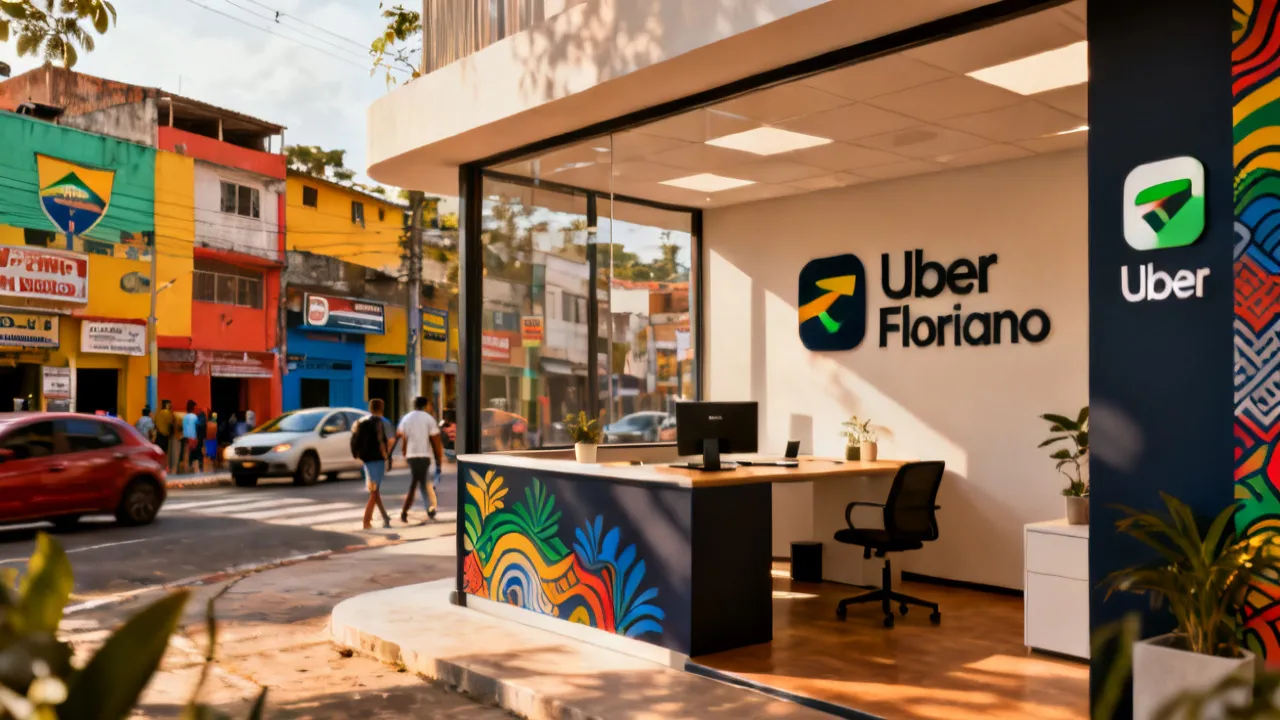
Critical Overview: What “Uber Floriano” Usually Means for Riders Nearby
When people search for Uber Floriano, they’re typically trying to understand how to request a car, what pricing can look like, and which supplier or operating model may apply to their pickup area “nearby.” In very on-demand mobility systems, the rider experience is shaped by a combination of fare calculation rules, driver availability, and local dispatch practices. Before choosing a ride, it’s very important to verify the fare estimate displayed at request time and confirm pickup details for your specific neighborhood.
From an industry perspective, the phrase “Uber Floriano” functions less like a single product and more like a search intent: it signals the user’s location-based need for transportation and their expectation that the app will surface ride options with transparent, time-sensitive estimates. That expectation matters because on-demand prices can change quickly due to demand, route distance, traffic conditions, and service category.
It’s also worth noting that riders often use local phrasing—“Uber + neighborhood/city reference”—as a shortcut for coverage. In practice, the app’s routing, matching logic, and the driver workforce available to fulfill requests can vary by micro-location. A street corner, a gate entrance, or a building cluster can affect pickup speed and distance-to-first-mile, which in turn affects the fare estimate. So even when two riders are “nearby,” the app may show different options and different quotes at the same moment.
Understanding “Uber Floriano” in Context (Objective Background)
Uber Floriano is often used by travelers and residents as shorthand for accessing ride-hailing services in a specific city area associated with Floriano. Because ride-hailing platforms rely on city-by-city operational logistics, coverage and service categories can differ by locale—meaning a rider “nearby” may encounter variations in vehicle types, pickup instructions, and available ride tiers.
Objectively, on-demand mobility platforms generally do the following:
- Compute an estimated fare when a request is created.
- Match the rider with available drivers within a time window.
- Apply pricing components such as distance, time, base fees, and local adjustments (depending on jurisdiction and service rules).
- Manage fulfillment via dispatch systems that account for demand patterns.
Even when two riders request at the same time, the visible estimate can vary based on pickup location accuracy, route selection, and how the platform models traffic conditions. The app typically uses a map-based understanding of roads, turn restrictions, and approximate travel times. If a rider drags the pickup pin even slightly, the system can re-evaluate the nearest reachable curb point and the first segment distance, leading to different pricing and potentially different driver arrival behavior.
Additionally, different ride categories (standard, higher capacity, comfort-oriented offerings, or other local variants) can change both the pricing structure and the matching pool. A tier with fewer qualifying vehicles may show a longer arrival time, while a tier with more supply may cost slightly less or more depending on demand and the way surge-like mechanisms are represented in that market.
Pricing Expectations: How Fare Estimates Are Typically Structured
Because your request mentions price information but does not specify a concrete number, the very reliable approach is to explain how pricing is normally built and what to check. In practice, riders searching for Uber Floriano should treat the displayed quote as the very current and authoritative reference.
Pricing in modern ride-hailing is not a simple “meter” that increments uniformly; instead, it is usually a composite of multiple elements, often including:
Common fare components you may see
- Base fee for activating the trip.
- Time component (how long the trip takes, based on routing/traffic).
- Distance component (how far the trip is).
- Service tier multiplier depending on vehicle category (e.g., standard vs. higher-capacity or comfort offerings).
- Local adjustments that can be applied in specific markets due to regulatory or operational conditions.
- Demand-related variability (often experienced during peak periods) that affects driver availability and pricing dynamics.
How estimates can differ even for “the same route”
Riders often expect that two trips with the same start and end points must have the same cost. That’s not always true. Several practical factors can produce different estimates:
- Pickup walking distance (or curb matching distance): if the driver must approach from a slightly different road segment, the platform may estimate a different pickup-to-start distance.
- Routing alternatives: the system may choose different roads depending on current traffic predictions, lane closures, or time-of-day patterns.
- Time-of-request impact: even within minutes, congestion can change enough to adjust the time component.
- Traffic modeling granularity: the app might estimate travel time using short-horizon models that update frequently.
- Minimum fare rules and local minimums: some markets enforce minimum charges that can affect short rides disproportionately.
Practical ways riders can reduce “surprise” costs
From an industry operations standpoint, many pricing complaints originate from preventable friction points: wrong pickup pin, unclear destination gates, or waiting time caused by pickup delays. To keep the experience predictable:
- Confirm the pickup pin matches the real curb location.
- Choose the destination carefully (entrance points, building names, and landmarks help).
- Avoid long delays at pickup—standing longer than needed can create additional charges in some markets.
- Compare ride tiers rather than assuming a single category is always optimal.
- Re-check the estimate if the route changes (e.g., after you move to a different curb or select an alternate pickup).
To make these steps easier, it helps to think like an operations engineer. In many cities, “surprise costs” are not caused by hidden pricing so much as by a mismatch between what the user thinks the trip path will be and what the map-based system predicts. If you reduce those mismatches—especially at pickup and at destination entrances—your estimate becomes more likely to match what you experience.
Reliable source guidance: For readers seeking authoritative explanations of how ride fares are calculated, the very dependable materials are the platform’s own help center pages and local policy documentation. Additionally, general industry research on on-demand fare variability is discussed in mobility studies by consulting firms and academic work; however, the exact computation method is always market- and policy-specific. Riders should treat these broader sources as contextual knowledge, not as guarantees about their specific quote.
Supplier Considerations: What “Supplier Details” Can Mean in Ride-Hailing
Your prompt references supplier details. In ride-hailing ecosystems, the “supplier” is usually one of three categories:
- Platform operations (the technology and rules layer that handles pricing logic, matching, and trip management).
- Independent driver workforce (the direct service fulfillment entity who provides the ride vehicle).
- Local partners where applicable (some markets use local operational partners for regulatory handling or service management).
Objectively, riders typically interact with the driver workforce as the immediate supplier for the trip experience, while the platform supplies the booking interface and governance framework. The practical takeaway: when you see a ride option under the Uber Floriano search context, you’re essentially selecting among platform-managed service categories, each fulfilled by available drivers meeting the system’s requirements.
But “supplier details” can also mean something more concrete to a rider: the displayed driver name, the car model, the license plate, the arrival time, and sometimes even the driver rating. These are not just informational; they are part of a safety and verification workflow. In many jurisdictions, that verification is the primary safeguard against wrong-vehicle pickup, and it’s also how disputes are resolved when something goes wrong.
What to check before confirming a ride
- Driver and vehicle details presented in the app match the car at pickup.
- Pickup location clarity reduces waiting and route corrections.
- Estimated arrival time aligns with your schedule.
- Cancellation terms shown at request time are understood—policies differ by market.
It can also be useful to consider the “supplier reliability” dimension. For example, if you repeatedly see the same pattern (drivers taking longer, or cars arriving from farther away), it may indicate that your pickup zone is difficult for drivers to access. That’s not a problem with the app’s intent; it’s an operational reality: dispatch systems select from the nearest feasible drivers. Changing your pickup location to a more accessible curb can effectively “improve supplier reliability” from your perspective.
How supplier availability affects the rider’s real experience
In on-demand systems, supplier availability is not static. It changes due to:
- Time-of-day effects (commute peaks, late-night shifts, weekend nightlife).
- Local events (stadiums, concerts, major traffic disruptions).
- Road access patterns (construction, one-way streets, curbside restrictions).
- Driver positioning: drivers often stage in spots with good connectivity and quick egress, which can shift by neighborhood.
Therefore, the phrase “Uber Floriano nearby” can feel inconsistent across the day. A rider might see short wait times at 2 p.m. but longer wait times at 7:30 p.m., not because “the app changed,” but because the supply pool reorganized. This is why the arrival estimate and the in-app matching results matter more than assumptions based on earlier rides.
Nearby Localization: How Local Culture Affects Pickup Reality
Even when the app interface looks identical across regions, real-world pickup conditions differ. In “nearby” Brazilian contexts, riders often navigate pickup points around commercial streets, bus terminals, and neighborhood landmarks. It helps to use locally understandable cues: building names, gate colors, storefront signs, and nearby intersections. The goal is simple—make it easy for the driver to confirm they are at the correct curb without prolonged back-and-forth.
For example, in many urban Brazilian neighborhoods, drivers frequently wait at the very accessible curb rather than directly at a building entrance. If you position yourself with clear visibility—without obstructing traffic—you can improve pickup speed and reduce time-related charges.
Pickup behavior is also influenced by how people typically move through spaces. In some areas, people gather in a specific spot near a pharmacy, a kiosk, or a sidewalk entrance. If the app pin is not placed near that common gathering point, drivers may interpret the location differently, leading to delays. A small operational detail—standing 20 meters closer to an accessible curb—can reduce waiting time and improve the matching experience.
Landmarks, entrances, and “how far from the curb” problems
One of the most common micro-problems in ride-hailing is when the rider expects a pickup at an entrance gate, while the driver expects a pickup at a curb where they can legally stop. In some neighborhoods, entrance gates are set back from the curb by a short driveway or a service road. That gap creates a mismatch between what the rider thinks is “pickup” and what the platform’s map-based model and local driver behavior consider feasible.
To reduce these issues:
- When possible, set pickup at a curbside point where stopping is clearly feasible.
- If you must use a gate entrance, include a short instruction like “pickup at gate on the right side” or “near the pharmacy storefront.”
- Use your phone’s location sharing (where available) if it helps your exact position be recognized.
- Avoid placing the pin in the middle of a street or on a non-road area. Even if it looks correct visually, drivers rely on navigable curb points.
Key Decision Framework: Picking the Right Ride Option Under Uber Floriano Searches
If you’re comparing options after searching for Uber Floriano, a structured decision approach usually yields better outcomes than picking based on price alone.
Step 1: Prioritize timing needs. If you’re late to an appointment, choose the option with the top arrival estimate rather than the lowest fare.
Step 2: Match vehicle capacity to group size. A cheaper tier can be cost-inefficient if it forces you to squeeze or complicates luggage.
Step 3: Evaluate pickup friction. If your location is difficult to reach (tight street access, construction zones, or unclear curbside entry), choose a service tier that tends to draw faster availability in your area.
Step 4: Confirm destination accuracy. Large gated complexes or hospital campuses often have multiple entrances; selecting the wrong one creates extra maneuvering time.
Step 5: Use the estimate shown at request time. That quote is the operational top reference. Pricing can shift quickly due to demand changes—particularly during evenings, weekends, and event hours.
There’s also a subtle sixth factor: risk tolerance. Some riders prefer the lowest cost even if it might take longer; others value predictability. If your day has strict time constraints, “predictability premium” is often worth it. The app’s estimated arrival time is one of the best quantifiable proxies for that predictability.
Regulatory and Safety Considerations (Objective and Non-Exaggerated)
Ride-hailing in any jurisdiction should be approached with baseline safety and compliance awareness. While practices vary by country and municipality, riders generally benefit from:
- Verifying the vehicle and driver identity inside the app before entering.
- Using seat belts and following local road safety rules.
- Avoiding cash-based payment expectations unless the platform clearly indicates payment options for that market.
- Reporting issues through official channels provided in the app.
From an industry lens, responsible platforms also emphasize incident reporting, driver onboarding standards, and trip recordkeeping—these mechanisms reduce disputes and improve accountability.
Riders should also remember that “safe” is not only about physical risk; it’s also about procedural safety. Procedural safety includes not getting into a car that doesn’t match the app details, not accepting last-minute route or pickup changes that you cannot verify, and keeping your own communication and payment flows within the app. When a dispute arises, the trip record is usually the backbone for resolution.
Comparison Table + Conditions/Requirements + Source + Step-by-Step Guide
The following section consolidates supplementary information in a structured way. It is intentionally practical and focuses on decision criteria rather than marketing claims.
| Aspect | What to Expect (Objective) | Conditions / Requirements | Source Type |
|---|---|---|---|
| Pricing transparency | Very platforms show an estimate before confirming the request. | Riders should use the in-app estimate at request time and ensure pickup pin accuracy. | Platform help center and market policies |
| Supplier role (who fulfills the trip) | The driver workforce typically fulfills the ride, while the platform manages matching and governance. | Drivers must meet platform onboarding and local eligibility rules; riders should match driver/vehicle details before entry. | Platform onboarding and local compliance descriptions |
| Pickup reliability | Pickup accuracy affects time and route; demand affects dispatch speed. | Use a precise pickup pin; stand in a safe, visible area; avoid last-second destination changes. | Operational top practices derived from mobility industry operations |
| Service availability | Vehicle tiers and wait times vary by neighborhood and time. | Check availability at the moment of request; consider alternate ride tiers if the wait time is unfavorable. | In-app real-time availability + market operations |
| Dispute resolution | Trip records and in-app reporting are used to address issues. | Retain screenshots of estimates and any messages if a problem occurs. | Platform support processes |
Step-by-Step: How to Use Uber Floriano Effectively Nearby
Below is a step-by-step guide you can follow when you’re searching for Uber Floriano and trying to choose the very suitable ride option.
- Open the app and set pickup using the correct curbside location. If you can, place the pin at the very direct accessible entry point.
- Select the destination and confirm it matches the correct entrance or landmark.
- Review available ride tiers shown in the interface, including expected arrival time.
- Validate the fare estimate displayed at request time. If the estimate seems inconsistent, adjust pickup accuracy before confirming.
- Confirm driver/vehicle identity once matched. Do not enter until you verify the details shown in the app.
- Communicate clearly during pickup if needed—short, precise instructions reduce delays.
- Track the trip and payment flow as provided in the app, and keep the receipt for your records.
- If issues arise, report through official channels with trip details and timestamps.
To make the steps even more effective, consider preparing two “default” behaviors. First, always check pickup accuracy, especially if you are in a busy commercial area with many side streets. Second, always verify the destination entrance if your destination has multiple gates. These two habits prevent a large proportion of the operational problems that riders encounter.
FAQs: Uber Floriano (Pricing, Suppliers, and Practical Questions)
1) What is “Uber Floriano” in practical terms?
“Uber Floriano” usually refers to requesting ride-hailing service in the Floriano-associated area. It is a location-driven search phrase that points you to available ride tiers and real-time estimates in the app.
2) How does pricing work when searching Uber Floriano?
Pricing is typically estimated based on distance, time, service tier, and real-time conditions such as demand and traffic. The very reliable figure is the in-app estimate shown at request time.
3) What supplier details should I pay attention to?
For very riders, the key supplier detail is the driver and vehicle match shown in the app. At the ecosystem level, the platform manages matching and governance, while drivers fulfill the ride. Always verify driver and vehicle identity before entering.
4) Are there requirements to use the service nearby?
Requirements vary by market, but commonly include a compatible payment method, an active rider account, and compliance with platform safety guidelines. Your app’s onboarding flow and local policies are the authoritative reference.
5) Why might my fare estimate change after I set a request?
Estimates can shift if demand changes, pickup location accuracy changes, or route conditions evolve. Re-check the estimate if you move the pickup pin or if the app recalculates routing.
6) What’s the top way to reduce pickup delays?
Use a precise pickup pin, stand in a safe and visible location, and provide clear landmark-based instructions if your curb access is complex. Reduced waiting time also helps keep the trip experience smoother.
7) Can I compare different ride tiers for the same trip?
Yes. Compare arrival time, vehicle capacity, and the displayed fare estimate. Sometimes a higher tier offers better fulfillment speed or comfort, while a lower tier may be optimal if timing is flexible.
8) Where should I go if there is a problem with the ride?
Use the platform’s in-app support or reporting tools associated with your trip. Provide trip details and screenshots if the situation involves pricing discrepancies, pickup confusion, or safety concerns.
9) Does this guide include exact Uber Floriano prices?
This article focuses on how pricing is typically structured and how riders should interpret in-app estimates objectively. Exact numbers depend on time, route, and market conditions, so the displayed estimate is the very dependable reference.
Industry Expert Notes: How to Think Like an Operations Manager When Booking
When I review consumer complaints or optimize user journeys for on-demand services, patterns emerge quickly. People rarely struggle with the concept of ride-hailing itself; they struggle with uncertainty. The very effective strategy is to reduce uncertainty through workflow hygiene: correct pickup pins, accurate destination points, and choosing tiers based on both price and timing.
In a Uber Floriano context, riders should also remember that local dispatch is dynamic. Even within the same neighborhood, driver availability can differ block-by-block due to parking patterns, street access, and how drivers position themselves between assignments. That is why the “nearby” experience can feel inconsistent unless the pickup instructions are clear.
From an operational viewpoint, consider your request as a set of variables the system must solve simultaneously:
- Spatial variable: where you are, and where the driver can legally stop.
- Temporal variable: when you need to depart.
- Quality variable: which vehicle tier meets your needs (capacity, comfort, luggage space).
- Compliance variable: which local rules or pickup restrictions apply.
When you reduce variability on your side—clear pin, clear pickup zone, clear destination gate—you reduce the system’s uncertainty and you tend to improve the match outcome (arrival time and ride quality).
Common Pitfalls to Avoid (Especially When Comparing Price)
- Comparing fares across different pickup points without accounting for route differences.
- Choosing a destination entrance that causes complex routing (multiple gates, one-way restrictions, or restricted campus roads).
- Ignoring arrival time when schedule risk matters—waiting can be more costly than a small fare difference.
- Assuming supplier consistency across time; driver availability changes, and fulfillment varies.
Another common pitfall is repeatedly re-requesting without adjusting the pickup location. In many systems, re-requesting can refresh the matching algorithm, but if the pickup remains ambiguous or hard to access, you can end up cycling through the same operational difficulty with different drivers. The better approach is usually to improve the input: set a more precise pin, add a short instruction, and make sure you’re standing at a legal stop area.
Finally, riders sometimes overlook baggage and group needs. If you have bulky items, a standard tier may be fine but a smaller vehicle can cause discomfort or additional friction at pickup and destination. Choosing a tier with better capacity can reduce “hidden costs” in time and inconvenience.
Reliable Sources and How to Verify Details
For the very accurate operational details—fare computation explanations, policy requirements, and service availability—use:
- Official platform help pages for your ride-hailing market
- Local municipal or regulatory guidance where ride-hailing rules are published
- Reputable industry research from established consultancies or academic publications for general market behavior (e.g., how demand impacts wait times and pricing dynamics)
This guide avoids exaggerated claims or unverified numeric promises. In ride-hailing, the only universally reliable “price” is the live estimate shown by the app in your exact circumstances.
If you want to validate that you’re interpreting information correctly, also consider cross-checking your app’s displayed fare breakdown (if available), your trip time estimate, and the distance. Many apps provide at least partial transparency: base fare, estimated time, estimated distance, and sometimes promotions or adjustments. If something seems off, take a screenshot at request time—this can help when you contact support.
Additional Practical Scenarios: What “Uber Floriano” Nearby Looks Like in Real Life
Because riders learn best through examples, it can help to think through common nearby pickup situations and how the decisions described above play out in real life. These scenarios are not guarantees of what you will experience, but they represent typical operational patterns seen in on-demand mobility.
Scenario A: Pickup near a busy commercial corridor
Imagine you’re searching for Uber Floriano and you are standing outside a storefront on a street with heavy turning traffic. The app shows a short arrival time for some tiers and a longer one for others. The cheaper option might have more drivers available, but the driver might need extra time to stop safely and to re-enter traffic. If you choose the lowest fare tier, you may wait longer at the curb—even though the “arrival estimate” looks acceptable.
Operationally, this happens because the map-based system can estimate travel time to a region, but actual curb accessibility can vary street-to-street. If you move your pickup pin one block to a more accessible curb—such as a designated stopping area or wider sidewalk—you often reduce the practical pickup friction. That friction reduction can make the ride both faster and more predictable.
Scenario B: Multiple entrances at your destination
Consider a destination such as a hospital, university, or large gated office. Even if you set the destination correctly in terms of the building name, the driver may need to approach a specific entrance. If you select an entrance that creates complex maneuvers—like an area with one-way restrictions—the trip time can rise. That can cause your final fare to differ from what you expected when you set the request.
A rider-friendly approach is to choose the entrance that best matches typical vehicle navigation patterns. If you are unsure which entrance is intended for pickup, watch how other cars approach the property or use a landmark known to be navigable. If the app suggests multiple pickup points, choose the one that aligns with the “car-friendly” road access rather than the most convenient pedestrian entrance.
Scenario C: Late-night demand and shifting supply
At night, especially on weekends, driver supply and rider demand can shift quickly. Riders searching for Uber Floriano nearby might see higher estimates and longer wait times. Some tiers may become scarce due to driver repositioning patterns (drivers may stage in areas with steady demand).
If your schedule is strict, don’t focus only on the displayed price. Instead, treat the app’s arrival time and availability as a sign of supply health. Sometimes a slightly higher fare tier provides more reliable matching because it draws from a different segment of the driver workforce. In those cases, the “extra cost” can function as a premium for reliability.
Scenario D: Short trip where minimum charges dominate
Short trips sometimes show fare estimates that don’t seem proportional to distance. This is often due to base fees and minimum charges that make the cost floor higher than you expect. If you compare two short trips with small differences in pickup points, the fare can change drastically due to minimums and the composition of time and distance components.
In this situation, the rider can reduce cost surprises by verifying that the pickup pin is as direct as possible. If your pickup pin is set in a less direct area, the system may estimate a longer pickup segment or route variation even if the destination is nearby. The result is that you “pay” for the system’s interpretation of the trip path rather than the real distance you think you’re traveling.
Scenario E: Pickup accessibility issues (construction, curb restrictions)
Construction zones and curb restrictions can cause drivers to park farther away or to take detours to reach the pickup area. The app estimate may not perfectly capture these micro-conditions. Riders often experience this as longer-than-expected arrival times or final fares that feel higher than expected.
Operational best practice is to choose a pickup pin that is likely to be reachable by a driver without illegal stopping. Even if you are located near the correct intersection, the curb where you are standing might be obstructed. Moving a few meters to an accessible curb can restore alignment between your actual pickup reality and the system’s routing assumptions.
Deep Dive: How Rider Inputs Influence Matching and Fare
To make the “Uber Floriano nearby” experience more predictable, it’s helpful to understand that rider inputs influence both matching and fare estimation. Many riders assume the platform “knows where they are,” but in practice, the pickup pin, the exact curb position, and the chosen destination entrance strongly affect the system’s internal calculation and dispatch logic.
Pickup pin accuracy and the “first-mile” problem
Fare estimates often incorporate the distance and time required for the driver to reach the pickup area. If your pin is slightly off, the driver may travel extra distance (or take an indirect route) to reach the location. Even if you later walk closer, the system may still have already matched the driver based on the earlier pickup location geometry.
That’s why rider behavior matters. A precise pin, placed on an actually stop-able curb, reduces the “first-mile” mismatch. It also helps prevent the common situation where the driver arrives and can’t stop at the exact curb you indicated, forcing them to reposition and increasing waiting time.
Destination accuracy and “last-mile” complexity
Similarly, destination accuracy can create a “last-mile” mismatch. If a building has multiple entrances, and your selected destination corresponds to an entrance that is less navigable for cars, the route may become longer. That can raise the time component of your fare estimate and lead to a final cost that is higher than expected.
In campuses and gated complexes, it’s common for vehicles to use specific lanes or gates. The most predictable approach is selecting an entrance that aligns with how vehicles typically approach. If you are visiting a site for the first time, you can reduce risk by selecting the entrance associated with drop-off instructions, signage, or an area that other taxis commonly use.
Demand variability and “quote confidence”
Even when inputs are accurate, demand variability can change the quote environment. If demand is high, the system may tighten the matching window or shift driver allocation across zones. The fare estimate may reflect this demand through additional components (sometimes represented as multipliers or adjustments).
Rider takeaway: treat the in-app quote as authoritative for that moment. If you wait too long after seeing an estimate, demand may change and the next estimate may differ. If your budget is strict, consider requesting promptly and avoid prolonged “hovering” while you continue browsing, unless you can tolerate potential pricing shifts.
How to Interpret Ride Tiers Beyond the Surface Price
Many riders compare ride tiers by price alone. But in practice, tiers differ across multiple dimensions: vehicle class, capacity, typical driver acceptance, and sometimes even dispatch prioritization. When you search for Uber Floriano nearby, you may see several options that look similar on paper but behave differently in real dispatch.
Arrival time is a decision variable, not an informational detail
Arrival time is one of the best quantitative indicators of supply. If the cheapest tier has a much longer arrival time than a slightly more expensive alternative, that difference can reflect driver availability patterns. In some cases, selecting the faster option reduces your total cost by avoiding missed appointments or additional time-based expenses (like waiting fees or the opportunity cost of your time).
Capacity matters even if you think it “fits”
Small mismatches in capacity can create hidden costs. For example, a vehicle that fits your group might not fit luggage comfortably. That can lead to awkward loading/unloading, longer time at pickup, or stress during the ride. If you have suitcases, equipment, or multiple bags, a higher-capacity tier may actually reduce total trip friction.
Comfort vs. standard: what you should actually evaluate
Some tiers emphasize comfort. But what matters for riders is often practical: seat quality, space for personal items, and the overall fit for your needs. If you’re going somewhere important (work event, appointment, or family trip), the comfort tier might offer better usability that you can feel immediately. If you’re only going a short distance and don’t require comfort features, the standard tier may be sufficient.
Dispute and Support: Building Evidence from the Start
Disputes can involve pricing differences, pickup confusion, cancellation charges, or safety concerns. While riders hope for a smooth trip, it helps to know how to handle problems in a way that increases the chance of a fair resolution.
What evidence usually helps
- In-app screenshots of fare estimates before confirming.
- Trip record details (time, route segment, driver identification).
- Message logs if you communicated with the driver in-app.
- Timestamped notes if you experienced confusion or delays.
From an operations perspective, support systems rely on trip metadata to verify what happened. Your personal narrative is important, but the trip record is usually the anchor for the investigation. That’s why saving screenshots early—especially before the ride—can be valuable.
Common dispute patterns and how to prevent them
Some disputes happen because of avoidable input errors:
- Wrong pickup location: rider enters the wrong car or delays pickup due to pin mismatch.
- Wrong destination entrance: driver arrives but the rider expected a different gate.
- Assumption of fixed routes: rider expects the route to be identical while road changes force different routing.
- Estimate mismatch expectations: rider believes the estimate is a guaranteed final price even when pricing includes time components.
Prevention is mostly about reducing ambiguity. Clear pickup pins, clear entrance selection, and respecting that travel time may change due to traffic are the most effective prevention measures.
Conclusion: A Practical, Objective Way to Navigate Uber Floriano Searches Nearby
Searching for Uber Floriano is top approached as a real-time, location-specific decision. Treat displayed fare estimates as your primary pricing reference, verify driver and vehicle details as the very relevant supplier factor, and use a structured booking routine to reduce delays. With clear pickup and destination information—especially in “nearby” urban conditions—the ride-hailing experience becomes measurably more predictable and efficient.
Ultimately, the most reliable way to “win” in ride-hailing is to reduce uncertainty: align your pins with reachable curbs, choose navigable entrances, interpret ride tiers using both time and cost, and use the platform’s in-app records as your source of truth. That approach turns a location-based search phrase like “Uber Floriano” into a stable, actionable process rather than a guessing game.
-

A Guide to Cost-Efficient Small Electric Cars for Seniors
-
Mastering Debt Consolidation: Boost Your Credit Score and Manage Interest Rates
-
Your Guide to Loans, Credit Checks, and Interest Rates
-
Affordable Independent Living: Finding the Right Senior Housing
-
Guide to Senior Living Apartments: Affordable and Comfortable Environments