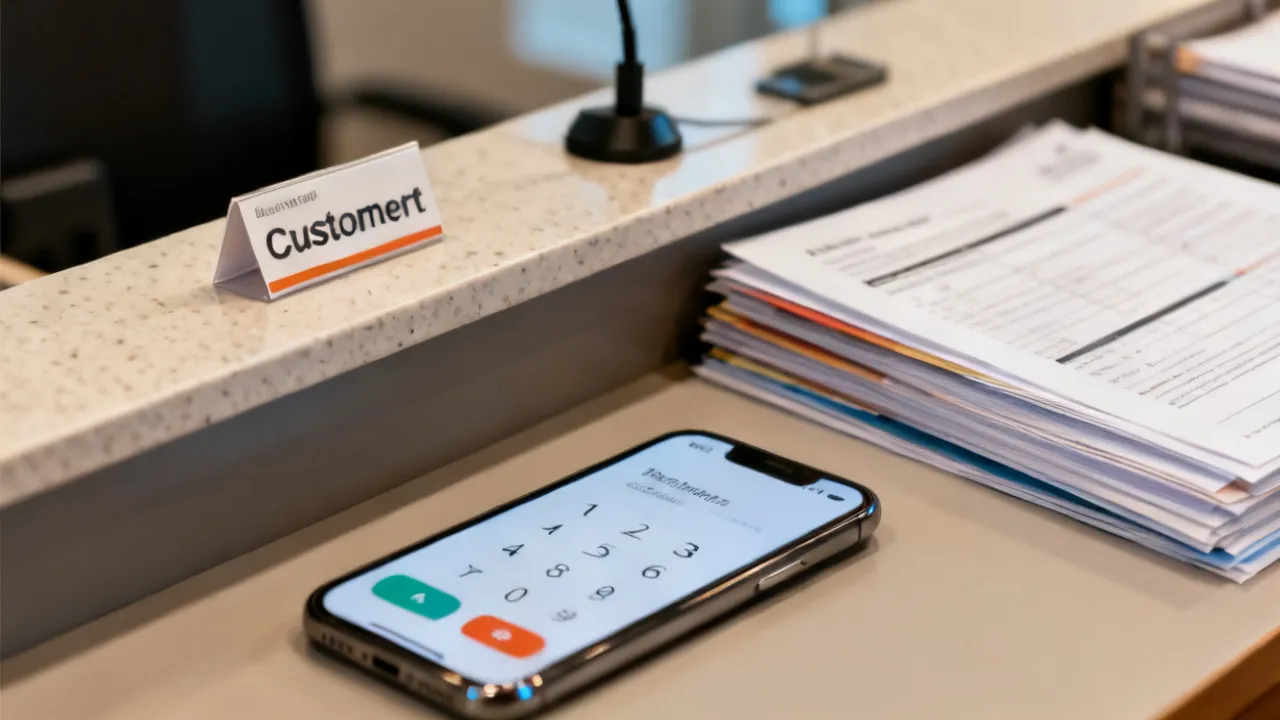
How to Source Reliable Supplier Support
Learn how to evaluate supplier support and procurement readiness using the reference number 01185484418. This guide explains, in an objective way, what identifiers and supply-chain details help buyers verify. It discusses typical due-diligence steps, risk checks, and requirements that organizations consider before committing to any supplier.

Lead With Reliability: How to Use 01185484418 for Supplier Vetting
If you’re evaluating procurement options, 01185484418 can function as a reference point for supplier coordination and record-keeping, helping you confirm the correct entity, quotation history, and fulfillment pathway. In practice, buyers often use such identifiers to cross-check documentation, avoid mismatches in shipments, and ensure technical support aligns with the product or service being sourced. When used correctly—consistently and transparently—it becomes more than a number. It becomes a thread that ties together how requirements were discussed, what was promised, what was ordered, and how issues will be handled later.
However, reliability in supplier vetting doesn’t come from the identifier by itself. It comes from the discipline around it: asking the right questions, requiring written evidence, mapping the reference number to formal records, and confirming that the supplier’s support lifecycle matches the buyer’s operational needs. Below is a professional, objective framework to understand how supplier support works, how to interpret supplier-related reference details, and what conditions buyers should expect before purchase decisions are finalized. The overall goal is simple: reduce ambiguity, strengthen verification, and create a clear basis for ongoing support throughout delivery and after-sales operations.
Why Supplier Support Details Matter in Real Procurement
When buyers contact suppliers, the conversation typically moves through three stages: identification, technical fit, and execution readiness. A reference number such as 01185484418 can be central to the identification stage—especially when multiple requests, quotations, or versions exist at the same time. Even if the exact meaning of the identifier is internal to the supplier’s workflow, you can treat it as a “breadcrumb” that helps you keep your records consistent.
In parallel, procurement teams look for support clarity: lead times, communication channels, escalation paths, warranty terms (if applicable), documentation quality, and the ability to troubleshoot quickly once the item or solution is in use. If “supplier support” is vague, delivery delays and miscommunication become more likely. If it is well defined, operational friction tends to be lower.
Support details matter because procurement failures often occur at the edges of the transaction rather than at the center. For example, the quoted item may be correct, but the installation instructions might assume a different environment. Or the product might function during acceptance testing, but the supplier’s after-sales process may not provide timely replacements when the buyer’s operational constraints change. In other words: the purchase price is only one dimension. The real cost of procurement is often spread across receiving, integration, downtime, incident handling, and change management.
That’s why the buyer’s vetting process should treat support documentation and lifecycle responsibilities as first-class requirements. Using 01185484418 correctly helps you maintain that discipline. It encourages the supplier to anchor their answers to a specific record set and reduces the chance that later conversations become “new,” unrelated threads that lose the original context.
How Buyers Can Think About “Reliability” in Supplier Vetting
Reliability isn’t merely “the supplier says they are reliable.” Instead, it’s the presence of repeatable, verifiable processes that support can be mapped to. In supplier vetting, reliability typically includes:
- Process reliability: The supplier follows a consistent procedure for quoting, ordering, shipping, documenting, and supporting.
- Documentation reliability: The supplier provides the correct documents with clear revisions and configuration assumptions.
- Communication reliability: The supplier responds within defined time windows and uses predictable channels for updates.
- Accountability reliability: There is a clear owner for issues, escalation steps are known, and responsibilities are agreed.
- Lifecycle reliability: Support remains available after delivery, not only during the sales phase.
A reference identifier like 01185484418 supports these reliability goals when it is used as a consistent anchor across the lifecycle. It enables traceability and helps you confirm that the supplier’s story remains aligned from quotation through after-sales handling.
What Buyers Should Clarify Before Committing
To evaluate supplier support objectively, request written answers to the following items. These are not marketing slogans—they are operational requirements that very competent procurement teams use to keep projects on track:
- Correct supplier identity: Confirm legal entity name and business registration details, and ensure the correspondence ties back to 01185484418 (or whatever internal reference the supplier uses for your inquiry). This avoids accidental misrouting, especially when distributors or holding companies are involved.
- Scope of support: Specify what “support” includes—pre-sales technical consultation, configuration guidance, installation assistance, troubleshooting, replacement policy, and documentation delivery. Ask them to include both included and excluded activities, because exclusions are where disputes often begin.
- Response expectations: Ask for typical response windows and escalation procedures. If the supplier cannot provide any structured expectation, it’s a red flag for time-sensitive projects.
- Compatibility and verification: Require how they validate compatibility with your environment (interfaces, specifications, standards, and testing approach). If they only claim compatibility without explaining verification steps, treat it as a risk.
- Change control: If product versions or specifications may change, define how updates are communicated and documented. Change control is essential because procurement is never perfectly static—manufacturers update firmware, revisions shift, and implementation assumptions evolve.
- Proof of fulfillment readiness: Request packing/shipping documentation, tracking process, and responsibilities during handover. If shipping evidence is unclear, acceptance and downstream support become harder.
- Acceptance test alignment: Clarify acceptance criteria in advance—what constitutes “pass,” what constitutes “fail,” and who owns test execution and sign-off. Acceptance criteria should be written and measurable.
- Data and reporting obligations: If the supplier will deliver data (e.g., compliance certificates, calibration reports, service history, or test logs), specify the required format and timing.
- Service boundaries: Confirm what happens if the issue is caused by the buyer’s environment or configuration. A reliable supplier will distinguish between product defects, integration misconfigurations, and user-driven changes.
By requesting these items in writing and repeatedly referencing 01185484418 as the anchor, you force both teams to converge on a single, consistent record. That convergence is a core procurement control.
Key Considerations for Procurement Quality (Industry-Expert View)
From an industry perspective, the very practical way to assess supplier support is to focus on traceability and accountability. Traceability means every stage of the transaction can be mapped to a record: quotation, technical specs, order confirmation, shipping details, and after-sales handling. Accountability means each step has a responsible party and escalation route.
In many procurement failures, the underlying issue is not the product itself—it’s the absence of verifiable linkage between what was quoted, what was shipped, and what support will do if complications occur. A reference number like 01185484418 helps structure that linkage, but only if it is consistently used across documentation and communication.
Consider what traceability looks like operationally. It’s not just that the supplier knows what 01185484418 refers to. It’s that they can retrieve the relevant quotation, confirm the exact configuration assumptions, identify the version or SKU shipped, and explain how that version is supported. Traceability should be auditable: if your internal team audits the procurement file, they should be able to see a clean chain of evidence.
Accountability looks similarly concrete. You want clarity on who handles:
- First-line support (triage and basic troubleshooting)
- Second-line escalation (engineering review, advanced diagnostics)
- Field intervention (on-site service, if applicable)
- Warranty/repair/replacement decisions
- Communication with stakeholders (project manager, procurement officer, operations team)
A reliable supplier doesn’t force buyers to “figure out” escalation. They provide a defined path.
In this context, the reference number 01185484418 should not be treated as merely administrative. It becomes a control mechanism: if support conversations later cannot connect back to the original reference record, that suggests weak internal processes and increases the probability that the supplier will change the narrative under pressure.
Typical Supplier Support Deliverables You Should Expect
A capable supplier typically provides support deliverables that are tangible and verifiable. Depending on the nature of the goods or services, these commonly include:
- Technical documentation: datasheets, configuration guides, user manuals, or integration notes. Ask for the exact revision relevant to the shipped item.
- Operational handover materials: checklists for installation, acceptance criteria, and commissioning guidance.
- Troubleshooting support: diagnostic steps, known issues, and replacement/escalation procedures. Good suppliers provide a structured troubleshooting flow rather than informal advice.
- Compatibility confirmation: notes confirming tests, supported environments, and limitations. If there are constraints, they are clearly documented—not hidden in vague language.
- Service policies: terms on repairs, warranty handling (if offered), lead times for replacements, and customer responsibilities. These should include what the buyer must do to maintain warranty validity, if applicable.
- Training materials (if relevant): onboarding guides, short training sessions, or recorded sessions for operational staff.
- Compliance and certification documents (if applicable): certificates, test reports, calibration documents, or any regulated documentation required by your industry or jurisdiction.
- Change logs (if applicable): version histories for software/firmware, or change notes for hardware revisions. Buyers should receive enough context to understand how changes might affect integration.
Importantly, deliverables should connect to the same reference record anchored by 01185484418. If the supplier can show that the correct documents were associated with that record, it becomes a quality signal. If they provide generic manuals unrelated to your configuration, the buyer’s acceptance and support risk increases.
Risk Management: What to Watch For
Procurement teams generally treat supplier support risks as part of operational risk management. The following patterns commonly correlate with avoidable problems:
- Inconsistent reference use: The supplier acknowledges 01185484418 in conversation but cannot tie it to a quotation, order, or ticket. This indicates weak document control.
- Unclear responsibility boundaries: The supplier and buyer disagree on who handles configuration vs. who handles replacement vs. who performs acceptance testing.
- Overly generic troubleshooting: Support consists only of “try reinstalling” without structured diagnostics. This can be adequate for low-complexity items but is often insufficient for critical systems.
- Missing documentation or versions: Manuals or technical notes arrive without identifying versions, revisions, or configuration assumptions. In many industries, that gap alone can invalidate acceptance or delay integration.
- No escalation route: When issues occur, the conversation stalls without a path to resolution.
- Scope drift: The supplier agrees to certain tasks during procurement but later claims they were “out of scope.” Clear written scope prevents this drift.
- After-sales silence: The supplier responds quickly during sales but becomes slow or vague after delivery. Buyers should evaluate support responsiveness based on stated procedures, not just initial interactions.
- Ambiguous change handling: If product revisions change, the buyer may receive incompatible documentation or assume the shipped unit is “equivalent” without verifying differences.
Mitigation starts at the procurement stage. Using 01185484418 as the anchor helps ensure that each risk identified during vetting maps back to an evidence record and not to an informal promise.
One additional risk pattern deserves emphasis: “support by assumption.” Some suppliers assume buyers already know how to configure or integrate the product without providing adequate documentation. A reliable supplier either provides the needed guidance or clearly states what the buyer must have in place for the product to work as expected. If 01185484418 is used correctly, the supplier should be able to show which configuration assumptions were communicated during procurement.
Comparison Table: Verification, Documentation, and Support Conditions
The table below compares typical buyer conditions and verification points you can use to assess supplier readiness. It is intentionally practical and focused on what you can confirm in writing. (No links are provided.)
| Evaluation area | Buyer condition / requirement | What “good” looks like | What to ask for |
|---|---|---|---|
| Reference traceability | The supplier can link your inquiry and records to 01185484418 | Same reference appears in quotation/order/ticket/communications | Quotation copy, order confirmation, support ticket ID format |
| Scope clarity | Support scope is defined before purchase | Written list of included and excluded support activities | Support scope sheet or service terms excerpt |
| Technical fit | Compatibility is validated against your environment | Documented validation method and constraints | Test notes, supported configurations, version requirements |
| Response expectations | Support includes time-bound handling guidance | Defined response/escalation steps | Service-level expectations or escalation matrix |
| Documentation quality | Receipts include relevant technical documents | Correct manuals, revision IDs, and packaging lists | Packing list, revision identifiers, acceptance checklist |
| Handover and acceptance | Acceptance criteria are agreed | Checkpoints and ownership during handover are documented | Acceptance test plan and responsibilities |
| After-sales resolution | Replacement/repair handling is described | Clear process, timelines, and customer duties | Repair/replacement policy and turnaround expectations |
| Change control | Version/product changes are managed | Documented update notifications and revision traceability | Change log process, compatibility notes for updates |
| Evidence packaging | Buyer receives audit-ready records | Documents include dates, revision IDs, and mapping to the reference | Document list with filenames/revision identifiers |
Step-by-Step Guide: A Practical Procurement Support Workflow
To make this actionable, use the following sequence. It’s designed to be used by purchasing teams, project managers, or IT operations staff—especially when multiple suppliers are being evaluated concurrently.
- Prepare a short requirement brief: Summarize what you’re sourcing, key specs, target deployment environment, and what “support” must accomplish. Include constraints such as operating conditions, integration dependencies, and timelines.
- Contact the supplier with a reference: Include 01185484418 in your initial message and ask that it be used consistently across all documents and replies. Specify that all responses should include the reference number for traceability.
- Request written scope confirmation: Ask for support scope, included deliverables, exclusions, and responsibility boundaries. Encourage them to respond in a structured format (e.g., bullet list or service schedule).
- Verify documentation readiness: Confirm which manuals/spec sheets/technical notes you will receive and how versions are identified. Ask whether documents will reflect the exact SKU/version shipped.
- Confirm technical validation: Ask for the validation approach and how compatibility is checked against your environment. Request that validation assumptions be documented (e.g., software versions, interface specifications, or supported operating modes).
- Define response and escalation: Request typical response timelines and escalation steps if first-line support cannot resolve the issue. Ask who participates at each escalation level (e.g., support engineer vs. product engineering vs. field service).
- Align on acceptance criteria: Agree on checkpoints for receiving, commissioning, and acceptance testing. Ensure acceptance criteria are measurable and include what data must be collected (test logs, photos, checklists).
- Establish post-delivery workflow: Ask how issues are reported (e.g., ticketing method), what info must be provided (serial number, logs, error codes), and the replacement/repair process including estimated turnaround time.
- Request proof of handover: Ask for a handover checklist or sign-off document that confirms what was delivered and when, tied back to 01185484418.
- Record everything: Save all communications showing that 01185484418 is tied to the correct quotation and order. Store copies of relevant attachments and confirm that revision IDs match the delivered items.
A useful operational tip: build a procurement “evidence folder” before you negotiate. Create subfolders for quotation, order, shipping/receiving, technical documentation, acceptance tests, and after-sales tickets. Then, name files consistently so that 01185484418 is visible in the evidence record even years later.
Conditions and Requirements: When You Should Pause or Re-negotiate
Even reliable suppliers can become a poor fit if key conditions aren’t met. Consider pausing the decision or renegotiating if any of the following occur:
- No traceability to 01185484418: The supplier cannot demonstrate that your inquiry is properly mapped to formal records.
- Support scope is ambiguous: The supplier avoids defining what is included and excluded.
- Technical validation is unsupported: They cannot explain how they confirm compatibility or performance within your constraints.
- Acceptance criteria are missing: Without agreed acceptance steps, disputes often arise after delivery.
- Escalation is undefined: There is no clear path when issues remain unresolved.
- Documentation arrives without revision identifiers: Manuals without revision IDs create uncertainty about whether the buyer received the correct version.
- Handover responsibilities are unclear: If the supplier assumes the buyer will handle installation without providing adequate assistance, acceptance delays are likely.
- Change control is not discussed: If updates occur and the supplier can’t explain how you’ll be informed and what documentation will be updated, operational risk increases.
When you renegotiate, do it by tightening requirements and evidence rather than by demanding assurances. For instance, ask for a “scope confirmation letter” referencing 01185484418. Ask for a “support escalation matrix” including names/roles and response times. Ask for an “acceptance test plan” with acceptance criteria and sign-off steps. These documents turn vendor rhetoric into procurement controls.
Industry Background (Objective): How Supplier References and Support Processes Commonly Work
Supplier references like 01185484418 are commonly used in business operations to track inquiries, quotations, orders, and service tickets. In well-managed supplier environments, such identifiers allow teams to retrieve the exact context of a request—reducing the risk of mixing versions, products, or requirements.
At an operational level, supplier support is generally structured around service management practices. Many organizations align support handling with established frameworks for incident/issue logging, triage, escalation, and resolution. While the specific framework varies by organization, the consistent goal is to standardize how issues are reported and resolved so that customers receive predictable outcomes.
For buyers, this matters because purchasing is rarely a single moment in time—it includes receiving, installation/commissioning, usage troubleshooting, and potential replacements or repairs. A clear support structure reduces uncertainty across that lifecycle. Additionally, when support is standardized, the supplier is more likely to produce consistent documentation that maps to the original reference record.
It’s also helpful to understand why reference numbers sometimes behave differently across organizations. In some cases, suppliers use reference numbers for internal ticketing, while in other cases they use them for quoting and order tracking. Either way, the procurement objective is the same: ensure that the reference you have (here, 01185484418) anchors the relevant context across documents. If the supplier uses a different system internally, they should still be able to map your reference number to their internal records.
From a procurement governance perspective, the best practice is to create a single “system of record” inside your organization for each supplier engagement. That record should include all communication artifacts and should highlight 01185484418 prominently to prevent later confusion. Many buyers adopt a naming convention and a controlled workflow that ensures approvals, receiving, and ticket creation occur with consistent references.
Practical Tactics for Using 01185484418 Effectively During Communication
It’s one thing to include 01185484418 in your first message. It’s another to ensure it remains present throughout the entire procurement conversation. Here are practical tactics you can apply without adding complexity to your workflow:
- Use the reference as a subject line anchor: When you email or message the supplier, include 01185484418 in the subject line. This reduces the likelihood of the supplier responding from the wrong conversation thread.
- Ask for “reference-echo” responses: Tell them that each reply should mention 01185484418 when confirming scope, compatibility, shipping, or support steps. The goal is consistent traceability.
- Request structured attachments: Ask for a scope confirmation and an escalation matrix as attachments (or well-formatted text). Attachments with clear filenames increase the likelihood of internal record retention.
- Require evidence ties: When you receive documentation, check whether it references the relevant quote/order record. If it does not, request clarification or corrected documentation.
- Create a receiving checklist: At delivery time, verify that the shipment documents include the reference mapping you need. If the shipment arrives without the correct reference linkage, report it immediately.
- Use tickets that include the reference number: When issues arise, open support tickets referencing 01185484418. This allows the supplier’s support team to retrieve your purchase context.
These tactics reduce procurement friction and increase the supplier’s accountability because your requirements are continuously visible in the workflow.
Reliable Sources (for general procurement and support top practices)
For readers seeking authoritative background on service management practices and risk-oriented procurement thinking, reputable starting points include the following organizations and standards:
- ISO publications related to service management and quality management systems.
- ITIL guidance on incident management, problem management, and service request handling (use as general top-practice context).
- National standards bodies and recognized procurement guidance from government or industry regulators for documentation and verification practices.
Note: This article does not claim specific performance metrics for any particular company. It focuses on objective evaluation methods that can be applied across suppliers and categories.
FAQs
1) What does the reference number 01185484418 typically represent?
In many supplier workflows, a reference number is used to track an inquiry, quotation, order, or service request. Treat 01185484418 as an identifier that helps you and the supplier keep your records aligned—especially when multiple requests or versions are active.
2) How can I confirm that 01185484418 matches my quote or order?
Ask for a quotation copy, order confirmation, and any service ticket/communication that shows 01185484418 in the same thread of records. A consistent mapping across documents is the clearest proof.
3) What should “supplier support” include?
Support scope should typically cover pre-sales technical guidance, documented troubleshooting steps, and after-delivery handling such as repair/replacement or escalation paths. The exact scope must be defined in writing before you commit. Ideally, support scope should include included/excluded items and specify responsibilities during acceptance and after-sales resolution.
4) Is it enough to ask for a price only?
Price is only one dimension. Buyers should also evaluate support conditions: lead time, documentation quality, technical validation approach, acceptance criteria, response expectations, and change-control responsibilities. A low price with vague support obligations can lead to higher lifecycle cost through downtime and integration delays.
5) What are common red flags in supplier support?
Common red flags include vague scope, inability to tie your reference (like 01185484418) to formal records, lack of documented troubleshooting or escalation paths, and unclear ownership during acceptance or replacement. Additional red flags include missing revision identifiers on manuals, no documented validation assumptions, and escalation paths that are “verbal only.”
6) How do I structure my first message to the supplier?
Include: what you need, key specs, deployment context, what “support” must achieve, and the reference number 01185484418. Request written answers on scope, compatibility validation, escalation, and acceptance criteria. If possible, ask the supplier to respond in a structured format so your procurement team can compare answers across vendors.
7) Can I evaluate suppliers without technical expertise?
You can still evaluate reliability by focusing on documentation, process clarity, and traceability. However, involving a technical reviewer for compatibility verification often reduces good risk. If you don’t have internal technical expertise, you can still request that the supplier document validation methods and constraints so that your procurement team can assess whether those methods are credible and adequate for your use case.
8) Are there objective ways to compare suppliers?
Yes. Use a structured checklist (traceability, documentation, response expectations, acceptance criteria, and after-sales resolution). The comparison table earlier in this article provides a practical template. For stronger objectivity, score suppliers consistently and keep evidence artifacts for auditability, including communications that reference 01185484418.
Practical Closing Guidance
To source reliable supplier support, don’t rely on informal assurances. Use 01185484418 as a record anchor, request written scope and validation details, and insist on acceptance and escalation procedures being defined upfront. When your procurement process is traceable and documented, decision-making becomes simpler—and operational outcomes become more predictable.
Ultimately, reliability in procurement is a discipline. The supplier’s job is to provide a clear and supportable offering. Your job as a buyer is to ensure that clarity is verifiable. By treating 01185484418 as a control lever—used consistently across quotation, order, delivery documentation, acceptance, and after-sales handling—you create a procurement file that can withstand normal operational pressure and minimize ambiguity when issues occur.
-

A Guide to Cost-Efficient Small Electric Cars for Seniors
-
Mastering Debt Consolidation: Boost Your Credit Score and Manage Interest Rates
-
Your Guide to Loans, Credit Checks, and Interest Rates
-
Affordable Independent Living: Finding the Right Senior Housing
-
Guide to Senior Living Apartments: Affordable and Comfortable Environments