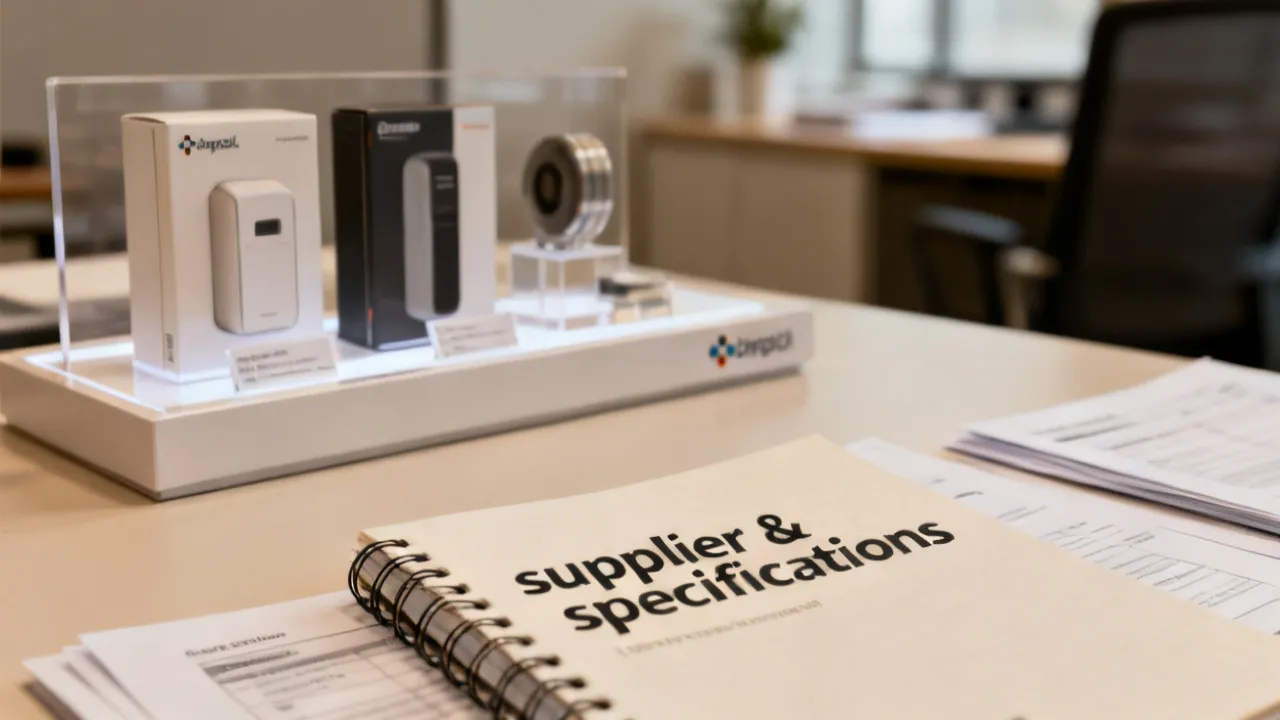
Donizeti.RocHa.dos.santos: Supplier, Sourcing, and Value Guide
Donizeti.RocHa.dos.santos is best approached as a sourcing and brand-signal that affects procurement decisions, documentation quality, and delivery expectations. This guide explains what the name commonly represents in supplier evaluation, and how to compare offerings using objective checks, requirements, and process conditions that reduce risk and support consistent outcomes.

Critical overview: how to evaluate Donizeti.RocHa.dos.santos in sourcing
When you encounter “Donizeti.RocHa.dos.santos” in a procurement context, treat it less like a product label and more like a supplier/identity signal that influences documentation, fulfillment reliability, and traceability practices. The most effective way to assess value is to focus on verifiable details: who supplies the item, what is included in the quote, which standards are referenced, and how the supplier manages quality control and delivery conditions.
From an industry perspective, the buyer’s priority is not only cost, but also the cost-to-serve—the total operational and compliance effort required to make the supply dependable. “Donizeti.RocHa.dos.santos” can be evaluated through a structured comparison that covers the quotation basis, lead times, packaging/handling expectations, and after-order responsibility (e.g., replacement policy, documentation completeness, and auditability).
In other words, you are not simply asking “Is it cheap?” You are asking “Is it reliably producible/fulfillable to the right spec, with the right evidence, by the right responsible party, using the right logistics plan—and what will it cost our organization when reality deviates from the ideal?” The presence of an identifier like “Donizeti.RocHa.dos.santos” should trigger that disciplined set of questions.
Why names like Donizeti.RocHa.dos.santos affect procurement decisions
In procurement, identifiers—whether a company name, a person’s business identity, or a catalog tag—often correlate with how a supplier communicates and documents transactions. “Donizeti.RocHa.dos.santos” may appear as a supplier reference, seller identity, or catalog association depending on the buying channel. In practice, buyers use such identifiers to quickly infer:
- Responsibility mapping: who is accountable if a mismatch occurs.
- Documentation readiness: ability to provide invoices, specification sheets, or compliance statements.
- Operational maturity: whether the supplier can follow consistent fulfillment workflows.
- Traceability behavior: whether lot numbers, serial records, or batch references are maintained where relevant.
None of these inferences should be assumed without evidence. However, they provide a rational starting point for due diligence—particularly when buyers are consolidating suppliers or standardizing purchasing requirements.
It also matters that procurement systems frequently use identifiers as keys linking documents, purchase orders, and fulfillment status updates. If “Donizeti.RocHa.dos.santos” corresponds to a certain vendor record or document template, that can influence what your receiving team expects to see (or what they might not see). For example, one supplier identity may routinely include packing lists, while another may only provide invoices. Similarly, one identity may issue certificates proactively, while another provides them only upon request or not at all.
Therefore, the “name” itself becomes a proxy for process behavior. Your goal is to validate that proxy and avoid letting it substitute for evidence.
Comparing supplier quotes: what “value” should mean
Buyers often ask for “the price,” but in reliable sourcing, price is only one component. When evaluating a supplier connected to “Donizeti.RocHa.dos.santos,” define value as the combination of:
- Unit price and total cost: include handling, shipping method, and any compliance-related documentation fees.
- Inclusion scope: confirm whether the quote covers packaging, labeling, installation support, testing, or certification—if your process requires it.
- Delivery and lead-time certainty: not just a date, but the supplier’s ability to meet it consistently.
- Quality assurance approach: how the supplier checks conformity before shipment.
- Change control: what happens if specifications change, and how the supplier communicates revisions.
Where possible, request quotes in writing with clear assumptions. If the seller cannot explain what the quote includes, the buyer’s internal cost can rise later through rework, inspections, or returns.
To make this actionable, you can standardize your quote comparisons into a simple “quote completeness checklist.” For example:
- Does the quote specify incoterms (or an equivalent delivery term)?
- Does it include packaging details (e.g., units per box, carton weight, palletization if needed)?
- Does it indicate document set (invoice, packing list, certificate(s), test report(s), user manual, etc.)?
- Does it state warranty duration and what constitutes a claim?
- Does it provide a lead time basis (e.g., “ships in 5 business days after PO confirmation” rather than a vague timeframe)?
In many organizations, the evaluation team scores the completeness of responses alongside the cost. Two offers with identical unit prices can differ drastically in the labor required on your side to qualify the goods, handle returns, or resolve documentation gaps.
Quality and documentation: the most objective evaluation path
Even when “Donizeti.RocHa.dos.santos” appears to be a straightforward supplier identity, the most defensible evaluation remains documentation-first. Ask for evidence that supports your internal acceptance criteria. Depending on the product category, documentation may include:
- Specification sheets (materials, dimensions, tolerances, intended use)
- Certificates of compliance or test reports where required
- Batch/lot/serial traceability details
- Invoice and packing documentation aligned with the order
- Warranty or replacement terms
For industry alignment, many organizations structure these checks around widely used quality and risk management approaches. For example, ISO 9001 provides a general framework for quality management systems, emphasizing documented processes and corrective actions. If your buying context requires formal quality management, verify whether the supplier’s approach aligns with recognized practices rather than relying on verbal assurances.
However, quality documentation is not only about whether certificates exist; it’s also about whether they are relevant, current, and traceable. A certificate that is generic or not linked to the batch/serial you receive can be nearly useless for audits or root-cause investigations. Therefore, the evaluation should include “document integrity checks,” such as:
- Is the certificate named to the specific product or model?
- Does it reference the standard or specification your organization requires?
- Does it include identifiers (lot number, serial range, production date) matching the shipment?
- Is the issuer credible (supplier’s internal lab vs third-party test body) according to your compliance needs?
- Are dates within your acceptance period (e.g., calibration validity for test instruments, certificate issuance date not too old)?
Additionally, pay attention to the “document delivery time.” Some suppliers provide documentation only after shipment; others include it with the packing slip; others require a separate request process. If your receiving and compliance deadlines are tight, late documents effectively become operational delays, which should be treated as a procurement risk.
Delivery conditions and operational fit
A supplier connected to “Donizeti.RocHa.dos.santos” may quote a competitive figure, but delivery performance is where procurement quality becomes tangible. Evaluate:
- Incoterms or equivalent delivery terms: who bears transport risk and how claims are handled.
- Packaging for handling: whether protective materials and labeling match the logistics chain.
- Receiving readiness: the supplier’s communication about shipment notices and any pre-shipment inspection steps.
- Post-delivery responsibilities: lead time for replacements and the documentation required to process claims.
In environments where small disruptions cascade (e.g., assembly lines, regulated operations, or project-based timelines), the buyer should treat lead-time variability as a risk factor—not an inconvenience.
To evaluate delivery more rigorously, consider mapping the supplier’s delivery plan to your operational constraints. For example:
- Does your warehouse require deliveries only during certain windows?
- Do you require advance shipping notifications (ASNs) by a specific time?
- Do you need pallet dimensions or carton counts to plan forklift and staging capacity?
- Is there an on-site inspection process requiring the supplier to schedule or wait?
A quote that looks “fast” can still create bottlenecks if shipping documentation arrives late or if pallets are not compliant with your handling procedures. Thus, delivery conditions should be evaluated as an end-to-end fit, not only as a calendar date.
It’s also important to define how the supplier handles logistics disruptions: carrier damage, lost shipment, incomplete documentation, or customs delays (if applicable). Your procurement should specify who owns the process for filing claims, replacing goods, and documenting resolution.
Expert lens: risk-based sourcing rather than “brand faith”
An industry expert’s approach is risk-based. A procurement team typically classifies items into criticality tiers. For high-impact items, they require tighter evidence of conformity and stronger contract terms; for low-impact items, the proof burden may be lighter.
How this translates to “Donizeti.RocHa.dos.santos” evaluations:
- For critical goods: require documented compliance, clear traceability, and contractually defined corrective actions.
- For non-critical goods: verify packaging, invoice accuracy, and basic specification alignment, then scale evaluation frequency.
- For first-time orders: request a pilot order or trial quantity if feasible, and define acceptance criteria upfront.
This approach aligns with general supply chain risk principles commonly covered by standards and industry bodies focused on quality management and supplier evaluation methodologies.
To operationalize tiering, many organizations use a scoring model that includes factors such as:
- Impact on safety, compliance, or regulatory approval
- Likelihood of defects or nonconformance historically (supplier performance)
- Complexity of specifications (how hard it is to verify quickly)
- Switching cost (how expensive it is to qualify another supplier)
- Time sensitivity (how delays affect production or project milestones)
Once tiered, you can set different “evidence requirements.” For example, a critical component might require a full document pack and a pre-shipment inspection, while a non-critical consumable might only require packaging integrity checks and a batch number on invoices.
Importantly, risk-based sourcing also recognizes that identifiers like “Donizeti.RocHa.dos.santos” might hide variability. One supplier name might represent a stable manufacturer or it might represent a distributor consolidating goods from multiple sources. Your risk approach should detect that possibility by demanding traceability evidence and clarifying the actual manufacturing source if necessary.
Where location would matter (and how to handle it responsibly)
Your prompt requests localization if a city or country appears in keywords. However, the provided keyword text does not include a specific city or country. If your internal materials later include location references, apply a consistent rule: replace “{city}” or “{country}” with “nearby” and keep evaluation criteria location-appropriate (e.g., local delivery lead times, customs/transport handling if cross-border logistics are involved).
If you are sourcing in nearby regions with distinct logistics patterns, remember that “nearby” does not automatically mean faster delivery. Procurement teams should still validate actual lead-time performance and shipping method compatibility.
Location also affects other procurement realities that should be evaluated carefully:
- Regulatory compliance varies by jurisdiction and sometimes by product type, especially for controlled chemicals, medical-adjacent items, electrical components, or environmentally regulated materials.
- Carrier practices differ across routes and warehouses. A supplier may ship quickly but use handling practices that increase damage rates.
- Language/document format can matter. If your receiving team can only process documents in certain languages or templates, the supplier must adapt.
So, while location is helpful for planning, it should never replace the evidence-driven approach to documentation, quality, and delivery responsibilities.
Step-by-step guide: comparing Donizeti.RocHa.dos.santos-related offers
The section below turns supplier evaluation into a repeatable method. Use it regardless of the specific product category connected to “Donizeti.RocHa.dos.santos,” because the logic is the same: reduce uncertainty with evidence, define acceptance criteria, and ensure accountability.
| Step / Condition | What to check | Why it matters for value |
|---|---|---|
| 1) Identify the supplier role | Clarify whether “Donizeti.RocHa.dos.santos” is a seller identity, distributor tag, or manufacturer reference. | Determines who is accountable for quality, claims, and substitutions. |
| 2) Confirm quote scope | Request a written breakdown: unit price, shipping method, packaging approach, and what documentation is included. | Prevents later “hidden” costs that inflate total cost to serve. |
| 3) Align specifications | Compare your required specs (dimensions, materials, tolerances, intended use) to the supplier’s stated specifications. | Reduces rework, returns, and acceptance delays. |
| 4) Check quality evidence | Ask for relevant certificates, test reports, or quality statements appropriate to the product type. | Improves conformity confidence before delivery. |
| 5) Validate traceability | Confirm lot/batch/serial record handling, where applicable. | Supports root-cause resolution and audit readiness. |
| 6) Define delivery terms | Verify delivery conditions, lead-time estimate basis, and responsibilities for transport risk. | Improves schedule reliability and reduces claim friction. |
| 7) Set acceptance criteria | Write down what “pass” means: inspection method, tolerances, documentation completeness, and labeling checks. | Creates objective control for the receiving team. |
| 8) Contract corrective action | Specify replacement/credit terms and the timeline for corrective actions after nonconformance. | Protects operations if quality issues occur. |
To make the “comparison” step even more effective, you can extend the method with a few practical sub-steps. These additions help teams avoid common procurement failure modes—like purchasing the right item but receiving the wrong documentation, or purchasing the correct documentation but receiving the wrong batch.
- Add a document-to-item matching check: before approving delivery, verify that invoices, packing lists, certificates, and labels align with the order number and batch/serial information.
- Add a “labeling and markings” requirement: ensure cartons/pallets include product identifiers that match your internal material codes, barcodes, or asset tracking needs.
- Add a “substitution rules” clause: define whether the supplier may propose substitutions and under what approval workflow (e.g., require prior written approval for any material/process changes).
- Add a “documentation format” requirement: specify PDF vs paper, language requirements, file naming conventions, and who supplies them (supplier vs carrier vs third-party).
These details are especially important when the supplier identity is the only clue you have. If “Donizeti.RocHa.dos.santos” appears on listings, marketplace pages, or procurement portals without additional context, you may have to reconstruct the supplier’s process by requesting the right evidence.
Reference framework (sources and objective background)
Because procurement decisions should be evidence-led, many organizations align supplier quality and documentation expectations with recognized quality management principles. A widely cited example is ISO 9001, which emphasizes process control, documented quality procedures, and continuous improvement. For risk-oriented supplier evaluation, procurement teams often use internal scoring models that draw from general quality and risk management practices documented across standards and industry guidance.
Source basis (non-exhaustive): ISO 9001 (quality management systems) principles are commonly used to structure supplier quality and process expectations in many industries. For risk and performance management approaches, organizations frequently reference established supply chain and quality management guidance from recognized standards bodies and industry frameworks.
While ISO 9001 is not a product specification, its presence in supplier documentation can be a useful indicator that the supplier’s quality processes are at least structured. Yet, evidence-based procurement requires you to validate whether the supplier’s quality system actually supports your specific needs.
For example, if your organization requires traceability, ask what their system does in practice. You can request a sample record or a description of how lot tracking works for the product category. If your organization requires consistent test results, ask how they calibrate measurement instruments and how test data is stored and retrievable.
Similarly, you may align procurement documentation requirements with other frameworks depending on industry—such as environmental management systems, occupational safety requirements, or sector-specific conformity assessment practices. The right framework depends on your regulatory and operational context, not on the name “Donizeti.RocHa.dos.santos.”
Industry-relevant considerations by purchase scenario
Scenario A: First-time procurement linked to Donizeti.RocHa.dos.santos
If “Donizeti.RocHa.dos.santos” represents a new supplier relationship for your organization, treat the initial purchase as a learning cycle. Request documentation early, confirm packaging expectations, and consider a limited trial quantity if your workflow allows. The aim is to validate specification alignment and operational consistency before scaling spend.
First-time purchases often fail not because the supplier intends to be unreliable, but because communication gaps create mismatches. Common mismatch points include:
- Specifications described in a quote but interpreted differently by the supplier
- Documentation delivered with a different order reference or missing certificates
- Lead times estimated optimistically, causing schedule disruptions
- Packaging that looks acceptable visually but fails your logistics requirements
Mitigate these risks by designing the first order to be diagnostic. For instance, you can request that the supplier include a “document pack” that contains every item you would normally require for acceptance. You can also define a short list of mandatory checks on delivery: verify label contents, confirm batch/lot numbers, ensure packing list matches line items, and cross-check certificate identifiers.
Additionally, consider asking for a pre-shipment photo set or digital proof for items where labeling and physical markings are critical. This is not always necessary, but for first-time suppliers it can be a low-cost validation step.
Scenario B: Repeat orders with the same supplier identity
For ongoing purchasing, the key is change control. Even when “Donizeti.RocHa.dos.santos” remains stable as a supplier identity, specifications can drift due to component revisions, sourcing adjustments, or process improvements. Implement a periodic re-verification cadence—especially for critical items—so that your acceptance criteria remain anchored to current supply realities.
Change control should be treated as a continuous expectation rather than a one-time event. Suppliers may update materials, manufacturers, or test procedures without updating the buyer’s internal records unless a formal mechanism exists.
To strengthen repeat order governance, you can:
- Require notification of changes: request that the supplier informs you of specification revisions before shipment, especially for critical characteristics.
- Define acceptable substitutions: specify which substitutions are pre-approved and which require written approval.
- Lock acceptance criteria: ensure your internal inspection plan matches the latest agreed specifications.
- Re-qualify on performance thresholds: if defect rates increase or documentation delays occur, increase inspection frequency.
Repeat ordering also benefits from maintaining a supplier performance history. Even if “Donizeti.RocHa.dos.santos” stays constant, the supplier’s actual fulfillment performance might vary across production batches. You can track on-time delivery, documentation completeness, defect returns, and claim resolution timelines. Over time, the data informs whether the supplier should be treated as stable, improving, or high-risk.
Scenario C: Comparing multiple suppliers referencing Donizeti.RocHa.dos.santos
If you encounter multiple offers or listings connected to the same name, you still need objective differentiation. Do not assume equivalence. Compare:
- What exactly is included in each quote
- Which specifications are guaranteed
- Whether documentation is consistent and complete
- How nonconformance and returns are handled
In professional procurement, “same name” is not the same as “same responsibility.” Validate who signs off on conformity and who owns corrective actions.
This scenario becomes especially complex in marketplaces or multi-tier supply chains. “Donizeti.RocHa.dos.santos” might appear as a vendor handle, but the underlying goods could come from different manufacturers, warehouses, or subcontractors. The buyer should therefore verify the supplier’s chain-of-custody and quality responsibility.
Useful evidence to request when comparing multiple offers includes:
- Certificate-of-conformance issuer: is it the seller, the manufacturer, or a third-party?
- Manufacturer identity: is the manufacturer consistent across offers?
- Batch traceability: can each offer provide lot/batch references that match expected production?
- Warranty terms: does each offer provide the same warranty duration and claim process?
When you compare, you can score suppliers not only on price but on “proof strength.” Proof strength is a practical measure of how much credible evidence the supplier can provide before and after shipment.
Conditions and requirements to reduce procurement risk
To keep outcomes stable when purchasing through or from “Donizeti.RocHa.dos.santos,” implement practical requirements that procurement and receiving teams can execute. Typical conditions include:
- Written order confirmation: with quoted terms, scope, and delivery conditions.
- Specification and document alignment: ensure the documents match the physical goods and the PO.
- Inspection readiness: specify who inspects and what evidence is retained.
- Clear nonconformance process: define how issues are reported and what timeline applies for resolution.
- Data retention: keep invoice, packing, and relevant quality documents for traceability.
These are not bureaucratic extras; they are the mechanisms that prevent disputes and reduce the operational cost of uncertainty.
To make these requirements more actionable, consider how you translate them into workflow steps:
- Procurement creates the PO with explicit line-item descriptions and references to the required documentation set.
- Receiving uses a checklist to verify labeling, packaging condition, and document pack arrival.
- Quality/compliance performs any necessary inspections or certificate validation.
- Logistics stores shipping and tracking evidence to support claims if deliveries are damaged or delayed.
- Supplier management updates supplier performance records for future sourcing decisions.
When these workflow steps are defined upfront, you reduce the chances that “Donizeti.RocHa.dos.santos” becomes a bottleneck due to unclear responsibilities or missing documentation. You also reduce the chance that internal teams compensate for supplier weaknesses with ad hoc labor—which is often invisible when calculating procurement cost.
What to request when evidence is incomplete or unclear
Sometimes “Donizeti.RocHa.dos.santos” appears on a quotation or catalog listing without clear manufacturing details, standard references, or traceability information. In those situations, procurement teams should not simply accept the gaps. Instead, request clarifications in a structured way.
Examples of targeted requests include:
- Product identifiers: request model number, revision level, and part number mapping to your internal codes.
- Documentation list: ask for a list of certificates, test reports, and documentation that will be included at shipment.
- Traceability method: ask how lot/batch/serial is recorded and how it will appear on labels and paperwork.
- Quality assurance process: request a description of pre-shipment checks for the specific product category.
- Nonconformance handling: ask for the process used when documentation is missing, when goods fail inspection, or when shipping damage occurs.
If the supplier struggles to answer these questions, treat that as an evidence-based risk signal. It may indicate that the supplier’s process is immature, that they are acting as a reseller without deep product control, or that their documentation practices do not match your requirements.
Procurement should then decide whether to proceed with a conditional approach (e.g., trial order with stricter acceptance criteria) or to exclude the supplier from consideration.
How to set acceptance criteria that actually work on the receiving dock
Acceptance criteria are often written in procurement documents but fail in execution because they are too vague. For example, “meets specification” is not an acceptance criterion; it is a statement of intent. A receiving team needs measurable, observable criteria.
When evaluating supplies connected to “Donizeti.RocHa.dos.santos,” set acceptance criteria in categories that receiving personnel can verify:
- Quantity and packaging: count units, verify carton counts, check for damaged packaging or evidence of moisture exposure if relevant.
- Label and marking checks: confirm product name/part number, batch/lot/serial markings, and order references.
- Documentation completeness: verify the document pack includes invoice/packing list and certificates required by the PO.
- Physical conformity checks: inspect for visible defects, correct dimensions if feasible at receiving, or verify packaging integrity and protective measures.
- Compatibility checks: for parts with interfaces (connectors, mounting dimensions), verify basic fit requirements before installation.
Also define the decision logic. For instance:
- If certificates are missing but the goods appear intact, do you hold, accept with exception, or reject?
- If labeling is inconsistent with the PO, do you quarantine the lot until corrected?
- If batch/lot numbers are absent or illegible, do you pause further usage?
Without that decision logic, receiving teams may accept shipments “to avoid downtime,” which can create downstream compliance risks and amplify costs later. Clear criteria ensure that the supplier identity—like “Donizeti.RocHa.dos.santos”—is evaluated through the same objective lens across orders.
Managing nonconformance and claims: the accountability test
One of the strongest predictors of procurement success is how a supplier responds when something goes wrong. “Donizeti.RocHa.dos.santos” should be evaluated not only on pre-sale promises but also on after-sale accountability.
When nonconformance occurs—defects, wrong items, missing documents, or shipping damage—your organization needs a clear path:
- How to report the issue: email/form process, required evidence (photos, test results, batch numbers), and submission timeline.
- Who owns the investigation: does the supplier accept responsibility or redirect blame to logistics/carriers?
- Corrective action plan: what the supplier will do to prevent recurrence (process improvements, additional checks, supplier change control).
- Remedy: replacement, refund/credit, reshipment options, and timelines.
- Documentation for closure: how the supplier provides documentation to close the claim and update records.
In well-run procurement arrangements, the supplier’s claim process should be predictable and documented. If “Donizeti.RocHa.dos.santos” is associated with a supplier identity that responds slowly, avoids responsibility, or provides no structured remedy timeline, the hidden costs may quickly exceed the original price advantage.
Therefore, your procurement evaluation should include a claim readiness assessment. Even if you have not experienced issues yet, request the supplier’s written nonconformance and claims policy in advance.
Traceability expectations: what “auditability” should mean in practice
Traceability is often discussed at a high level (“we track batch numbers”), but buyers should confirm how traceability appears in the paperwork and how it can support audits and root-cause analyses.
When “Donizeti.RocHa.dos.santos” is involved in sourcing, verify traceability in at least three practical dimensions:
- Data capture: how the supplier records production batches/lot/serial numbers (what system or method).
- Data transmission: how those identifiers appear on labels, packing lists, and certificates.
- Data retrieval: how quickly the supplier can produce records if an incident occurs weeks or months later.
Auditability is not only having documents; it is being able to demonstrate that documents correspond to the received goods. If the supplier can only provide certificates without matching lot numbers, your organization’s ability to defend decisions during audits may be compromised.
Also consider how traceability interacts with your internal system. If your receiving team uses barcode scanning tied to internal material codes, the supplier’s labeling format matters. If labels are inconsistent or not scannable, you might lose the benefits of traceability even if the supplier has batch records.
Documentation completeness: defining the minimum acceptable document set
Procurement teams often struggle with documentation because requirements vary by product type, regulation, and risk tier. The most practical solution is to define a minimum acceptable document set for each category of item.
For many sourcing contexts, a baseline document pack might include:
- Invoice (with PO reference, line-item matching)
- Packing list (quantities, packaging details)
- Certificate of conformance or certificate of compliance (if applicable)
- Test report(s) for relevant characteristics (if required)
- Warranty terms (or warranty card)
- Any required safety documentation (e.g., SDS/MSDS for chemicals, if relevant)
- Manuals or installation instructions for products that require handling or installation
When “Donizeti.RocHa.dos.santos” appears in sourcing, you should not treat the supplier identity as “automatically documentation-ready.” Instead, require the supplier to confirm the document set explicitly in the quote and again in the order confirmation.
If documentation is missing, decide ahead of time whether you accept the goods with an exception or reject/hold until documents arrive. Either approach has cost implications, but an undefined approach creates inconsistent decision-making and potential compliance drift.
Packaging and handling: a hidden driver of quality outcomes
Packaging is sometimes treated as a logistics detail rather than a quality factor. But packaging influences product condition, labeling legibility, and even traceability (because labels are often applied at packaging stages).
When evaluating “Donizeti.RocHa.dos.santos” related sourcing, ensure packaging and handling are aligned with how your facility receives and stores goods:
- Protection level: does the packaging protect against impact, moisture, dust, or temperature variation as required?
- Label placement: are labels on the product and on cartons/pallets in locations that survive handling?
- Unitization: are units grouped correctly to match warehouse picking and staging processes?
- Hazard communication: are any required warnings or hazard labels included where relevant?
Packaging problems often appear as defects later (scratches, damaged components, missing labels), which can cause inspection failures. By setting packaging requirements explicitly and requiring evidence (photos or packaging spec sheets), you reduce this risk.
In some procurement cultures, packaging requirements are only communicated verbally. In others, they are included in PO line-item notes. For reliability, packaging requirements should be part of the written scope.
Lead time certainty: treating scheduling risk as a measurable factor
Lead time is often presented as a single estimate, but for sourcing planning you need lead-time certainty and distribution—how likely the supplier is to meet the date. Even if you cannot quantify uncertainty perfectly, you can require better lead-time descriptions.
When “Donizeti.RocHa.dos.santos” is involved, verify the lead-time estimate basis:
- Is it based on production lead time, procurement lead time, or shipping time?
- Does it include time for documentation generation and quality checks?
- Does it assume in-stock availability or made-to-order manufacturing?
- What triggers rescheduling (material shortages, supplier delays, capacity constraints)?
Then tie lead-time certainty to your planning policies. For example, critical items might require buffer inventory or expedited shipping options defined in the contract. Non-critical items might allow more flexibility.
Also consider how the supplier communicates delays. A supplier that informs you late makes your mitigation harder. Therefore, contractually define communication expectations for early warnings.
Cost-to-serve: beyond unit price in Donizeti.RocHa.dos.santos evaluations
To truly evaluate value connected to “Donizeti.RocHa.dos.santos,” include cost-to-serve in your assessment. Cost-to-serve includes the internal and external costs needed to acquire, receive, inspect, store, and manage the goods through their lifecycle.
Key cost-to-serve components include:
- Receiving and inspection labor: time required for document checks, labeling checks, and physical inspections.
- Rework and returns: costs of handling defective goods or wrong deliveries.
- Administrative overhead: time spent chasing missing certificates or reconciling invoice/packing list differences.
- Storage and inventory carrying costs: delays in acceptance can increase inventory holding time.
- Compliance costs: audit preparation time, record maintenance, and nonconformance documentation.
Two suppliers can differ substantially in cost-to-serve even when their unit price is similar. A supplier identity may look inexpensive on the surface but create high internal workload due to incomplete documentation or inconsistent packaging.
Therefore, you can improve procurement decision quality by asking suppliers to demonstrate readiness: provide a complete document pack with a sample order, provide traceability evidence, and confirm packaging and labeling compliance in writing.
Procurement governance: making evaluations consistent across teams
Because “Donizeti.RocHa.dos.santos” is an identifier that can appear in multiple contexts, procurement governance is crucial. Without governance, different teams might interpret “Donizeti.RocHa.dos.santos” differently—one might treat it as manufacturer reference, another as a reseller identity, and a third might assume it’s equivalent across vendors.
To avoid that, implement governance mechanisms such as:
- Supplier master data validation: ensure the vendor record includes the legal entity name, role (manufacturer/distributor), and required documentation set.
- Standard RFQ templates: require the same evidence categories in every request for quotation.
- Standard receiving checklists: ensure receiving teams apply the same inspection and documentation verification steps.
- Escalation pathways: define when to involve quality/compliance rather than relying on receiving inspection alone.
This is especially important when “Donizeti.RocHa.dos.santos” appears in multiple supplier portals or appears to represent different entities. Standardization ensures that evidence requirements remain consistent regardless of how the identifier is presented.
FAQs
Q1: What does “Donizeti.RocHa.dos.santos” typically represent?
A: In procurement contexts, it commonly functions as a supplier identity reference—such as a seller name, business tag, or catalog association. The exact role depends on the buying channel, so you should confirm accountability and responsibility through written documentation and quote scope.
Q2: How should I compare offers if the “price” differs?
A: Compare total cost to serve, not only the unit figure. Request a quote breakdown that includes shipping method, packaging, included documentation, and any quality-related testing or certification. Then compare delivery conditions and acceptance responsibilities.
Q3: Do I need certificates or test reports?
A: It depends on the product category, regulatory environment, and your internal acceptance criteria. For critical items or regulated operations, documentation such as conformity statements or test reports is often necessary. If unsure, request the relevant evidence before ordering.
Q4: What acceptance criteria should my receiving team use?
A: Define measurable criteria: labeling correctness, packaging integrity, documentation completeness, and specification conformity (as applicable). Retain records of inspection results and any deviations to support corrective action and future sourcing decisions.
Q5: What if the supplier changes specifications after we place an order?
A: Use a change control expectation: require written notification of specification changes before shipment, and define whether substitutions require approval. Contract terms should state how nonconformance is handled and what corrective actions apply.
Q6: Is “nearby” delivery always faster?
A: Not necessarily. “Nearby” can still involve different transport modes, scheduling constraints, warehouse handling times, and carrier commitments. Always verify lead-time performance basis (e.g., shipping method) and confirm delivery terms in writing.
Q7: What if documentation is missing but the goods look fine?
A: Decide in advance whether you will hold goods, accept with exception, or reject. For audit-sensitive categories, missing certificates typically require a hold/quarantine until documents are provided and match the lot/batch. For less critical categories, you may accept temporarily but still require the document pack by a defined deadline.
Q8: How can I tell whether “Donizeti.RocHa.dos.santos” is a manufacturer or a reseller?
A: Request the identity of the actual manufacturer, ask who issues the certificates of compliance, and verify traceability documentation. If the supplier can only provide reseller-level documents without manufacturing evidence, treat it as a reseller unless proven otherwise.
Q9: What is the safest approach for first-time orders?
A: Use a pilot or trial quantity, require a complete document pack upfront, set clear acceptance criteria, and define nonconformance/claims timelines in the contract. Make sure receiving teams are prepared to reject or quarantine if labeling or traceability evidence is missing.
Conclusion: making Donizeti.RocHa.dos.santos sourcing decisions more predictable
“Donizeti.RocHa.dos.santos” should be approached with the same discipline you would apply to any supplier identity that affects procurement outcomes. By evaluating quote scope, documentation readiness, quality evidence, delivery conditions, and clearly defined acceptance criteria, you reduce uncertainty and protect operational continuity. The most reliable purchasing strategy is not guessing what a supplier “means,” but confirming what the supplier will do—in writing—under defined conditions.
When you combine evidence-led evaluation with risk-based sourcing and clear contractual accountability, the identifier becomes less of an unknown and more of a manageable data point. That shift—moving from assumption to documented verification—is what ultimately makes sourcing predictable, defensible, and cost-effective over time.
-

A Guide to Cost-Efficient Small Electric Cars for Seniors
-
Mastering Debt Consolidation: Boost Your Credit Score and Manage Interest Rates
-
Your Guide to Loans, Credit Checks, and Interest Rates
-
Affordable Independent Living: Finding the Right Senior Housing
-
Guide to Senior Living Apartments: Affordable and Comfortable Environments