Xvidio Guide to Internet Providers and Low-Cost Access
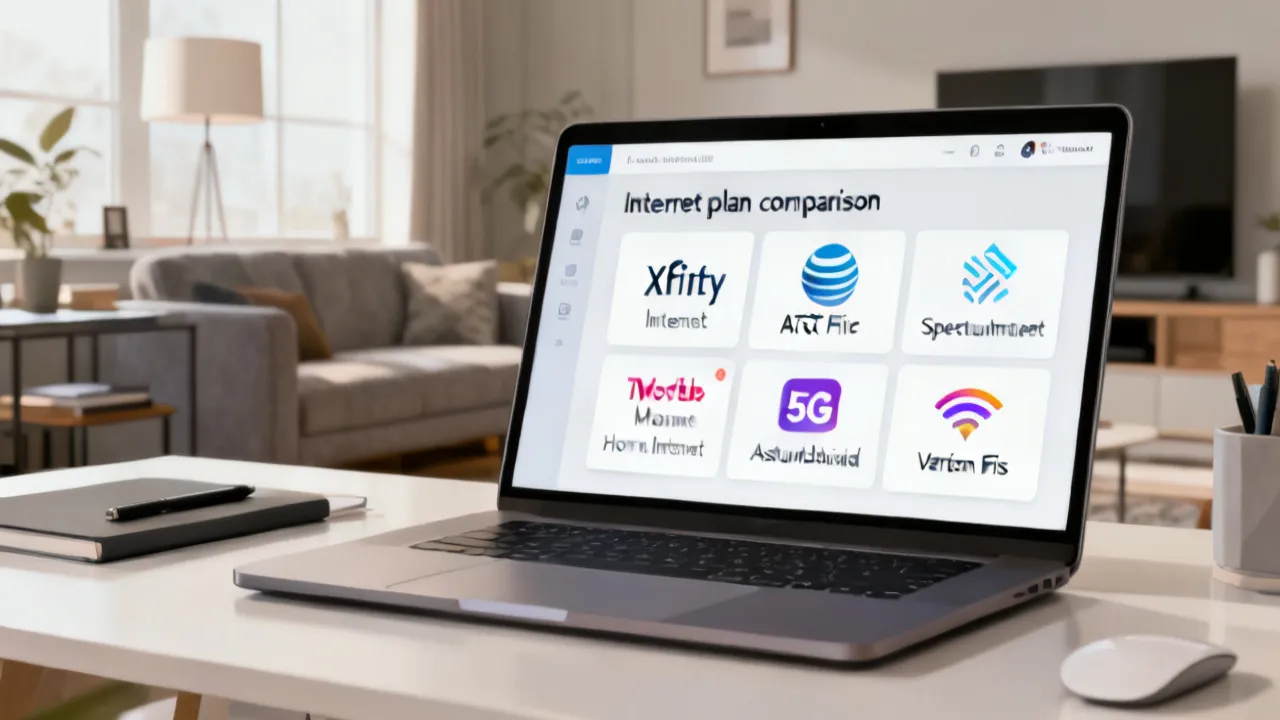
This guide compares major U.S. internet options—Xfinity Internet, AT&T Fiber, Spectrum Internet, T-Mobile 5G Home Internet, Astound Broadband, and Verizon Fios—then explains practical ways to access broadband at lower cost. It provides objective plan context around speed tiers, equipment and contract terms, and regional availability. The background covers how fixed broadband and fiber differ and why “total monthly cost” matters for households.
1) Quick take: choose based on total cost, network type, and installation reality
If you’re evaluating Xvidio-style “what should I buy?” decisions, the most reliable approach is to compare providers on three axes: connection type (fiber, cable, or 5G fixed wireless), all-in monthly price (including equipment rental, autopay terms, and expected price changes), and how stable your speeds are during peak hours. In practice, households that stream, work from home, or run smart-home devices typically benefit most from fiber-class reliability (when available), while cable and fixed wireless can be competitive alternatives when coverage is limited.
One key mindset shift: “the best plan” is rarely the plan with the highest advertised download speed. For most homes, the real differentiator is the combination of (1) how consistent the service is under load, (2) how well Wi‑Fi performs in your space, and (3) whether your actual monthly bill stays predictable after promos end and after you add any required equipment. When you approach the decision this way, you can avoid common traps like paying for a faster tier you don’t use, or choosing a lower-cost option that performs poorly at evenings when everyone is online.
Additionally, installation and activation practicality matters. A plan that is technically affordable can become frustrating if it requires a long appointment window, equipment you can’t easily configure, or a setup that leaves you with weak coverage in key rooms. For households with kids, frequent video meetings, or heavy evening usage, “time-to-go-live” can be as important as the monthly rate, because downtime can cost more than the difference between two plans.
2) Provider snapshots: what each option generally optimizes
Xfinity Internet commonly appeals to households that want predictable cable plans with flexible term structures. Many offerings are contract-free, and some include access to Xfinity Wi‑Fi hotspots. However, equipment rental can add to the monthly total if you don’t already have compatible gear. Another factor with cable is that performance can vary by neighborhood and time of day because cable networks are typically shared within serving areas. In many places that still works well, but if you’re in a heavily loaded area, you may notice slower speeds during peak hours.
AT&T Fiber is designed around symmetrical upload/download speeds, which is especially relevant for video conferencing, live streaming, cloud backups, and creators. For pricing, AT&T typically bundles value through autopay discounts and includes a Wi‑Fi gateway on eligible fiber plans, which can reduce setup friction and out-of-pocket equipment costs. With fiber, the throughput experience tends to be more consistent because the medium is less susceptible to the same type of congestion that can appear on shared cable segments.
Spectrum Internet is often associated with straightforward terms: unlimited data, no contracts on many offers, and a modem included on qualifying offers. Keep in mind that promotional rates may change after the introductory period, and optional add-ons like dedicated Wi‑Fi services can affect the effective monthly spend. For many households, Spectrum’s “modem included” aspect reduces the immediate setup cost compared with providers that charge for equipment from day one.
T-Mobile 5G Home Internet leverages fixed wireless 5G technology. It’s frequently considered for areas where wired options are less available—particularly in nearby suburban and rural pockets. Since performance depends on radio conditions and local network capacity, it’s wise to confirm coverage and test reliability at your specific address before committing. Fixed wireless can be fast and convenient, but it can also be more variable than fiber, particularly during certain weather conditions, at certain times of day, or if signal strength is marginal inside your home.
Astound Broadband can be a cost-focused choice where it’s available, frequently offering low entry pricing and sometimes including multi-year price guarantees depending on the plan. Regional footprint matters: availability is not uniform, so check service eligibility for your address. When it is available, Astound often competes by offering aggressive promotional pricing, which can be a strong win if you confirm what happens after the promo window.
Verizon Fios targets fiber users who prioritize consistent performance and usually bundle core equipment such as a Wi‑Fi router. When you value symmetrical speeds and stable service, fiber-based plans often align well with that goal—though monthly pricing can be higher at the top speed tiers. Verizon’s value proposition tends to emphasize reliability and steady performance more than maximum headline speed.
It’s also worth noting that the practical experience of using any of these providers is shaped by several layers: the “last mile” network (fiber/cable/wireless), the in-home connection (modem/gateway placement and wiring), and the internal Wi‑Fi environment. Even if your ISP is excellent, a poorly placed router or an old Wi‑Fi standard can make your home feel slower than it is.
3) Comparison table (packages, prices, and additional services)
The table below summarizes several representative packages and the kinds of additional services that often influence total monthly cost. Prices are presented as typical plan examples based on the provided reference set; always verify your exact eligibility on the provider’s site.
| Provider & example package | Typical monthly price (as referenced) | Common extras that affect value |
|---|---|---|
| Xfinity Internet (Connect / Connect More) | $19.99–$39.99 / month | No contracts on many offers; some include Xfinity Wi‑Fi hotspot access; equipment rental may apply on some plans |
| AT&T Fiber (300 Mbps / 500 Mbps / 1 Gig) | $55–$80 / month | Symmetrical speeds; autopay discount commonly included; Wi‑Fi gateway included on eligible plans |
| Spectrum Internet (up to 500 Mbps / up to 1,000 Mbps) | $50–$70 / month | Unlimited data; no contracts on many offers; free modem included; optional Wi‑Fi service may cost extra |
| T-Mobile 5G Home Internet | $35–$70 / month | Fixed wireless 5G (address-dependent); discounted rates possible for eligible customers |
| Astound Broadband (intro tier) | From about $20 / month | Regional availability; promotional pricing; some plans feature price guarantees |
| Verizon Fios (300 Mbps / 1 Gig) | $49.99 / $89.99 per month (as referenced) | Fiber connection; symmetrical speeds; Wi‑Fi router included; autopay may apply for listed pricing |
Source of the reference information used to create this table:
source: [www.xfinity.com](www.xfinity.com) | source: [www.att.com/internet/fiber/](www.att.com/internet/fiber/) | source: [www.spectrum.com](www.spectrum.com) | source: [www.t-mobile.com/isp](www.t-mobile.com/isp) | source: [www.astound.com](www.astound.com) | source: [www.verizon.com/home/fios/](www.verizon.com/home/fios)
To make this table more actionable, you can treat it as a starting point and then add a “total first-year cost” model. That model should include: (1) how much you pay per month during promos, (2) what the bill becomes after promos end, (3) whether equipment rental applies, (4) whether you need to buy extra routers or mesh nodes, and (5) any installation charges (and the time cost if the appointment delays your start date). In many real-world cases, equipment costs and promo expiration matter as much as the base price range.
For example, consider two hypothetical plans both advertise around $50/month. If Plan A includes a router and modem with no rental, while Plan B charges $10/month for equipment and increases after six months, the true cost difference over the first year can be significant. This is why a comparison table is not enough by itself—you need to model the bill as you’ll actually pay it.
4) Price ranges by region: what “typical” can mean (and why totals differ)
Internet affordability varies widely by country due to infrastructure density, competition, and regulatory structures. Below is a rephrased overview of the general ranges provided in your reference set.
| Region | Approximate monthly price range (rephrased) |
|---|---|
| United States (nearby context) | About $30–$100+; options range from fiber to broadband, with speeds commonly from ~100 Mbps up to 1 Gbps where pricing tends to be higher. |
| United Kingdom (nearby context) | About £25–£60+; many areas offer fiber or broadband, with speeds frequently around 30–100 Mbps. |
| Canada (nearby context) | About CAD 50–CAD 100+; fiber and broadband packages often span roughly 25 Mbps to 1 Gbps. |
| New Zealand (nearby context) | About NZD 60–NZD 100+; fiber or VDSL are common pathways, with options reaching 100 Mbps or more. |
| Australia (nearby context) | About AUD 60–AUD 110+; fiber coverage is expanding, with typical plans often in the 50–100 Mbps range. |
| Singapore (nearby context) | About SGD 30–SGD 60+; competitive markets often keep costs comparatively contained despite high-speed fiber offerings reaching up to around 1 Gbps. |
Even within the same country, price can differ sharply by neighborhood. That happens because competition is often concentrated: one provider may dominate one part of a city while another provider dominates elsewhere. The cost also depends on local infrastructure—fiber lines may be available in one street but not the next, which means your “typical” choices at the regional level may not reflect your exact options.
Another reason totals differ is how pricing is structured. Some markets have heavy promotional discounting (low introductory prices that rise later). Some have equipment inclusions that shift the “real” monthly cost upward or downward. Some include extras like Wi‑Fi hotspot access, while others do not. If you’re comparing globally, you should standardize your comparison by using a single metric: the first-year all-in cost (including equipment and likely usage add-ons).
Finally, “typical speed” and “typical stability” are often not the same thing. A market can have affordable 200–300 Mbps options but still deliver inconsistent performance in crowded areas if congestion exists. Conversely, a market might offer fewer choices but still deliver stable service due to network design and investment levels.
5) Expert guidance: how to compare plans like a network buyer
As an industry-minded analyst, I recommend reading beyond headline speed numbers. Consider:
- Upload matters: Fiber plans like AT&T Fiber and Verizon Fios often advertise symmetrical speeds, which can reduce bottlenecks for upstream-heavy tasks (video calls, uploads, remote work).
- Equipment and Wi‑Fi delivery: Some cable plans include a free modem; some fiber plans include a Wi‑Fi gateway; other offerings may charge equipment rental. If you already own a router, confirm compatibility and whether provider equipment is required.
- Data policy and usage patterns: Unlimited data is beneficial if you do frequent streaming, large downloads, or cloud backups, but check whether any “fair use” policies exist in the fine print.
- Contract terms and price stability: Promotional pricing can change. If you want predictable budgeting, prioritize plans with clear price guarantees or no-contract structures and track when introductory rates expire.
- Coverage variability for fixed wireless: T-Mobile 5G Home Internet is address-dependent. Two neighboring addresses can experience different signal quality due to building materials, elevation, and local radio conditions.
To compare more like a network buyer, you can also apply a few additional “operator-level” checks that many people overlook:
- Latency sensitivity: If your household plays online games or conducts frequent video calls, lower and more consistent latency can matter more than peak bandwidth. Fixed wireless can sometimes have higher variability in latency due to radio scheduling and backhaul conditions.
- Simultaneous usage: More than one person streaming, gaming, or attending calls at once stresses the network. Fiber tends to hold up well under simultaneous demand, while cable can vary depending on local network congestion at peak times.
- Wi‑Fi generation: Two plans with the same internet speed can feel different if one includes a newer Wi‑Fi gateway and the other forces you to rely on older Wi‑Fi hardware. Wi‑Fi 5 vs Wi‑Fi 6 vs Wi‑Fi 6E can affect how efficiently the home network handles multiple devices and modern streaming demands.
- Device mix: Many modern phones and laptops support higher Wi‑Fi rates than older smart TVs and streaming boxes. If your key devices are older and you buy a very high-speed tier, you may not get proportional benefit. That’s where placement, Wi‑Fi bandwidth, and device compatibility become more important than your ISP’s speed tier.
One practical technique is to translate provider tiers into household tasks. For instance:
- Streaming: Most households don’t need gigabit for standard streaming, but they do need enough stability to prevent buffer events during peak times.
- Video conferencing: Upstream consistency matters. If upload is low or fluctuates, calls can stutter even if your download speed is high.
- Cloud backups: Upload is the limiting factor. Symmetrical upload from fiber can save time and reduce repeated background throttling.
- Gaming: Stable latency and good Wi‑Fi matter. A faster tier can help if your gaming device also downloads updates, but day-to-day responsiveness is often more affected by Wi‑Fi quality and local latency.
6) How to access the internet at a low cost: detailed, step-by-step methods
Lowering the monthly total is usually about reducing either (a) the service price, (b) equipment-related charges, or (c) the likelihood of paying for more speed than you need. Here is a practical playbook.
Step 1: Estimate real household bandwidth needs (not max speed)
Start by listing your main uses: HD/4K streaming, online gaming, video conferencing, smart-home devices, and backups. A household heavy on video calls may benefit more from symmetrical upload than from simply higher download. This is a key reason fiber options (when available) can be cost-effective even if sticker prices look higher.
To make your estimate more accurate, consider “typical concurrency,” which is the number of simultaneous sessions you expect. For example, if at 7–10pm you have two people on 4K streaming while one person is in a video call and another is downloading updates, you need a connection that can sustain multiple streams without significant degradation. Many households mistakenly choose based only on peak download for a single device, but the real world is concurrent usage.
Smart-home devices like thermostats, cameras, and doorbell systems can add upstream demands if they rely on frequent uploads (motion clips, events, or alerts). Even if their data rate seems low individually, the pattern of frequent small uploads can be sensitive to jitter and reliability. That’s another scenario where symmetrical uploads (fiber) can feel better for some households.
Step 2: Compare “all-in monthly” costs for the first 12–24 months
Many plans advertise a monthly price that may be conditional (autopay) or promotional (introductory). Include possible add-ons such as:
- equipment rental (if applicable),
- optional Wi‑Fi services,
- installation fees (if any), and
- expected post-promotion price increases.
This is often where the best deal emerges: a slightly higher advertised rate can become cheaper after equipment and term conditions are factored in.
A useful way to do this is to build a simple worksheet: months 1–3 (promo), months 4–12 (post-promo), and months 13–24 (if you’re planning that far). Add any equipment rental each month. If the provider charges a one-time installation fee, include it in the first month (or spread it across the first year for comparison clarity). Then compute an “average monthly cost” across the first 12 months. That average often predicts what you actually feel financially.
Also watch for autopay requirements. If the autopay discount requires a specific bank setup or you might not qualify (for example, if you pay by check instead of direct withdrawal), plan on the non-discount price. Some households think they qualify because they signed up for autopay, but then they later change their payment method. That can quietly change the monthly total.
Step 3: Prefer contract-free options when you value flexibility
No-contract structures can reduce the cost risk if you move, change usage, or switch to better coverage. In the reference set, Xfinity Internet and Spectrum Internet are commonly marketed with contract-free terms for certain plans, while pricing structure still varies—so confirm details on checkout or the plan page.
Flexibility can also reduce your total cost if you’re in a “coverage bet” scenario—especially with fixed wireless. If 5G Home Internet doesn’t deliver the performance you expect, switching away quickly can prevent you from being locked into a long contract period. While contracts can sometimes come with incentives, you should treat lock-in carefully if the service is address-dependent.
Step 4: Reduce equipment charges by using compatible hardware where possible
Where a provider includes a free modem or gateway, your out-of-pocket cost can drop immediately. Where equipment rental is listed separately, verify whether you can use your own modem/router (and which standards are supported). If you own a good Wi‑Fi router, you may avoid paying for provider Wi‑Fi services—though the provider may still require a gateway for line termination.
For cable and fiber, many providers require some form of gateway device for authentication and network configuration. In those cases, you might still use your own router for Wi‑Fi after the gateway bridges or routes traffic. The important point is to separate “ISP gateway” from “your Wi‑Fi experience.” You can often keep the required provider equipment while choosing your own Wi‑Fi system, especially if you have coverage problems or prefer advanced settings.
If equipment rental is the difference between two plans, you can estimate the break-even point for buying your own hardware. For example: if rental costs $10/month, that’s $120/year. A router that costs $120 could, over time, pay for itself—though you should consider that routers can become outdated and some providers may update requirements. Still, in many cases, owning the equipment is one of the simplest ways to reduce total cost.
Step 5: Check for targeted discounts and bundling opportunities
Some providers apply discounted pricing when customers meet criteria. For example, AT&T fiber pricing commonly references an autopay discount, and T-Mobile 5G Home Internet may offer discounted rates for customers on Magenta MAX plans. In practice, the discount value depends on your existing relationship with the provider—so it’s a “fit check,” not a universal savings rule.
Other common discount categories (varies by region) may include military discounts, student discounts, or promotions tied to a mobile plan. Bundling can also create indirect value: if the provider offers a combined bill that reduces administrative friction, you might decide that slight monthly increases are acceptable. However, for households that want the lowest total cost, it’s still best to compute the combined bill and compare it directly against a non-bundled alternative.
Step 6: Use fixed wireless only if wired performance is unlikely
Fixed wireless can be a strong low-cost route when fiber/cable availability is limited. But because performance can fluctuate with local radio conditions, treat it like a “coverage bet.” Where wired service exists, fiber or cable often provides more predictable latency and throughput.
To reduce risk when you consider fixed wireless, you should test the actual location where your gateway would be installed. If your home has an attic or area with better line-of-sight to cellular towers, you may be able to place the 5G gateway there (or use an internal window/optimal spot) to improve performance. If you can’t place it optimally, performance might drop. Some providers allow trial periods or offer return policies—if so, you should treat that trial as essential signal validation, not as a mere administrative step.
Step 7: Reassess every time a promo cycle ends
If you started on an introductory offer, mark the end of the promo period. Re-quote at that moment. Many households find that switching plans (sometimes even within the same provider) restores a lower effective monthly rate.
It’s easy to forget promo end dates, especially when you’re busy with work and family. A simple budgeting trick is to place a calendar reminder one month before the promo expiration so you can compare again while you still have time to act. Consider reaching out to your provider or checking online upgrade/downgrade options before you’re forced into paying the higher post-promo rate for months.
Another strategy is to avoid the “upgrade trap.” Some providers offer you a discount if you upgrade to a higher tier. But if your household usage hasn’t changed, upgrading may not help. Compare the actual cost difference between your current tier’s promo and the new tier’s promo. Sometimes the “lowest effective cost” comes from staying put and switching to a different promo or a different plan altogether.
Step 8: Use Wi‑Fi optimization to avoid paying for unnecessary speed
Sometimes “speed problems” are actually Wi‑Fi placement problems. If your router is in a closet or behind the TV cabinet, performance drops and your natural reaction is to buy higher bandwidth. A cheaper fix is often to reposition your access point, use Ethernet for the main workstation when possible, and choose the correct Wi‑Fi channel band for your environment.
Practical Wi‑Fi steps that often deliver a noticeable improvement:
- Elevate the router: Placing the gateway higher (on a shelf or in a central location) can reduce signal loss.
- Avoid thick barriers: Brick, metal shelving, large aquariums, and concrete walls can attenuate signal.
- Use 5GHz or 6GHz appropriately: For short distances, newer bands can give higher throughput; for whole-home coverage, older bands may travel better.
- Consider mesh only when needed: If you can’t achieve good coverage with placement and a single access point, mesh can be cost-effective. However, mesh is a purchase, so evaluate it against the price difference between ISP tiers.
- Prefer Ethernet for heavy users: If you have a gaming PC, work laptop, or smart TV that supports Ethernet, wired connections often provide better reliability than Wi‑Fi.
The point is: don’t assume that your ISP is underperforming until you’ve ruled out local Wi‑Fi issues. A quick test is to run an internet speed test on a device connected by Ethernet (if possible) and compare it to a Wi‑Fi test in the same room. If Ethernet is much faster than Wi‑Fi, your bottleneck is internal—not external.
7) Industry context: why network type affects perceived quality
From an infrastructure standpoint, the technology behind each provider can strongly influence real-world experience:
- Fiber (AT&T Fiber, Verizon Fios): Typically supports consistent throughput and symmetrical performance. This can be important for upstream tasks and for households that sustain multiple simultaneous connections.
- Cable broadband (Xfinity Internet, Spectrum Internet, Astound Broadband): Uses shared network segments that can be excellent in many areas, but peak-time variability may occur depending on local conditions.
- Fixed wireless (T-Mobile 5G Home Internet): Performance depends on signal quality. It can be cost-effective, especially for nearby suburban or rural addresses where wired alternatives are limited.
Perceived quality is not only about throughput. People feel “fast” when webpages load quickly, calls don’t stutter, and apps respond immediately. Those are influenced by latency, jitter, and packet loss. The technology layer influences these metrics differently: fiber tends to be stable, cable can experience variable performance under congestion, and fixed wireless can vary due to radio scheduling and interference.
Another important factor is the difference between “speed you can measure” and “speed you can sustain.” Speed tests often show peak or near-peak throughput under controlled conditions. But households care about sustained performance while multiple devices are active—streaming simultaneously, downloading updates, and handling background sync. Plans that look similar on speed tests can feel different if one network is more stable during long sessions.
There’s also a home-network element: even with excellent ISP performance, poor internal Wi‑Fi can make the home feel slow. The more devices you have, the more you benefit from Wi‑Fi that supports efficient device management (modern Wi‑Fi standards) and good placement. That’s why the included gateway and Wi‑Fi design choices can have a big effect on your daily experience.
8) Addressing the “Xvidio” use case: what to consider for streaming and uploads
When users search for solutions like Xvidio, they often care about smooth streaming, low buffering, and stable video calls. For that reason:
- Streaming: Download capacity matters, but so does sustained throughput. Cable tiers (Xfinity, Spectrum, Astound where available) can be sufficient when the network is not congested.
- Video calls and creator workflows: Symmetrical upload (AT&T Fiber, Verizon Fios) can reduce bottlenecks for upstream-heavy activities and reduce the chances of call quality dips when someone else starts uploading content.
- Gaming: Latency consistency and router/Wi‑Fi quality can matter as much as raw speed. Where fiber is available, it often improves stability.
If you’re doing creator workflows (editing, uploading videos, using cloud storage, or streaming from home), the upstream requirement becomes a core driver of plan selection. A plan with high download but modest upload can create a workflow bottleneck—your video may finish encoding on time, but the upload step can be slow or may interfere with other tasks during uploads. Symmetrical fiber can shorten that entire cycle and make the internet feel “snappier” because upstream congestion is less likely.
For streaming specifically, it’s also helpful to distinguish between two scenarios:
- Watching: You primarily need stable download throughput and low buffering probability.
- Watching while uploading: If someone in the home is uploading (work meetings with camera, cloud backups, or streaming uplinks), the network experiences both upstream and downstream load. Fiber tends to handle this pattern well due to symmetrical and often stable performance.
Buffering can happen for reasons beyond insufficient download speed. For example, if Wi‑Fi signal quality fluctuates—because the router is far away or there are obstacles—video can buffer even if your measured download speed is high. This is why households sometimes “upgrade” from a 300 Mbps tier to a 600 Mbps tier and still see buffering: the actual issue was Wi‑Fi reliability and packet loss. A measured improvement at the modem doesn’t guarantee improved video playback on a particular device.
So for an Xvidio-style experience, you want a plan that supports:
- Consistent throughput during evening peaks (congestion resistance),
- Low jitter and packet stability (smooth playback and stable calls),
- Enough upstream capacity (uploads without stepping on other tasks),
- Wi‑Fi coverage that matches your layout (especially for smart TVs and streaming boxes).
9) FAQs
Q1: Which is best for low-cost internet—cable, fiber, or 5G fixed wireless?
“Best” depends on what’s available at your address and what your household actually does online. Cable and fixed wireless can be low-cost entry routes, while fiber often provides strong long-term value through reliable performance and symmetrical speeds. The lowest total cost usually comes from comparing all-in monthly pricing and equipment charges over time.
If you’re trying to pick fast, a helpful rule of thumb is: if fiber is available and priced reasonably relative to cable, fiber is often the best “set-and-forget” option. If fiber is not available, cable can be the next best stability choice, while fixed wireless is best treated as a backup or a conditional option depending on address-level performance.
Q2: Do the advertised speeds represent what I will always get?
Not necessarily. Many plans list “up to” speeds. Real performance depends on network conditions, Wi‑Fi quality, device capabilities, and whether the service is fiber, cable, or fixed wireless. For fixed wireless, signal conditions at the exact location can significantly affect throughput.
It’s also important to remember that speed tests vary by time and by server load. If you do a test at noon in a quiet period, you might see excellent numbers; if you test at 8pm during peak usage, results may be lower. That doesn’t mean the plan is “bad,” but it means you should evaluate performance in the time window that matters to you.
Q3: Are there hidden fees or equipment costs?
Potentially. Some providers include a modem or gateway; others may charge equipment rental on certain plans. Always check whether Wi‑Fi equipment is included, whether you must use provider gear, and whether monthly price changes occur after the introductory period.
Hidden costs can also include taxes and local fees that are not always obvious in the base “from” price displayed online. Another less obvious cost is the price of Wi‑Fi upgrades if the included gateway doesn’t provide good coverage in your home. These costs don’t appear as “ISP fees,” but they show up in your wallet.
Q4: Is Wi‑Fi service worth paying for if I already own a router?
Often, yes—sometimes. If your router is compatible and you can meet the provider’s configuration requirements, you may reduce monthly costs by using your equipment. If the provider requires a gateway with specific features, you might still use your router for Wi‑Fi after setup, but verify supported configurations.
Sometimes paying for provider Wi‑Fi support is really about convenience. If you’re not comfortable managing network settings, the simplest approach might be to accept the included Wi‑Fi system and avoid extra troubleshooting. But if you already own quality mesh or router hardware, it’s often worth using your own setup to avoid rental fees.
Q5: How should I choose between AT&T Fiber and Verizon Fios if both are available?
Compare the plan tiers that match your household needs, then focus on total monthly cost, equipment inclusion, and any conditions like autopay discounts. If your work involves frequent uploads or video conferencing with multiple participants, symmetrical performance can be a decisive advantage for both fiber options.
If both fiber options seem close in price, a practical tie-breaker is the availability and expected installation timeline. Another tie-breaker is whether one provider’s gateway Wi‑Fi is more suitable for your home layout, potentially reducing the need to buy mesh nodes.
Q6: What’s a safe way to evaluate T-Mobile 5G Home Internet?
Start with coverage eligibility at your exact address and, if possible, confirm performance during the hours you use the internet most (evenings, weekends, or work calls). Fixed wireless results can differ by building and local network conditions.
Even if eligibility is positive, you should treat the installation placement of the gateway as part of the evaluation. If the gateway ends up behind walls or on a lower floor, signal might drop. If your provider offers a way to position the gateway and test performance, do so before you finalize long-term commitment.
10) Conditions and requirements to expect when switching or activating service
Below is a supplement-style summary of common operational conditions you should be prepared for when selecting an internet plan. (Actual requirements vary by provider and eligibility.)
| Area to verify | Typical requirement or condition |
|---|---|
| Service availability | Internet type (fiber/cable/5G) depends on address-level coverage; some providers have regional availability. |
| Equipment ownership | Certain plans include modem or Wi‑Fi gateway; others may require provider equipment or charge rental. |
| Pricing conditions | Autopay discounts or introductory promos may apply for a limited period; verify how pricing changes after that window. |
| Installation logistics | Fiber and cable may require an appointment, while fixed wireless can be faster but still depends on signal quality. |
| Wi‑Fi setup expectations | Even when a gateway is included, you may choose your own router; compatibility and placement influence performance. |
When switching providers, you should also prepare for practical transitions: device reconnections, Wi‑Fi name/password changes, and potential downtime while cables are swapped or gateways are activated. If you have smart-home devices that depend on Wi‑Fi credentials, plan to update them. If you use cameras or doorbells, verify whether they require specific Wi‑Fi bands or settings. Planning these details can reduce the “it’s working but not everything is connected” frustration.
If you have contractual obligations or a requirement to preserve internet continuity for work, schedule activation thoughtfully. Some providers can coordinate with your existing service for a smoother cutover, but you still want a contingency plan such as a mobile hotspot for critical tasks during the first few hours or day.
11) Practical checklist: make the decision in one sitting
- Confirm your address eligibility for Xfinity Internet, AT&T Fiber, Spectrum Internet, T-Mobile 5G Home Internet, Astound Broadband, and Verizon Fios.
- Pick two tiers: one “meets today’s usage” and one “comfort tier” for future growth.
- Calculate the first-year total including potential equipment charges and known promo expiration.
- Assess Wi‑Fi needs: If you have weak coverage in certain rooms, you may spend on hardware or optimize placement instead of buying extra bandwidth.
- Decide based on your primary activities: uploads/video calls favor symmetrical fiber; heavy streaming can be cable-friendly; fixed wireless can be a strong contingency when wired access is limited.
To make the checklist even more effective, you can add these decision prompts while you’re on the provider checkout pages:
- Does the checkout price require autopay? If yes, can you reliably set it up and keep it?
- Is equipment included and for how long? Sometimes equipment is included only on certain promotions or tiers.
- What happens after the promo period? Look for the expiration date and the expected new rate.
- What’s the installation plan? If you’re on a deadline, compare availability windows and appointment lead times.
- Are there additional Wi‑Fi fees? Some providers charge extra for managed Wi‑Fi or premium Wi‑Fi nodes.
If you do this checklist properly, you’ll usually end up with two realistic options, and then you can choose based on the “most important risk” in your household. For many households, the most important risk is price volatility. For others, it’s reliability during peak hours. For remote workers and creators, the most important risk is upstream performance and stability.
It’s also wise to plan a short testing period after installation (especially for fixed wireless). For the first week, test your internet speed at different times and run a couple of practical checks: a video call while downloading something else, a cloud backup upload, and streaming from your main device. If performance is stable across these tasks, you can feel confident that your plan choice matches your real needs.
Disclaimer
1) The above information comes from online resources, and the data is as of October 2023. 2) The specific access requirements and methods are subject to the official requirements of the Internet service provider. This website will not be updated in real time.
Reference Links
[www.xfinity.com](www.xfinity.com)
[www.att.com/internet/fiber/](www.att.com/internet/fiber/)
[www.spectrum.com](www.spectrum.com)
[www.t-mobile.com/isp](www.t-mobile.com/isp)
[www.astound.com](www.astound.com)
[www.verizon.com/home/fios/](www.verizon.com/home/fios)
-

A Guide to Cost-Efficient Small Electric Cars for Seniors
-
Mastering Debt Consolidation: Boost Your Credit Score and Manage Interest Rates
-
Your Guide to Loans, Credit Checks, and Interest Rates
-
Affordable Independent Living: Finding the Right Senior Housing
-
Guide to Senior Living Apartments: Affordable and Comfortable Environments