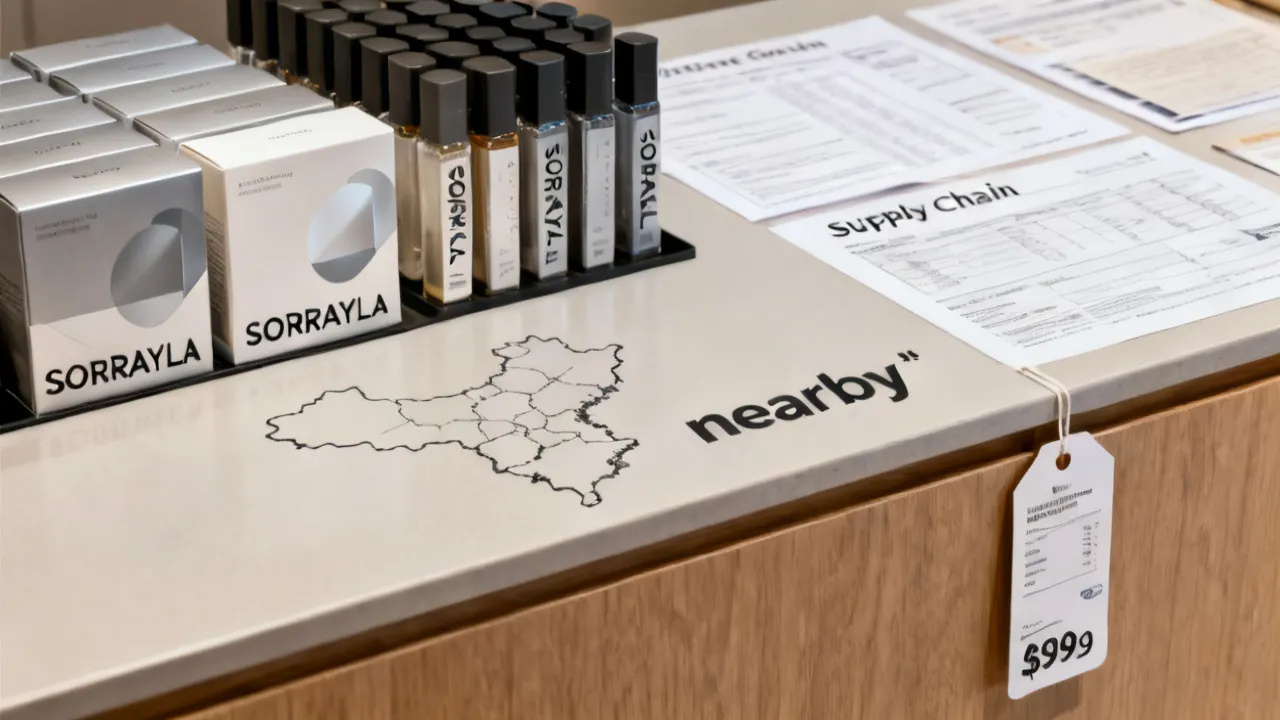
Ade Sara: Expert Guide to Selection and Sourcing
This guide explains how to evaluate Ade Sara products for quality, authenticity, and fit-to-need purchasing. Objectively, it reviews what “Ade Sara” typically refers to in commercial contexts, why supplier credibility matters, and how to compare offerings using practical criteria—without relying on hype, unverified claims, or inflated promises.
1) Key guidance for choosing “Ade Sara” with confidence
When you’re considering Ade Sara as a product option, the very important step is to assess the item’s specifications, documentation, and supplier reliability before you focus on aesthetics or price. In many markets, “Ade Sara” appears as a brand or product designation, and the buying experience can vary widely depending on whether the seller provides clear product details, consistent packaging standards, and transparent fulfillment terms. If you want a result that matches your expectations—whether for everyday use, gifting, or a commercial purchase—use a structured evaluation process rather than impulse decisions.
From an industry perspective, buyers often assume that the same product name automatically means the same manufacturing standard. In practice, differences can arise from versioning, regional distribution, and supply-chain handling. That’s why you should treat “Ade Sara” as a starting point for verification, not a guarantee of uniform quality.
Confidence in a purchase is rarely created by one piece of evidence. Instead, it comes from a pattern: multiple confirmations that the product you think you’re buying is truly what arrives at your doorstep (or your receiving dock). That pattern usually includes matching variant identifiers, clear photos, consistent documentation, proper packaging, and an identifiable support channel. If any part of that chain is missing, risk increases—sometimes slightly, sometimes dramatically depending on what “Ade Sara” actually is in your context.
Another key consideration is how quickly the product’s “value” becomes measurable. For some categories, value appears immediately (for example, usability on day one). For other categories, value is only obvious after continued usage, seasonal conditions, or longer-term performance. When you’re buying a product like “Ade Sara,” which may exist across multiple versions or bundles, it’s important to identify what timeframe will reveal whether you made a good choice. The longer the feedback delay, the more you should rely on upfront evidence like documentation, warranty terms, and supplier track record.
Finally, understand that “confidence” also involves planning your response if something goes wrong. Even a correct purchase can develop problems due to shipping damage, manufacturing defects, or missing components. A confident buyer therefore chooses not only “the best listing,” but also the option with the most predictable remedy path: returns, exchanges, warranty claims, and customer support response speed.
2) What “Ade Sara” typically means in the marketplace (objective background)
“Ade Sara” is commonly used as a commercial label in product listings, invoices, and catalogs. In objective terms, a product name like this generally identifies either:
- A brand (the manufacturer’s or distributor’s identity)
- A product line (a category within a brand)
- A catalog designation (an internal SKU or model label used by a supplier)
Because the term can function differently depending on the seller and region, buyers should focus on concrete details: materials, manufacturing method (where applicable), size/volume, included accessories, warranty terms, and packaging condition at delivery.
Important note about your provided keywords: the input you supplied contains placeholders (e.g., repeated single quotes) rather than explicit product terms, price figures, or supplier/location specifics. Therefore, this article is written as a professional, objective purchasing guide for “Ade Sara” purchases. If you share the exact product type, any listed price range, supplier name, and the location you meant, I can revise the article to include those exact details in-context.
In many real-world listings, the name “Ade Sara” may appear without enough surrounding detail to uniquely identify what’s inside the box. That’s why you should treat the name as a pointer and not as the complete description. Buyers frequently lose money not because the product was “bad,” but because it wasn’t the product they intended to buy.
For example, “Ade Sara” could refer to:
- A specific model used across multiple capacity tiers (small/medium/large).
- A starter kit and a premium kit with different accessories.
- A product sold under the same name in new and older production batches.
- A brand label applied by distributors, where the true manufacturer varies by contract period.
Even within the same category, the differences between versions can affect compatibility, performance, and total ownership cost. That’s why buyers should always seek an unambiguous “source of truth”—the manufacturer’s specification sheet, an authorized reseller invoice details, or a SKU/variant code that maps to one specific configuration.
When a listing lacks a variant identifier, you can often still reconstruct accuracy by correlating multiple clues: packaging photos, included documentation, the font/placement of model numbers on labels, and the presence/absence of particular components. In professional procurement, this process is sometimes called “spec triangulation”: instead of relying on one description, you verify using multiple independent features.
3) Why supplier credibility often matters more than headline price
Industry professionals rarely evaluate purchasing decisions on price alone because downstream costs frequently come from:
- Returns or exchanges due to mismatch with the listed specifications
- Missing components (bundles, accessories, documentation)
- Packaging damage or inadequate protective shipping
- Warranty coverage uncertainty or unclear support channels
For “Ade Sara” purchases, aim to verify that the supplier can provide consistent information across multiple listings or invoices. Consistency is a real-world proxy for process maturity: it suggests stable sourcing and clearer product handling.
To understand how supplier credibility creates value, think beyond the moment of purchase. Suppose the product is durable and you keep it for years. Even if a cheaper seller offers a lower unit price, you might pay more overall if the warranty is harder to use, if the product arrives damaged, or if returns are restricted. For sellers, “credibility” typically means they have systems that reduce error: accurate picking/packing, stable inventory rotation, clear dispute resolution, and responsiveness when customers ask technical questions.
Credibility is also linked to how well the seller can answer questions that go beyond marketing copy. A dependable supplier doesn’t only describe the product; they can explain what is included, how it’s packaged, and how it matches certain use cases. If the seller cannot answer basic questions like “Which variant is this?” or “Is the warranty transferable?” then you should treat the listing as higher risk—regardless of how attractive the price looks.
Another reason credibility matters is that many “hidden costs” show up only after you commit to the order. For example:
- Shipping surcharges added after checkout.
- Restocking fees or “no return for opened items” rules that make it costly to test compatibility.
- Delays that cause schedule problems for personal needs or enterprise delivery commitments.
- Inconsistent warranty procedures, such as requiring returns to a distant facility rather than local service.
When you evaluate “Ade Sara,” you can often detect credibility by how transparent the seller is about these topics. Sellers who are confident in their process frequently provide clear terms and proactive detail. Sellers who are less reliable often avoid specifics, leaving you to discover the rules after purchase.
In other words, supplier credibility acts like insurance. It doesn’t remove the possibility of problems entirely, but it increases the probability of a smooth experience and makes corrective action easier and faster if something fails.
4) Expert evaluation checklist for Ade Sara (apply before checkout)
Use this checklist to evaluate any Ade Sara listing, regardless of whether you buy online or through a distributor.
4.1 Product identity and documentation
- Exact product name and any model or variant identifiers
- Material and construction details (where relevant to the category)
- Included items (e.g., accessories, manual, warranty card)
- Batch/lot information if the category requires traceability
- Clear photos showing packaging and labels
When you check product identity, you’re trying to answer a fundamental question: “Is there only one possible thing this SKU could be?” If the listing description allows multiple interpretations, risk increases. Try to find at least one hard identifier—SKU, part number, model code, or a label image that includes the variant.
Documentation matters because it’s proof that the seller’s claims can be verified. Manuals, warranty cards, compliance labels, and spec sheets all help establish whether you’re receiving the intended configuration. In categories where materials or performance are critical, documentation also provides the baseline for what “normal” looks like. That becomes important when you need to address issues later.
Batch/lot information matters particularly for products where manufacturing differences can affect performance or compatibility, or where there are periodic updates. Even when a product seems identical on the surface, batch variations can be relevant in quality control. If a listing offers traceability, it generally indicates better inventory discipline.
4.2 Quality signals you can confirm
- Quality of labeling: accurate spelling, legible serial/batch marks (if applicable)
- Packaging integrity: protection appropriate to the product type
- Standard compliance statements only when the listing provides evidence
- Support responsiveness: quick, specific answers to technical questions
Quality signals are the “observable evidence” that supports the seller’s claims. For example, if a listing shows a product label clearly, with the model number visible and consistent with the description, that’s a positive sign. If the listing uses blurry images, missing labels, or generic stock photos that don’t show the exact variant, then you should assume risk.
Packaging integrity is more than aesthetics. Proper protective packaging reduces the likelihood of damage in transit and may also reduce the chance of missing components. Look for listing photos showing protective wraps, sealed compartments, padding, and tamper-evident features when relevant.
Support responsiveness is often undervalued by casual buyers. However, the quality of the seller’s answers is one of the best predictors of how they will handle issues later. Ask a question that requires specific knowledge: “Does this include X accessory?” or “Is this the updated version with Y?” A credible seller will answer clearly and consistently. A less reliable seller may respond with vague reassurance or ask you to accept uncertainty.
4.3 Pricing structure: compare total value, not only unit cost
Even without a specific price figure in your prompt, professional purchasing comparisons follow a standard pattern:
- Unit price (obvious but incomplete)
- Shipping and handling (often the biggest hidden variable)
- Delivery timeline (affects planning and resale windows)
- Return conditions (restocking fees and eligibility rules)
- Warranty/service coverage (especially important for durable goods)
To compare total value, you should convert every listing into the same conceptual “bundle of rights.” That bundle includes:
- The product you receive (including all included items).
- The time you receive it (delivery window and handling time).
- The protections you get (warranty duration, warranty transferability, return policy).
- The costs you pay (unit price, shipping, any mandatory insurance, any expected restocking fees).
Sometimes a slightly higher unit price from a reputable seller is cheaper overall because it includes more accessories, provides clearer warranty coverage, or ships faster with safer packaging. Conversely, a low unit price may become expensive if the item is missing components, if return shipping is non-trivial, or if support is hard to reach.
For “Ade Sara,” because the name itself might not uniquely identify the exact version, total value comparisons must also include the “fit certainty” you get from evidence. A listing with detailed specifications, clear variant labeling, and visible packaging can be more valuable than a cheaper listing that looks similar but lacks proof.
5) Comparison table: selection approach, source of truth, steps, and conditions
The table below is designed to help you compare buying routes for Ade Sara while staying grounded in evidence and practical constraints. It does not include links, in accordance with your requirements.
| Buying route / decision point | Source of truth (what you should verify) | Step-by-step guide | Conditions / requirements |
|---|---|---|---|
| Direct from a brand or authorized channel | Manufacturer/distributor documentation, warranty terms, and item specifications | 1) Confirm the exact variant and SKU. 2) Request/verify warranty coverage details. 3) Check packaging and included items. 4) Confirm shipping and return terms. | Seller must provide consistent product documentation and clear post-purchase support. |
| Authorized reseller / established retailer | Reseller invoices, product sheets, and serial/batch traceability if relevant | 1) Compare multiple listing photos. 2) Verify compatibility with your use-case. 3) Confirm return eligibility. 4) Ask whether the item is current production or an older batch. | Listing must clearly describe specifications and bundle contents. |
| Third-party marketplaces | Seller ratings paired with verifiable listing details (not just reviews) | 1) Cross-check the product description with packaging photos. 2) Confirm shipping origin and handling method. 3) Review return policy terms carefully. 4) Request proof of batch/variant if that matters for your selection. | You should avoid decisions based solely on rating metrics; prioritize documentation and clear terms. |
| Wholesale or bulk sourcing (commercial purchase) | Purchase contract terms, lead times, and quality inspection process | 1) Define acceptance criteria. 2) Require inspection or sample validation where possible. 3) Confirm lead times and logistics responsibility. 4) Document the warranty/service plan for onward sale. | Contract language must be explicit about quality standards, remedies, and delivery obligations. |
To make this comparison table more actionable, consider how each route changes your risk profile:
- Direct brand purchases typically reduce uncertainty about compatibility, warranty validity, and version updates. The risk shifts toward availability, shipping cost, and lead time.
- Authorized resellers usually provide strong product information but may have limited control over inventory freshness or bundle selection. Your risk is often around “stock-specific” differences.
- Third-party marketplaces can be convenient, but the main risk is mismatch between listing content and received item, especially when photos are generic or when variant labeling is unclear.
- Wholesale/bulk sourcing introduces process risk: quality inspection, acceptance testing, and contract clarity become more important than the individual listing quality.
When you choose a route, you’re not only choosing where to buy. You’re choosing which documentation and remedy mechanisms will likely be easiest to access if there is a problem.
6) Conditions and requirements to reduce purchasing risk
Whether your “Ade Sara” acquisition is personal or commercial, the conditions below help you avoid common failure points.
- Match the variant: many product names share similar labels; confirm size, version, or configuration.
- Keep written proof: screenshots of the listing, order confirmation, and any messages with the supplier.
- Understand return eligibility: verify whether returns are allowed after opening, and whether defects are handled differently than “buyer’s remorse.”
- Check packaging and transport handling: fragile or sensitive goods may require specific protection.
- Confirm warranty or service route: who covers issues, how claims are processed, and typical response timelines.
In practical terms, “keeping written proof” is not bureaucracy. It’s a risk-control strategy. If a dispute arises, you can present a clear timeline and evidence that the supplier advertised specific details. Without that evidence, you may rely on memory or vague claims that are hard to resolve.
Also note that “return eligibility” should be treated as a two-layer rule: the written policy and the operational reality. Written policies can say “returns accepted,” but operationally there might be restocking fees, damaged-box conditions, or strict time limits. That’s why it’s beneficial to check the policy text and also observe how the seller responds to return-related questions.
Packaging and transport handling requirements depend on the product category. Some items require anti-static protection, moisture barriers, shock-absorbing padding, or sealed compartments. If the seller uses minimal packaging or provides little evidence of protective shipping, you should factor in the likelihood of damage.
For warranty/service route, confirm not only the duration but also where you must go to claim warranty. For example, some warranty processes require shipping to a service center. Others may allow local service partnerships. For international shipping, warranty coverage can vary depending on distribution agreements. A credible seller will clarify these points upfront.
Finally, if “Ade Sara” is part of a commercial workflow—resale, integration into a system, or use in a service environment—consider adding a pre-delivery validation step. That can include requesting serial/batch details before shipment or arranging inspection upon receipt. The goal is to reduce the time between receiving the product and identifying whether it meets your acceptance criteria.
7) Industry perspective: how suppliers typically differentiate “Ade Sara” offerings
In a mature supply ecosystem, sellers differentiate not only on price but on operating discipline—especially around inventory rotation and quality control. You can often observe this discipline in practical ways:
- Accuracy of the listing: clear specs and consistent photos suggest stable processes.
- Quality control claims backed by details: credible sellers describe inspection stages or documentation rather than vague assurances.
- Response behavior: reputable suppliers answer technical questions plainly and do not redirect you repeatedly to generic statements.
- Packaging consistency: products shipped in consistently protective packaging typically reflect better fulfillment training.
Even without exact price information, you can still assess value by evaluating these operational signals.
From an operational standpoint, differentiation often happens in four areas:
- Inventory management (how quickly they update listings, whether they rotate stock, whether they prevent mixing variants).
- Fulfillment accuracy (picking correctness, correct bundle assembly, ensuring accessories are included).
- Documentation accuracy (warranty card included, correct manual, correct model label).
- Customer support execution (how they handle exceptions, how fast they respond, how they process disputes).
Suppliers with strong processes usually reduce ambiguity. Their product pages and packaging images show labels clearly. Their warranty terms are specific and match the product category. Their photos look like real stock rather than generic “representative” images.
There’s also a behavioral dimension: when a seller is reliable, they can explain trade-offs without hiding behind vagueness. For example, if there are multiple versions of “Ade Sara,” they can tell you which one is currently shipping and what changed. If a product is discontinued or replaced by an updated version, a reputable seller communicates that clearly. Less reliable sellers often keep marketing copy static even when inventory changes.
Another area is how sellers treat the buyer’s due diligence. If you ask for variant clarification or documentation, a dependable seller welcomes the question. A less reliable seller may discourage detailed inquiry or respond with “don’t worry, it’s the same.” In many procurement experiences, that response is a sign that the seller does not want to expose the differences between variants or bundles.
Therefore, when choosing between “Ade Sara” options, treat your questioning as a measurement tool. Your goal is to see whether the seller’s behavior matches the level of transparency implied by their listing.
8) FAQs about Ade Sara purchasing and sourcing
Q1: What does “Ade Sara” refer to?
Ade Sara typically functions as a brand name, product line, or catalog designation depending on the seller. To verify what you are buying, confirm the exact variant/model and review detailed specifications, bundle contents, and any warranty or documentation included.
Q2: How can I compare two Ade Sara listings objectively?
Compare total value: unit price plus shipping/handling, delivery timeline, return conditions, warranty coverage, and the clarity of product specifications. Prefer listings with consistent images and explicit descriptions of what is included.
To make comparison more objective, create a short scoring grid for your own use. For example, give each listing a score out of 5 for: (1) variant clarity, (2) documentation included, (3) packaging shown, (4) warranty terms specificity, and (5) return policy fairness. The listing with the highest evidence-based score usually represents the most reliable value, even if its unit price is not the lowest.
Q3: Should I rely on reviews for Ade Sara quality?
Reviews can provide useful context, but they are not proof of current inventory quality. Use reviews as an initial signal, then validate specifications, packaging integrity, and return/warranty terms before purchase.
It’s important to understand review limitations. Reviews can be about earlier batches, different bundles, or even different variants that share the same name. A listing might receive positive reviews because customers liked “Ade Sara” in a certain configuration, but later inventory changes might alter what is actually shipped. That’s why reviews should support—rather than replace—your verification steps.
Q4: What should I ask a supplier before buying?
Ask for the exact variant/SKU, included items, production timing (if relevant), warranty or service coverage, return eligibility after opening, and confirmation of shipping/handling standards. If the product category requires it, ask about batch/lot traceability.
When asking, use questions that are easy to answer with specifics. For example: “Can you confirm the model number on the label?” “Does the box include instruction manual and warranty card?” “Is the product sealed?” “What is the warranty process if there is a defect on arrival?” These questions force the seller to provide concrete evidence and reveal whether they have access to accurate inventory details.
Q5: Why is the same Ade Sara name sometimes priced differently?
Price differences can reflect variant changes, different bundle contents, shipping costs, warranty coverage, or fulfillment efficiency. The very reliable approach is to compare what is included and what protection is offered—not only the unit price.
Price differences can also be caused by distribution models. Some sellers may be clearing older inventory (possibly with older batch dates or reduced warranty support). Others may be selling a newer variant that is functionally updated. If you don’t confirm the variant, you may pay for a “premium” listing but actually receive a more basic item, or the opposite.
Q6: What are common red flags when buying Ade Sara?
Red flags include unclear specifications, mismatched photos, missing or vague warranty terms, aggressive refund restrictions, unclear shipping origin, and inconsistent answers to basic questions about included components or variant details.
Additionally, watch out for policy red flags such as: unclear responsibility for shipping damage, refusal to provide proof of what’s included, or “contact us after arrival” processes that delay remedies. If the seller requires you to accept uncertainty until after delivery, you should treat that as a risk factor.
Q7: Do I need to confirm anything about location-based availability?
If availability differs by region, confirm shipping origin, expected delivery windows, and local handling practices. Also check whether warranty coverage is honored through the destination country or through a separate service channel.
Location matters for logistics and for warranty. Some warranty coverage may only be valid when purchased from an authorized local distributor. If you buy from a seller in another region, the warranty card might still exist, but claiming coverage might require shipping to a different address or using a non-local service channel. A credible seller clarifies this early.
9) Reliable sourcing principles (how professionals validate claims)
Because your prompt did not include specific numerical performance data, this article avoids unverified statistics. When buyers do encounter claims about quality, performance, or industry adoption, professional due diligence typically references:
- Official manufacturer documentation or authorized distributor materials
- Regulatory or standards bodies relevant to the product category
- Reputable industry reports from recognized research firms or trade associations
If you provide the product category behind “Ade Sara” (for example, home goods, personal care, electronics, or textiles), I can add category-appropriate references and turn the evaluation checklist into a more precise compliance-and-spec framework.
In procurement, there’s a concept of “claim verification.” Sellers often make broad claims like “high quality,” “original,” “certified,” or “latest version.” The buyer’s job is to validate those claims by obtaining evidence that maps to the claim. For example:
- If the claim is “original,” ask for the relevant proof such as warranty registration details or manufacturer batch information.
- If the claim is “certified,” ask which standard applies and whether the listing provides the compliance label or documentation.
- If the claim is “latest version,” ask for the model number and production date range that correspond to the updated design.
This is where the “source of truth” approach matters. The listing text might be marketing copy; photos might be representative; reviews might refer to earlier inventory. Your source of truth is ideally the manufacturer’s documentation or an authorized reseller’s invoice and product sheets, or—if not available—clearly verifiable label data on the delivered packaging.
When professionals cannot obtain official documentation, they rely on strong surrogate evidence: clear, consistent packaging photos showing the exact label and serial/batch marks; detailed return terms; and a supplier whose historical behavior suggests low mismatch rates. Surrogate evidence doesn’t replace documentation, but it can reduce risk when official materials are not readily accessible.
10) Practical next steps
To move from research to purchase with fewer uncertainties, follow this short sequence:
- Define your requirements for Ade Sara (variant, size/configuration, intended use, and must-have inclusions).
- Verify the listing using the documentation and packaging signals described above.
- Compare total value (price + shipping + warranty + returns), not only unit cost.
- Confirm supplier responsibility through written terms and clear post-purchase support.
- Keep records of the listing details and your communications.
To help you make these steps concrete, here’s an example workflow you can adapt:
- Step 1 (requirements): Write down what you need. For instance: “Ade Sara model A, includes warranty card, sealed packaging, delivered within 5–7 days.”
- Step 2 (verification): Compare listings and require images showing the model label, the contents of the box, and any warranty documentation.
- Step 3 (value comparison): Calculate total cost including shipping and estimate risk cost through return/warranty terms. Prefer the listing that gives both lower risk and fair remedies.
- Step 4 (supplier responsibility): Send one targeted question. If the seller responds quickly with specifics, that’s a positive signal. If not, reconsider.
- Step 5 (records): Save the listing screenshot, order confirmation, and all messages so you have a documented baseline.
After purchase, a confident buyer also performs a “receive-and-check” procedure. That might include:
- Inspecting packaging for damage before opening when feasible.
- Confirming that included items match the listing description.
- Checking the label for model/variant match.
- Taking photos immediately in case a warranty claim or dispute arises.
- Verifying that the warranty documentation (if applicable) is present and consistent.
This receive-and-check procedure is especially valuable when returns are restricted. Even if you hope everything is correct, preparing evidence at the time of delivery makes it easier to resolve issues quickly.
11) Localization note
Your prompt does not specify a city or country to localize language and purchasing norms. If you share the location you meant (for example, a nearby region), I can incorporate culturally relevant purchasing expectations—such as common payment preferences, typical delivery conditions, and local customer service norms—while also ensuring that any “{city} or {country}” placeholders are replaced with “nearby.”
Localization also affects how you interpret “warranty” and “returns.” In some regions, warranties are more consumer-protection oriented and easier to claim. In others, warranties may be more dependent on authorized service networks. Delivery practices differ too: some areas may have higher risk of parcel mishandling, which changes the importance of protective packaging evidence. If you plan to buy “Ade Sara” from a seller outside your immediate region, consider asking the seller about local handling and how they package the item for that route.
Payment norms can also affect risk. For example, if a buyer can’t easily access dispute mechanisms for certain payment methods, they should favor sellers with clearer refund/return steps and better documented policies. Although this article stays general, the same verification discipline applies everywhere: confirm details upfront, and ensure the remedy pathway is explicit.
Conclusion
Choosing Ade Sara successfully comes down to verification discipline: confirm the exact variant, assess packaging and included items, evaluate supplier reliability, and compare total value through the lens of warranty and return conditions. With this approach, you reduce risk and improve the odds that the purchased item matches your intended outcome—without relying on vague promises or unsupported claims.
-

A Guide to Cost-Efficient Small Electric Cars for Seniors
-
Mastering Debt Consolidation: Boost Your Credit Score and Manage Interest Rates
-
Your Guide to Loans, Credit Checks, and Interest Rates
-
Affordable Independent Living: Finding the Right Senior Housing
-
Guide to Senior Living Apartments: Affordable and Comfortable Environments