Understanding 21979368133 Through Supplier Pricing Context
This guide explains how “21979368133” functions in supplier pricing and sourcing workflows, from identification to procurement checks. Objectively, the term appears as a numeric reference commonly used in catalogs, inventory systems, or order documentation. You’ll learn how to verify accuracy, compare supplier terms, and document requirements before purchasing.
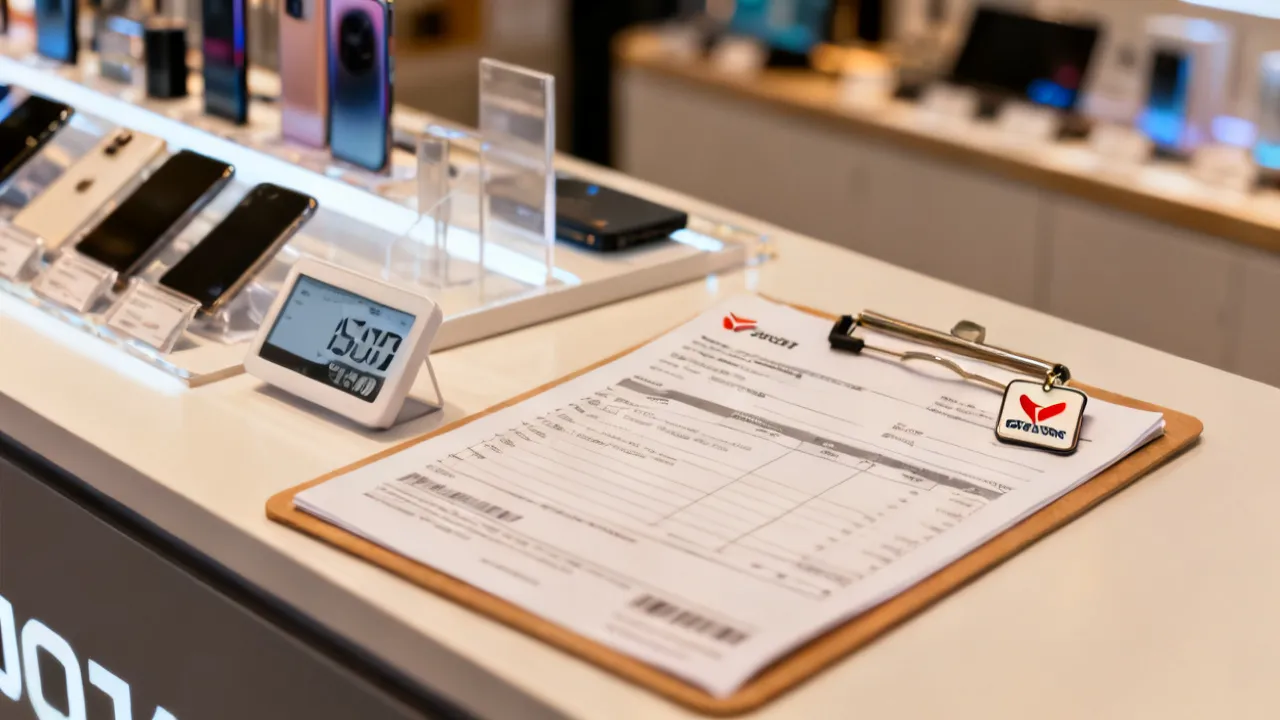
Critical overview: what “21979368133” likely represents in sourcing and pricing
When you encounter 21979368133 in a procurement, listing, or inventory context, treat it as a reference identifier—the kind of number many suppliers attach to a specific SKU, model, specification bundle, or orderable item. In real-world buying processes, this identifier matters because it anchors pricing, availability, packaging assumptions, and compatibility claims. If a catalog, quotation, or supplier page associates a price with 21979368133, your first priority is to confirm that the quote truly corresponds to the same identifier and the same product configuration.
Because you may be evaluating offerings from different sellers, the top approach is comparative: verify the match between 21979368133 and the item description, check terms tied to shipping and warranty, and ensure the supplier’s documented specs align with your intended use. This is also where a “nearby” location can influence lead time and fulfillment options, especially in markets where pickup or regional logistics are common.
Keywords note: The provided keywords contained placeholder/blank items around the numeric string. In the absence of additional textual keyword content, this article focuses on the numeric identifier 21979368133 as the central topic, integrating it naturally into the procurement and pricing narrative.
Background context: why numeric identifiers drive supplier pricing
In very industries—consumer electronics, components, industrial supplies, and logistics—suppliers rely on reference numbers to reduce ambiguity. Even when two products look similar in a photo, a reference like 21979368133 can represent a precise variant: a different revision, wattage rating, compatibility matrix, region code, or bundle configuration.
From an objective standpoint, supplier pricing is often downstream of these identifiers. Pricing engines and catalog systems typically attach costs, promotions, and stock status to a specific SKU. When the identifier is wrong or mismatched, you can see symptoms such as:
- Quoted price applies to a different configuration than expected.
- Availability shown for one item but fulfillment attempted for another.
- Warranty or return eligibility limited by SKU-specific terms.
- Incorrect compatibility claims because the quoted specs don’t correspond to the purchased unit.
Industry top practice is therefore not to treat a numeric identifier as a superficial label, but as a contract anchor between buyer and supplier. That concept sounds formal, but operationally it means: if something goes wrong (wrong item received, DOA returns, warranty denial), the identifier becomes the fastest way to determine what was actually bought, what was promised, and which commercial rules were intended to apply.
What 21979368133 might mean inside supplier systems
Without additional catalog context, it’s impossible to prove exactly what 21979368133 stands for in a particular supplier’s system. However, procurement teams tend to encounter similarly structured numeric strings in a few common forms:
- SKU / article code: A code used internally to represent a specific salable unit. These typically appear on quotations, purchase orders, invoices, and shipping labels.
- Model-variant identifier: A code that represents a particular configuration (e.g., a specific chipset, material grade, firmware generation, power rating, or packaging type).
- Orderable bundle ID: A code that corresponds to a pack that includes multiple subcomponents. In that scenario, the price might represent the bundle, not a single piece.
- Warehouse item code: A code used by a specific fulfillment center. Two suppliers can share the same marketing product name but carry different warehouse codes for the same external-facing product.
- Supplier catalog reference: A reference number used to map product details in the supplier’s catalog. Some sellers use it on web listings and also in the back office, but may not present it as prominently as an alphanumeric SKU.
For 21979368133, the key point is not which label best describes it, but how you should behave: assume it is meaningful, assume it ties to specific commercial terms, and validate it against the supplier’s documentation and the exact product attributes you need.
Expert procurement perspective: how to evaluate pricing tied to an identifier
As an industry analyst would recommend, you should evaluate pricing around 21979368133 using a structured lens. Prices rarely reflect only the base unit cost; they commonly incorporate procurement conditions such as packaging, minimum order quantities, fulfillment method, and service levels.
Below are the very important diligence checks when a supplier ties a price to 21979368133:
- Identifier verification: Confirm the number appears in multiple fields (SKU, item code, line item, or product detail page) and in the supplier’s quotation document, not only in a casual message.
- Configuration confirmation: Compare described attributes against what you need. For example, if the item is a component, ensure revision and compatible part numbers match your system’s requirements.
- Unit-of-measure clarity: Ensure the price is per unit, per pack, per bundle, or per pallet. Numeric IDs sometimes correspond to a pack rather than a single unit.
- Commercial terms alignment: Check whether the supplier’s price includes shipping, handling, taxes, or installation/commissioning (when relevant).
- Lead time realism: Identify whether the supplier offers “in-stock” fulfillment or requires replenishment. Lead time differences can change total cost of ownership, even when the unit price is similar.
- Warranty and returns: Ensure return eligibility and warranty coverage reference the exact SKU or reference code.
- Documentation quality: Prefer suppliers who provide a quotation with line-item references that match 21979368133, along with invoice-ready descriptions.
This is how professionals reduce “quote mismatch” risk—one of the very common causes of dissatisfaction in procurement workflows. In practice, the mismatch often occurs not because anyone is trying to trick you, but because internal catalogs and human assumptions diverge. A strong quoting process forces alignment between the identifier, the description, and the commercial terms.
Comparative decision-making: price is only one variable
Even if you are comparing two suppliers offering different prices for the same identifier 21979368133, the decision should include other cost drivers:
- Total delivered cost: shipping, taxes, duties, and handling fees can outweigh a small unit price difference.
- Risk premium: if one supplier has a less clear warranty policy or weaker documentation, buyers often implicitly pay via higher operational risk.
- Operational downtime: for components or equipment tied to production or service delivery, delayed fulfillment can be more expensive than any unit price gap.
- Quality assurance: verified specs and traceability reduce the chance of incompatibility. Traceability is frequently associated with SKU-level identifiers.
Therefore, a “low price” associated with 21979368133 should be reviewed for what it excludes—especially if the supplier’s terms are ambiguous. A frequent procurement observation is that suspiciously low prices often correlate with one or more hidden constraints: longer lead times, limited return windows, exclusions in warranty language, nonstandard packaging, or incomplete documentation (which can later complicate audits and receiving).
Conversely, a higher price might include better packaging, faster delivery, stronger warranty coverage, clearer compliance documentation, or easier RMA handling. Those items can be the difference between a smooth integration into your operations versus a time-consuming remediation cycle.
Conditions and requirements you should expect in a well-run quotation
When suppliers list an identifier like 21979368133, a professional quotation should typically include enough information to prevent misinterpretation. If any of the following are missing, treat it as a sign you need clarification before purchase:
- Full item description tied to 21979368133
- Quantity and unit (each, pack, carton, etc.)
- Price breakdown and whether shipping/tax is included
- Expected dispatch or delivery window
- Warranty duration and conditions tied to the SKU
- Return/RMA process details, including whether the SKU is returnable
- Compliance statements if the product requires them (industry-specific)
In regional markets with frequent “nearby” fulfillment, suppliers may also specify pickup options, local carrier schedules, or service coverage areas. Those details can materially affect your timeline. For example:
- Pickup vs delivery: If pickup is offered, does the supplier require appointment scheduling? Are there cutoff times?
- Local service constraints: If delivery is “nearby,” does it exclude weekends or holidays? Is there a minimum order threshold?
- Dispatch location: If the supplier has multiple warehouses, clarify which location will fulfill the 21979368133 order.
Even in straightforward procurements, procurement teams learn that “nearby” can be operationally vague. A robust quotation turns “nearby” into a measurable schedule and clear responsibility boundaries.
Step-by-step guide: verifying 21979368133 before you commit
If you want a practical workflow that matches how procurement teams reduce errors, follow this sequence.
- Capture the identifier: write down 21979368133 exactly as shown. Avoid manual transcription errors—leading/trailing digits matter.
- Request or confirm item description: ask the supplier to restate the item description that corresponds to 21979368133.
- Ask for SKU-level specs: request key attributes needed for compatibility (model, revision, dimensions, electrical ratings, materials, or whatever applies to your category).
- Confirm packaging/unit pricing: verify whether the quotation price is per unit or per pack/bundle.
- Check delivery conditions for “nearby” fulfillment: if you are located in a region where “nearby” logistics exist, ask about dispatch cut-off times and local carrier reliability.
- Review warranty and returns: ensure policies are tied to the exact SKU/reference code.
- Get the quote in writing: ensure your quotation or proforma invoice includes 21979368133 in the line item, so the paper trail matches the transaction.
- Retain documentation: save the quote, invoice, shipping confirmation, and product documentation for traceability.
This method is intentionally conservative; it is designed to prevent expensive mismatches. In many cases, the “extra” work is small—one additional email asking the supplier to confirm SKU-level description and unit-of-measure. But the return on that effort can be substantial, especially for high-dollar orders, production-critical components, or items with strict compliance requirements.
It also helps to formalize how you handle approvals internally. For instance, procurement managers often require a checklist sign-off that the SKU code, the quantity, and the warranty terms align with the original purchase intent before issuing a purchase order.
Comparison table (no links): supplier evaluation criteria for items tied to 21979368133
The table below summarizes how buyers typically compare suppliers when the pricing is anchored to an identifier such as 21979368133.
| Evaluation area | What to look for in a supplier quote | Why it matters for 21979368133 | Buyer requirement / condition |
|---|---|---|---|
| Identifier match | 21979368133 appears in the quote line item and description | Prevents SKU mismatch and quote errors | Supplier must confirm the exact identifier in writing |
| Configuration details | Revision/specs reflect what you need | Pricing may vary by variant even if photos look similar | Buyer should specify required attributes; supplier confirms compliance |
| Price basis | Price per unit vs per pack/bundle is clearly stated | Unit price can be misleading without UOM clarity | Buyer should require explicit unit-of-measure |
| Delivery and “nearby” options | Lead time and fulfillment method are stated (dispatch date, delivery window) | Local logistics can change total cost and timeline | Buyer should confirm whether delivery is standard vs express |
| Shipping inclusions | Clarify whether shipping/handling/taxes are included | Delivered cost can exceed the headline unit price | Buyer should request a delivered-total estimate |
| Warranty and returns | Warranty length and return eligibility linked to the SKU | Policies often vary by SKU or product category | Buyer should request RMA conditions before purchase |
| Documentation | Invoice-ready descriptions and product documentation | Traceability reduces operational risk | Buyer should require invoice documentation at shipment |
Beyond the basics: deeper procurement checks tied to numeric identifiers
Many buyers stop at “does the supplier mention 21979368133 in the quote?” That’s necessary, but not always sufficient. In mature procurement programs, teams extend the checks to reduce latent risk. The identifier may be correct, yet the transaction can still fail if the supplier’s promise differs from your operational needs.
Below are additional diligence checks that often matter once basic identifier match is achieved:
- Traceability artifacts: Ask whether the supplier can provide lot numbers, serial numbers, certificates of conformity, or test reports—especially if you need compliance documentation for audits.
- Revision control: Confirm that the revision level included under 21979368133 is the one your engineering team expects. For electronics and industrial parts, revision mismatches can break compatibility.
- Substitution policy: If the supplier runs out of stock, do they have a right to substitute? If yes, does the substitution preserve the same identifier or allow equivalent alternatives?
- Installation requirements: If the product is equipment or software, clarify prerequisites, version compatibility, firmware levels, and license terms. Numeric identifiers sometimes refer to a hardware SKU but pricing could also depend on included software licenses.
- Packaging and handling: Some identifiers represent premium packaging, ESD-safe materials, or protective inserts. These packaging differences can matter for damage rates during shipping and for compliance with storage conditions.
- Quality assurance: If your risk tolerance is low, require incoming inspection criteria or third-party testing. Some suppliers can tie quality reports to the identifier.
These checks are not about distrusting every supplier; they are about reducing uncertainty. If 21979368133 appears to be the “same SKU,” you still want assurance that the SKU is the one that meets your technical and operational acceptance criteria.
Reliable sources to anchor procurement reasoning (objective references)
To keep the guidance grounded, the procurement principles above align with broadly documented supply-chain and purchasing practices. For background on procurement risk, traceability concepts, and standardization of identifiers across supply chains, you can consult authoritative sources such as:
- ISO standards on product traceability and quality management systems (e.g., ISO 9001 quality management principles for process consistency).
- GS1 standards used globally for identification and product data exchange in supply chains (helps explain why identifiers matter and how SKU-level data reduces ambiguity).
- OECD guidance on responsible business conduct and due diligence (useful for understanding why documentation and verification matter across procurement processes).
These resources are referenced for general top-practice context rather than for any single numeric identifier claim.
Industry context: how teams prevent “wrong item” issues
In many organizations, wrong-item procurement issues stem from one of two problems: either the supplier’s internal listing mapping is incorrect, or the buyer’s request lacks specificity. When an identifier like 21979368133 is used correctly, it reduces both failure points by forcing a precise match between requested and quoted line items.
Professionals typically operationalize this through:
- Structured purchase orders that require SKU/reference codes.
- Line-item confirmation during supplier onboarding and quotation approval.
- Receiving checks that compare the shipped label/code with the ordered code.
- Document-controlled returns to speed up RMA resolution.
Even when a supplier is reputable, these practices keep procurement outcomes consistent. In practice, the “wrong item” scenario can be caused by:
- Supplier catalog errors that map the wrong item under 21979368133.
- Buyer ambiguity where the identifier is not referenced in the purchase order.
- Substitution during fulfillment without proper notice.
- Label printing or warehouse picking errors (human error in the warehouse is still a real operational risk).
Strong procurement systems treat the identifier as a mechanism to catch issues early—ideally at order confirmation or receiving inspection—before parts reach production lines or end users.
Common pitfalls when using a reference number like 21979368133
To improve decision quality, it helps to recognize typical failure modes:
- Numeric-only assumptions: buyers sometimes assume the number alone guarantees correct configuration. In reality, packaging and variants may differ.
- Incomplete descriptions: if the supplier uses minimal text, you may not know what revision or bundle is included.
- Price inconsistency across documents: a different price may appear on an invoice than on the quote because a different line item or UOM was substituted.
- Warranty conditionality: warranties can be tied to exact product configuration and serials, not just the general category.
- Receiving mismatch: the delivered item code may not align with the intended order line.
Correcting these issues early is alvery always cheaper than addressing them after shipment. Once items are received, the costs shift from procurement-level resolution to operational-level remediation: inspection labor, downtime, return shipping, and potentially even replacement purchases.
One particularly expensive pitfall involves compatibility. If 21979368133 maps to a slightly different revision than you intended, the problem might only surface after installation. At that point, even if the supplier honors warranty, your operational costs (labor, rework, delays) may not be recoverable under standard commercial terms.
Therefore, procurement teams often request the technical details that ensure compatibility: datasheets, specification sheets, revision notes, and any “engineering change” documentation relevant to the identifier.
FAQs about 21979368133, supplier pricing, and verification
1) What does 21979368133 mean?
Very often, a number like 21979368133 functions as an internal or catalog reference identifier tied to a specific SKU, model variant, or orderable product configuration. The exact meaning depends on the supplier’s catalog system; therefore, you should confirm the description and specifications that match this identifier in the quotation.
2) Why can prices differ even if the identifier is the same?
Prices can differ due to changes in unit-of-measure (e.g., per pack vs per unit), shipping inclusions, payment terms, warranty coverage, or bundled components. Even with the same identifier, check whether the supplier’s quotation clearly states what is included and how the unit price is calculated.
3) Should I rely on a supplier’s headline price alone?
No. A headline unit price associated with 21979368133 should be cross-checked against delivered total cost, delivery window, warranty terms, and return conditions. Procurement teams typically treat the quote as a bundle of commercial terms, not a single number.
4) What documents should I request before ordering?
Request a quotation or proforma invoice that includes 21979368133 in the line item, plus product description, quantity/UOM, delivery lead time, warranty terms, and return/RMA conditions. These are essential for accountability and traceability.
5) How does “nearby” fulfillment affect purchasing?
If the supplier offers “nearby” fulfillment (e.g., regional delivery or pickup), it can reduce lead times and potentially change shipping/handling fees. However, you still need to verify that the quote ties the same identifier 21979368133 to the exact product configuration you expect.
6) What should I check when the item arrives?
Compare the shipped item label or documentation against 21979368133 from your order/quote, verify the quantity and packaging type, and inspect for visible damage. If there’s a mismatch, document it promptly for faster resolution.
7) Can I use 21979368133 to compare suppliers accurately?
Yes, as long as suppliers use the identifier consistently and you validate the supporting description and specs. The safest comparison includes the same identifier plus matching configuration attributes and identical or comparable commercial terms.
Practical recommendation: how to proceed when you see 21979368133 with a price
If you are currently deciding whether to purchase an item referenced by 21979368133, proceed as follows: confirm the SKU description tied to the number, request UOM clarity, ask for written delivery and warranty/returns terms, and ensure the delivered-total cost is comparable across suppliers. If you are sourcing in a context where “nearby” logistics matter, confirm dispatch and local delivery conditions as well. This disciplined approach turns a numeric identifier into a reliable purchasing reference rather than a potential source of mismatch.
By treating 21979368133 as a contractual anchor—verified in documentation, aligned with product specs, and evaluated alongside warranty and total delivered cost—you reduce procurement risk and improve the odds of a smooth supplier transaction.
-

A Guide to Cost-Efficient Small Electric Cars for Seniors
-
Mastering Debt Consolidation: Boost Your Credit Score and Manage Interest Rates
-
Your Guide to Loans, Credit Checks, and Interest Rates
-
Affordable Independent Living: Finding the Right Senior Housing
-
Guide to Senior Living Apartments: Affordable and Comfortable Environments