How Maju Supports Strategic Growth
This guide explains how “Maju” functions as a practical concept for planning improvement across operations, supplier coordination, and market readiness. In objective terms, “Maju” is widely used in Indonesian contexts to signal progress and advancement, while “supplier” and “price” considerations reflect the realities of procurement and operational cost control. It also outlines requirements and decision steps for adopting structured growth.
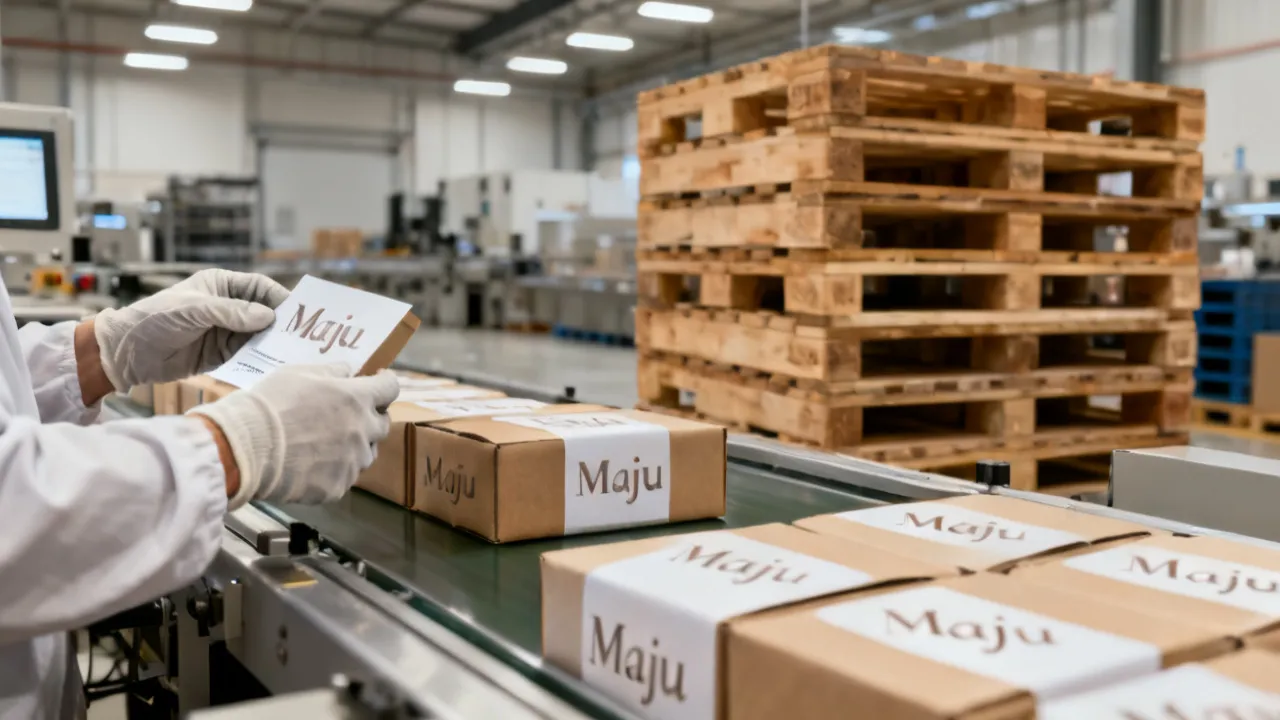
1) The Practical Meaning of “Maju” in Growth-Oriented Operations
When organizations say Maju, they typically mean progress that can be planned, measured, and sustained. In operational settings, that often translates into strengthening how work moves from planning to execution: standardizing workflows, improving quality checks, aligning suppliers, and using pricing logic that supports predictable delivery. For decision-makers, the strongest “Maju” outcomes come from treating progress as a system—not a slogan.
Because procurement and logistics directly affect timelines and costs, the “Maju” mindset is usually expressed through two concrete pillars: supplier reliability and price discipline. Even when demand fluctuates, organizations that keep their supply relationships stable and their cost assumptions grounded tend to move forward more consistently.
However, “Maju” is more than merely getting goods on time. In a growth-oriented operational program, “Maju” is the ability to scale without losing control. That means your organization can increase volume, expand product coverage, or improve service levels while maintaining consistent quality and manageable costs. It also means you can anticipate constraints—like lead times, capacity limits, compliance requirements, or currency volatility—and design operations that absorb change rather than collapse under it.
To see what “Maju” really means in practice, it helps to ask a straightforward question: How would you know that progress is happening? If the only answer is “because we feel it is improving,” the program is likely to drift. In contrast, if the answer includes metrics—such as on-time delivery rates, defect rates, order cycle time, and forecast accuracy—then “Maju” becomes visible and controllable.
In Indonesian business conversations, “Maju” also carries a motivational dimension. It signals advancement and a forward-looking stance that resonates with teams: people want to believe that effort leads to tangible improvement. But operationally, motivation must be paired with structure. If you want “Maju” to persist through busy seasons, leadership transitions, and supplier changes, you need a governance model that keeps priorities and standards consistent.
Therefore, in procurement- and execution-heavy environments, “Maju” is best understood as a discipline of repeatability: the organization learns, codifies best practices, reduces variation, and ensures that improvements remain effective when conditions shift.
2) Why “Maju” Matters for Procurement, Quality, and Execution
In many Indonesian business conversations, Maju carries cultural weight: it implies advancement, forward momentum, and improvement that benefits both the organization and its stakeholders. Objectively, those goals align with widely recognized operational management principles—like process standardization, risk mitigation, and performance review cycles.
At the same time, a growth plan can fail if pricing and supplier coordination are handled informally. For example, if a team relies on last-minute quotations without confirming lead times, payment terms, or quality requirements, costs may rise and delivery schedules may slip. In other words, Maju needs procurement clarity to remain achievable.
Procurement and supplier coordination are not “back office” concerns when the business is scaling. They influence three critical operational outcomes: time (how quickly you can fulfill orders), quality (how reliably the delivered items meet specifications), and cost (not only unit price, but the total cost impact of decisions).
Consider what happens when procurement execution is inconsistent:
- Time risk: procurement may place orders without consistent lead-time assumptions. If suppliers then deliver late, operations schedules break, causing production downtime or missed service windows.
- Quality risk: specifications may be unclear or acceptance criteria may vary between teams or batches. This leads to defects, rework, customer complaints, and additional inspection costs.
- Cost risk: “cheap” unit price can become expensive once you include expedited freight, scrap, rework labor, warranty claims, and delays that affect cash flow.
Therefore, Maju matters because it forces procurement to operate as an engine of reliable execution. When procurement decisions are aligned with quality requirements and operational schedules, growth becomes smoother. Conversely, when procurement behaves reactively, growth becomes fragile.
There is also a stakeholder dimension. Customers expect consistent delivery and quality. Internal stakeholders—such as production, engineering, or operations—need stability to plan work. Finance needs predictable spending patterns to manage budgets. A “Maju” program that integrates these perspectives reduces friction and enables teams to focus on continuous improvement rather than firefighting.
In practical terms, “Maju” in procurement means moving from:
- Ad-hoc sourcing → to structured sourcing with defined criteria
- Manual and undocumented approvals → to documented governance and repeatable processes
- Reactive issue resolution → to proactive risk management and preventive controls
- Unit-cost thinking → to total cost thinking (TCO, total landed cost)
- Untracked supplier performance → to scorecards and continuous improvement cycles
When organizations make these shifts, “Maju” stops being an abstract aspiration and becomes operational capability.
3) Supplier Coordination and Price Awareness: The “Maju” Feedback Loop
From an industry perspective, the very workable progress models share a simple idea: improvements must be fed by reliable inputs. Supplier performance data, material availability, and pricing structures provide those inputs. Then, improvement teams adjust operational plans and quality gates.
Consider how the procurement function can support “Maju”:
- Supplier qualification ensures capability matches your technical and compliance needs.
- Price transparency helps teams compare proposals on total cost of ownership, not just unit cost.
- Clear specifications reduce defects and rework—often the hidden cost that undermines growth targets.
- Forecast collaboration improves production scheduling and reduces lead-time surprises.
This loop is not only practical; it is also defensible. It aligns with established supply chain practices such as vendor management, continuous improvement, and structured cost analysis.
To expand this idea, it helps to visualize the feedback loop as a cycle with four stages:
- Plan: translate business demand into procurement requirements (quantities, specs, timing, quality expectations).
- Source: select suppliers based on capability and reliability; negotiate pricing using a transparent model; define contractual terms including lead-time and acceptance criteria.
- Deliver: receive goods and validate quality using consistent processes; capture performance data (delivery time, defect rates, responsiveness).
- Improve: analyze deviations, update specifications or supplier requirements, adjust forecasting assumptions, refine pricing models, and standardize learnings.
“Maju” exists when the cycle shortens: the organization does not just deliver today’s needs, but uses delivery outcomes to make future procurement and execution better.
Price awareness deserves special attention because growth can intensify cost sensitivity. Even if demand increases, margin can be threatened when procurement decisions ignore lifecycle costs. For example:
- A supplier might offer a lower unit price, but if defects are higher, the rework cost can exceed the savings.
- Another supplier might charge more but deliver faster and reduce downtime, improving overall throughput.
- A supplier might include certain logistics costs in the proposal, while another proposal hides them in separate line items that appear only at invoicing.
“Maju” requires procurement to treat these differences as decision variables, not as surprises. Therefore, pricing models should be built with enough structure to evaluate total impact.
Coordination also improves when stakeholders share the same definitions of “performance.” If procurement, quality, operations, and finance each track different versions of the “same” metric, improvement becomes noisy. A “Maju” feedback loop thrives on consistent definitions: what counts as on-time, what constitutes a defect, what qualifies as rework, and how exceptions are categorized.
Lastly, supplier coordination is not only about compliance and speed; it’s about communication reliability. During disruptions—like shipping delays, component shortages, or regulatory changes—suppliers who proactively communicate status and offer mitigation options reduce operational uncertainty. This communication quality becomes part of “Maju” performance.
4) Location-Context: Understanding “Nearby” Business Realities
You may encounter “Maju” discussions in local contexts where operational decisions are influenced by nearby infrastructure, port or warehouse access, and regional supply availability. When suppliers are geographically closer (your request references “nearby”), it can reduce uncertainty in transit and improve responsiveness for urgent replenishment. However, proximity does not automatically guarantee quality or pricing fairness—those still require verification.
In practice, teams often balance a trade-off: nearby sourcing can shorten response times, while broader sourcing might offer better specialization or competitive pricing. A “Maju” plan typically evaluates both paths using consistent requirements—so the organization advances based on evidence, not assumptions.
To make “nearby” sourcing a real “Maju” advantage, organizations should consider multiple location-related variables rather than assuming distance alone predicts performance.
Key variables often include:
- Lead-time variability: not only average transit time, but how often delivery deviates from the expected schedule.
- Incoterms and responsibility boundaries: shipping responsibility can shift outcomes; a “nearby” supplier might still transfer risk to your organization depending on contract terms.
- Warehouse handling capability: nearby suppliers may have faster dispatch, but if their receiving/packaging practices are weak, the advantage disappears.
- Capacity reliability: proximity does not prevent capacity shortages. A supplier may be close but still unable to meet sudden volume spikes.
- Regulatory considerations: certain goods may require documentation or compliance checks that introduce lead-time delays regardless of distance.
Another practical point: when organizations prioritize “nearby” suppliers, they should also ensure that the supply chain remains resilient if that region experiences disruptions. For example, local floods, labor strikes, or infrastructure congestion can impact transportation even over short distances. “Maju” therefore should incorporate contingency planning, such as secondary sourcing options or buffer stock strategies.
Organizations also sometimes interpret “nearby” as a means to reduce procurement friction. That can be true if site visits, audits, and quality checks are easier when suppliers are close. But audits and verification still require discipline. A supplier located a short drive away might still deliver inconsistent quality unless specifications, acceptance criteria, and corrective actions are clearly defined.
Ultimately, location context is one lever in a broader decision model. “Maju” programs treat proximity as an input that influences the lead-time and responsiveness estimate, while keeping the quality and cost logic anchored in measurable requirements.
5) Industry Expert Comparison: “Maju” Options Through Decision Criteria
The table below reframes additional information as a practical comparison of options. It focuses on decision conditions and operational fit—without relying on unverified claims or promotional language.
| Dimension | Supplier-First “Maju” Approach | Price-First “Maju” Approach | Balanced “Maju” Approach |
|---|---|---|---|
| Primary goal | Stabilize delivery and quality by strengthening supplier relationships | Control spend by optimizing unit cost and procurement structure | Improve outcomes by optimizing total cost, quality, and lead time together |
| Top when | Quality consistency and schedule reliability are critical | Demand is predictable and cost pressure is immediate | Both performance and efficiency must improve concurrently |
| Typical requirements | Supplier audits, clear specs, acceptance criteria, performance reporting | Competitive bidding rules, cost models, chargeback/rebate clarity | Defined scorecards, agreement SLAs, robust forecasting, governance for exceptions |
| Risk if mismanaged | Over-reliance on a limited supplier pool; complacency in cost efficiency | Hidden costs from defects, expedited freight, or contract disputes | Complexity in governance if scorecards and ownership are unclear |
| Very measurable indicators | On-time delivery, defect rate, corrective action closure time | Unit price variance, budget adherence, spend under management | Cycle time, total landed cost, service level, quality yield |
To deepen the comparison, consider how each approach typically shapes decision behavior:
- Supplier-first “Maju” tends to invest more effort upfront—supplier onboarding, audits, training on your specifications, and longer-term agreements that reduce transaction costs. This approach often performs well when the business faces high quality sensitivity (e.g., regulated goods, safety-critical components, or products with strong brand implications). The organization’s “progress” is measured through operational stability: fewer quality surprises and fewer schedule disruptions.
- Price-first “Maju” tends to push for competitive bidding cycles and aggressive unit-cost negotiations. It can work when demand is stable and when quality outcomes are easy to verify. But if suppliers deliver inconsistent quality or lead-time variability is high, the organization can experience “cost overrun by the back door,” where hidden costs accumulate after the purchase decision.
- Balanced “Maju” attempts to combine both logics. It uses scorecards and pricing models to capture cost and performance trade-offs together. This approach usually requires stronger governance and cross-functional alignment, but it also tends to produce more robust results over time because it reflects real operational complexity.
In many growth-oriented Indonesian contexts, teams discover that neither extreme is ideal. Growth pressures can create incentives to chase either lowest price or guaranteed supply. Yet the best “Maju” outcomes often come from a balanced model that defines priorities clearly and still demands evidence. For instance, a company might allow a slightly higher unit price if it reduces lead time variability and improves first-pass yield (quality yield). The key is to make this trade-off explicit and measurable.
Balanced “Maju” also supports better decision-making during disruptions. If a supplier fails on a metric, the organization can use governance rules—such as escalation protocols, contingency suppliers, or corrective action requirements—to respond quickly rather than react emotionally.
Finally, expert practice often includes a “segmentation” idea: not every item or supplier needs the same level of relationship depth. For high-risk categories, a supplier-first emphasis may be necessary. For low-risk categories, a more price-efficient model may be acceptable. “Maju” therefore can be implemented through category management, where decisions are tailored to impact and risk.
6) Source and Evidence: What “Maju” Should Reference in Real Planning
To keep progress plans objective, decision-makers typically rely on established frameworks and reputable research rather than anecdotal performance claims. For instance:
- Supply chain risk and resilience concepts are widely discussed in academic and industry literature, including reports associated with major research institutions and professional organizations.
- Vendor performance measurement and continuous improvement are common in operations management approaches documented by recognized bodies of knowledge.
- Total cost of ownership (TCO) methodology is standard in procurement analysis; it captures costs beyond the initial purchase price.
For additional reading, teams often consult: (1) publications from supply chain and procurement professional associations; (2) peer-reviewed operations research in logistics and procurement; and (3) official regulatory or standards documentation that informs quality and compliance. Where specific quantitative claims are used, they should be tied to a verifiable source such as government statistics, official industry reports, or peer-reviewed studies.
To make evidence-based planning more practical, organizations can translate “evidence” into specific artifacts they maintain internally. For example:
- Historical procurement data (price trends, invoice anomalies, lead-time distributions, defect rates).
- Quality records (inspection results, nonconformity reports, corrective action closure times).
- Logistics performance data (carrier delays, warehouse processing times, damage rates).
- Supplier documents (certifications, process capability information, audit reports).
When these artifacts are maintained, “Maju” becomes auditable. It is easier to explain why a supplier was selected, why a price model included certain components, and why a specific operational decision was made. This reduces the risk of decisions being challenged later, and it supports continuity when responsibilities change.
Evidence also improves cross-functional alignment. Finance and operations often need different types of data, but evidence-based planning can connect them. For instance, finance can benefit from total landed cost models, while operations can benefit from lead-time variability distributions. Both perspectives can be integrated into a unified “Maju” dashboard.
Another helpful practice is benchmarking. “Maju” programs can compare their performance to relevant benchmarks: internal baselines by category, industry benchmarks when available, and best practices documented by supply chain frameworks. Benchmarking should be used carefully—context matters. But it can highlight where a process is far from best-in-class and where improvement effort will have the biggest payback.
Evidence-based planning also includes the discipline of validating assumptions. For example, if a team assumes “nearby suppliers always deliver faster,” the organization should check historical delivery variability. If the data contradicts the assumption, the “Maju” plan should evolve. That ability to correct course quickly is a hallmark of true operational maturity.
7) Step-by-Step Guide: Turning “Maju” Into a Managed Program
Below is a step-by-step guide that many operational leaders use to make Maju practical—especially when suppliers and price assumptions significantly affect delivery. These steps emphasize governance, measurable outcomes, and clear conditions/requirements.
Step 1: Define what “progress” means in your context
Instead of using “Maju” as a general aspiration, define measurable targets. Examples: reduce order cycle time by a specific percentage, improve defect rates, increase on-time delivery, or reduce total landed cost. The key is to connect “Maju” to operational metrics you can observe.
To strengthen this step, consider defining progress with both outcome metrics and process metrics.
- Outcome metrics show the business result: on-time delivery, customer complaints, service level attainment, cost-to-serve improvements.
- Process metrics show whether the system is improving: quote turnaround time, approval cycle time, time-to-issue purchase order, inspection throughput, corrective action closure time.
This distinction helps prevent a common failure mode: teams may hit the outcome metric temporarily due to external conditions, but process metrics reveal whether the improvement is sustainable.
In addition, define target ranges rather than single points where possible. For example, “on-time delivery ≥ 95%” can be more actionable when paired with “no more than 2 critical nonconformities per batch” and “average lead-time deviation within a defined band.”
Step 2: Map your value chain for decision points
Identify where supplier inputs affect quality and lead time: incoming inspection, production stages, packaging, and last-mile delivery. “Maju” initiatives often fail when they only target one stage while other stages remain unstable.
Mapping the value chain also helps you identify the “handoff points” where information often gets lost. In many procurement systems, handoffs occur at:
- Quotation-to-PO conversion
- Specification release and document control
- Goods receipt and inspection scheduling
- Exception reporting and corrective action initiation
- Invoice reconciliation and dispute handling
If “Maju” is implemented without addressing these handoffs, the organization might still deliver inconsistently. For example, a great supplier can still cause delays if the receiving team is not scheduled properly. Similarly, a supplier can deliver compliant goods, but quality outcomes suffer if inspection criteria are not aligned.
Step 3: Establish supplier requirements and verification
Write down what “good supplier performance” means in measurable terms. Typical requirements include:
- Technical specification compliance
- Documented quality control processes
- Packaging and labeling standards
- Lead-time reliability and communication protocol
- Corrective action process for nonconformities
Where possible, confirm these requirements through documented evidence, audits, or structured sample testing.
To make this step even more actionable, define requirements at two levels:
- Baseline requirements (mandatory): compliance standards, certifications, minimum process capability, required documentation.
- Performance requirements (measurable outcomes): acceptable defect rate ranges, acceptable lead-time variability, expected response time for escalations, and acceptance criteria for corrective action closure.
Also, ensure documentation is controlled. Many operational failures come from outdated specifications, unclear revision histories, or mismatched documents between procurement, engineering, and supplier teams. A “Maju” program should include version control and clear release communication.
Additionally, verification should be risk-based. Not every item needs the same inspection intensity. “Maju” can be improved by applying the right level of verification effort where the risk of defects or delays is highest.
Step 4: Build a pricing model based on total cost of ownership
Price is not only the unit number; it is the full cost impact across the lifecycle. A structured pricing model should consider:
- Unit cost and quantity breaks
- Expected defect/rework cost impact
- Logistics and handling charges
- Payment terms that affect cash flow
- Costs of downtime caused by delivery delays
This approach supports “Maju” because it links price decisions to operational outcomes, not just budget targets.
Expanding the model helps teams avoid blind spots. For example, incorporate the cost of: nonconformance events (handling, inspection retries, returned goods); supplier change management costs (special packaging, requalification time); and inventory carrying costs when lead times are uncertain. If lead time uncertainty forces you to hold more safety stock, that safety stock carries real cost.
Furthermore, pricing models should be compatible with contract terms. If contracts include rebates, penalties, warranties, or credits, procurement must include them correctly in the total cost comparison. Otherwise, price-first logic can mislead decision-makers who compare unit price but ignore financial implications at settlement time.
Step 5: Create a supplier scorecard and cadence
Use a scorecard to track performance continuously. A typical scorecard includes on-time delivery, quality metrics, responsiveness, and change management reliability. Then set a review cadence (monthly or quarterly) with clear escalation rules.
To make scorecards effective, define:
- Metric definitions (how on-time is calculated, how defects are counted, what qualifies as a corrective action closure)
- Data sources (ERP transactions, inspection systems, email/ticket logs)
- Ownership (who compiles and validates data)
- Escalation thresholds (what happens when delivery falls below a target)
Many organizations fail not because they lack scorecards, but because they lack operational discipline around them. A scorecard that is updated irregularly or disputed often loses trust. “Maju” requires scorecards to be consistent and credible.
In addition, include leading indicators, not only lagging outcomes. For example, track the number of open nonconformity tickets, the average time to respond to issues, and the percentage of shipments with complete documentation. These leading indicators can predict performance problems before they reach customer impact.
Step 6: Pilot, learn, and standardize
Start with a pilot scope: one product category, one supplier group, or one region (including “nearby” suppliers if geography matters). Collect performance data, refine requirements, then roll out more broadly.
Piloting is where “Maju” becomes real rather than theoretical. During pilot execution, organizations should run structured learning sessions to identify what worked and what did not. For example:
- Were the specifications clear enough to prevent rejections?
- Did the supplier understand the acceptance criteria?
- Did the pricing model predict actual invoice outcomes?
- Did lead-time assumptions match the observed lead-time variability?
- Were there process delays internal to your organization (approvals, receiving schedule, inspection timing)?
Standardization then means converting pilot learnings into repeatable templates: revised supplier requirements documents, updated scorecard structure, improved procurement workflows, and defined escalation playbooks.
Also, standardization should include training. If procurement staff or quality inspectors interpret requirements differently, “Maju” will degrade when the program scales. Training ensures the system remains consistent as people and workloads change.
Step 7: Document governance and conditions/requirements
Progress is sustained when conditions are explicit. For example:
- Change control: how spec changes are approved
- Exception handling: what to do if lead times move unexpectedly
- Contract clarity: warranty terms, penalties/credits (only if contractually defined), and acceptance criteria
- Data ownership: who maintains the scorecard and performance evidence
These conditions create repeatability—an essential characteristic of true Maju.
To strengthen governance, consider establishing a “single source of truth” for critical documents and performance data. This might be a procurement portal, a controlled repository, or a standardized ERP process. When people share the same data, disputes reduce and execution accelerates.
Governance also includes meeting cadence and decision rights. For example, who can approve a supplier substitution? Who can authorize an expedited shipment? Who can accept a deviation from specs under a concession process? Without decision rights, teams may pause or escalate too late, harming progress.
8) Conditions and Requirements for a Sustainable “Maju” Program
To avoid superficial “progress,” the following conditions typically determine success:
- Cross-functional ownership: procurement, quality, operations, and finance must align on metrics and governance.
- Supplier engagement: suppliers need clarity and predictable processes to perform consistently.
- Accurate baseline data: improvement must be measured against reliable current-state numbers.
- Procurement discipline: quotations should be compared using standardized criteria and documented assumptions.
- Quality gate integrity: acceptance standards and inspection methods must be consistent across time.
When these requirements are met, “Maju” becomes operationally credible.
To expand on sustainability, it helps to highlight the organizational capabilities required for a long-term “Maju” program:
- Process capability: the ability of teams to follow standardized workflows (RFQ, PO release, receiving, inspection, invoice reconciliation).
- Analytical capability: the ability to interpret performance data, identify root causes, and update models based on evidence.
- Behavioral capability: disciplined escalation and timely corrective action, rather than silent acceptance of recurring issues.
- Resource capability: staffing and tooling to maintain scorecards, manage documentation, and support audits or inspections.
- Change management: training and communication so that new practices are adopted rather than resisted.
Another condition is alignment between contract structure and operational reality. If contracts are vague or do not specify acceptance criteria and responsibilities clearly, operations may experience disputes that delay settlement and disrupt planning. “Maju” requires legal and operational alignment so that contract provisions support execution, not obstruct it.
Furthermore, sustainability requires managing supplier relationships intentionally. “Maju” is not a one-time project; suppliers need long-term clarity and predictable rules. If you frequently change specifications or evaluation methods without notice, suppliers will struggle to invest in stable processes. A “Maju” program should manage changes deliberately through change control mechanisms.
Finally, sustainable “Maju” includes continuous improvement cycles. After each procurement cycle, teams should analyze performance and update the system: revise templates, improve forecasting logic, update supplier requirements, and refine pricing models based on actual cost outcomes.
9) What Industry Readers Should Watch: Common Failure Patterns
Even well-intentioned organizations can stall. Common pitfalls include:
- Unit-cost obsession: choosing the lowest price without accounting for defect rates, rework, or delivery disruptions.
- Supplier selection without verification: approving suppliers based on paperwork only, with limited evidence of real-world performance.
- Inconsistent specifications: changes occur without formal change control, leading to mismatches and rejections.
- Weak escalation protocols: delays and quality issues are escalated too late to prevent customer impact.
- Unclear accountability: teams track metrics but do not decide who acts on them.
These problems often prevent Maju from becoming a durable capability.
To provide more practical insight, here are additional failure patterns that commonly appear during scaling:
- Scorecard fatigue: teams lose trust when metrics change frequently or data integrity is inconsistent. A “Maju” program must keep metric definitions stable.
- Over-standardization: applying identical processes to all categories, even when risk differs. For example, a low-risk commodity may not need the same supplier audit depth as a regulated component.
- Internal bottlenecks: procurement may improve supplier coordination, but receiving and inspection teams might not scale. If inspection capacity is limited, goods receipt processing becomes a bottleneck and “Maju” stalls.
- Hidden ownership gaps: when multiple teams contribute to procurement and quality, accountability can blur. For example, who owns corrective action follow-up—the supplier manager, quality team, or procurement? Without clear ownership, issues repeat.
- Late data capture: if performance data is collected only at month end, teams cannot react quickly. “Maju” needs timely data.
- Inadequate root-cause analysis: responding to every defect with “more inspection” instead of addressing process causes at the supplier. Inspection is not the same as improvement.
One of the most damaging failure patterns is when organizations treat “Maju” like a one-time initiative. If the program ends after the pilot without embedding governance, standards, and training into daily operations, the organization will revert to previous behavior.
Another pattern is when “Maju” is pursued only by procurement without quality and operations partnership. Procurement might secure better terms, but if quality gates are inconsistent, defects will still flow through. Conversely, quality might enforce strict inspections, but if procurement does not secure lead-time reliability, production schedules still break.
Therefore, the common theme across failure patterns is imbalance: misalignment between cost decisions, quality enforcement, and execution scheduling.
10) Procurement and Supplier Insights: Linking “Maju” to Real Sourcing Decisions
From an industry expert viewpoint, sourcing decisions should be treated like investments in operational stability. “Maju” is reinforced when procurement decisions improve the organization’s ability to forecast, schedule, and deliver consistently. In practical terms:
- When supplier lead times are documented and stable, production planning becomes more reliable.
- When acceptance criteria are clear, quality outcomes become more predictable.
- When pricing assumptions are modeled using total cost, budget planning becomes more accurate.
That is the essence of Maju—progress grounded in repeatable process logic.
To make “Maju” tangible in sourcing decisions, procurement leaders often use a structured approach known as “decision segmentation.” The idea is to classify items and suppliers by impact and risk, then adjust sourcing strategy accordingly.
For example:
- Strategic categories (high impact, high risk): prioritize supplier-first elements—strong qualification, long-term agreements, joint improvement, robust scorecards.
- Leverage categories (high impact, lower risk): use structured bidding and price discipline with a quality and lead-time baseline.
- Routine categories (low impact, lower risk): streamline purchasing workflows while keeping minimum quality requirements.
This segmentation makes “Maju” sustainable because it prevents the organization from over-investing in low-risk areas and under-investing in high-risk areas. It also helps cross-functional teams focus their effort where it matters most.
Procurement insights should also include supplier development tactics when supplier performance is below target. “Maju” is sometimes achieved not by switching suppliers but by improving supplier capability through targeted actions—like training, process improvements, clearer specifications, and joint root-cause sessions.
Supplier development can include:
- Providing feedback that is specific and actionable (not vague complaints)
- Sharing process expectations and acceptance criteria in a teachable format
- Co-developing corrective action plans with measurable steps and timelines
- Running calibration sessions for inspection and acceptance to ensure consistent standards
When supplier development is done systematically, “Maju” becomes a capability that strengthens the supply base rather than merely finding the “best” supplier at a point in time.
Additionally, procurement can strengthen “Maju” by improving internal coordination with demand planning. If procurement relies on forecasts without collaboration, suppliers will experience demand volatility and may respond by adjusting pricing, reducing capacity, or increasing lead-time variability. Collaborative forecasting helps suppliers plan capacity and raw material procurement, which supports stable delivery.
11) FAQs
Q1: What does “Maju” mean in a business context?
In many Indonesian contexts, Maju is associated with progress and advancement. In business, it typically means structured improvement—such as better delivery reliability, higher quality outcomes, and more efficient operations—rather than vague ambition.
In practice, “Maju” becomes real when it translates into repeatable operational outcomes. That includes the ability to plan and execute with less uncertainty, reduce variation, and sustain improvements over multiple procurement cycles.
Q2: How should a company balance supplier reliability and price?
A balanced approach evaluates total cost of ownership and service impact. Unit price matters, but so do defect rates, lead-time variability, rework costs, and logistics expenses. A supplier scorecard can help compare suppliers on both cost and performance.
One practical method is to compute a total cost comparison for each supplier proposal: total landed cost plus expected downstream costs (defects, rework, downtime). Then track performance through a scorecard so that the “Maju” decision remains consistent with observed results.
Q3: Why do “nearby” suppliers sometimes help, and sometimes not?
Being geographically closer can reduce transit uncertainty and improve responsiveness. However, it does not guarantee quality, contract clarity, or competitive pricing. “Maju” still requires verification through requirements, inspection, and performance tracking.
To ensure “nearby” truly supports progress, organizations should review historical delivery variability, claim rates (damages, returns), and documentation completeness—not only average transit times.
Q4: What requirements should be included in supplier onboarding?
Common requirements include technical specifications compliance, documented quality processes, packaging/labeling standards, lead-time and communication expectations, and a corrective action workflow for nonconformities.
It can also help to include data and documentation requirements: how suppliers provide certificates, inspection reports, revision history, and delivery schedules. Clear onboarding reduces ambiguity and supports stable execution.
Q5: How can an organization measure whether “Maju” is working?
Measure against agreed targets such as on-time delivery, defect rate, corrective action closure time, cycle time, and total landed cost. Use a consistent baseline so improvements are attributable to your program rather than external changes.
To avoid false confidence, track both outcome and process metrics. For example, cycle time improves when internal approvals are fast and supplier lead-time variability decreases. If outcomes improve but process metrics do not, the improvement may not be sustainable.
Q6: Is it enough to negotiate price to achieve “Maju”?
No. Price negotiations can help, but without stable supplier performance and quality control, costs may resurface as hidden expenses (rework, expedited shipping, downtime, or customer issues). “Maju” should incorporate procurement discipline and operational metrics together.
In other words, price is one input. “Maju” requires the system around price—specification clarity, supplier qualification, acceptance criteria, escalation protocols, and continuous performance review—to work consistently.
Q7: What governance practices support good progress?
Documented change control, clear acceptance criteria, regular scorecard reviews, defined escalation routes, and cross-functional ownership help ensure improvements continue after the pilot phase.
Governance also requires data credibility: metric definitions, consistent calculation methods, and clear data ownership. Without governance that supports trust, teams may stop using the system, undermining “Maju.”
Q8: Are there any risks when implementing supplier scorecards?
Yes—risks include inconsistent measurement methods, unclear accountability, and scorecards that focus only on one metric (like delivery) while ignoring quality or responsiveness. A well-designed scorecard should align with operational priorities and data accuracy.
A common mitigation is to establish metric definitions up front and validate data sources early. Another mitigation is to review scorecards collaboratively so that suppliers and internal teams understand expectations and agree on how performance is measured.
12) Conclusion: Making “Maju” Credible Through Systems Thinking
Ultimately, Maju becomes powerful when it is treated as a disciplined program: define progress, verify suppliers, model pricing responsibly, and measure outcomes with governance. Whether your strategy emphasizes supplier stability, price efficiency, or a balanced combination, the top results come from evidence-based decisions that connect procurement inputs to operational performance.
If you approach “Maju” this way—through clear requirements, measurable metrics, and consistent review—you move forward with confidence, not guesswork.
Making “Maju” credible also means learning and adapting. A system that improves over time is more valuable than a one-time win. When procurement teams treat supplier performance data, pricing assumptions, and quality outcomes as interconnected variables, the organization can keep advancing even under changing conditions—demand shifts, supply disruptions, and operational scaling challenges.
In the end, “Maju” is not simply “moving forward.” It is moving forward with clarity: clarity on what “progress” means, clarity on how performance is measured, and clarity on how decisions translate into reliable execution.
-

A Guide to Cost-Efficient Small Electric Cars for Seniors
-
Mastering Debt Consolidation: Boost Your Credit Score and Manage Interest Rates
-
Your Guide to Loans, Credit Checks, and Interest Rates
-
Affordable Independent Living: Finding the Right Senior Housing
-
Guide to Senior Living Apartments: Affordable and Comfortable Environments